

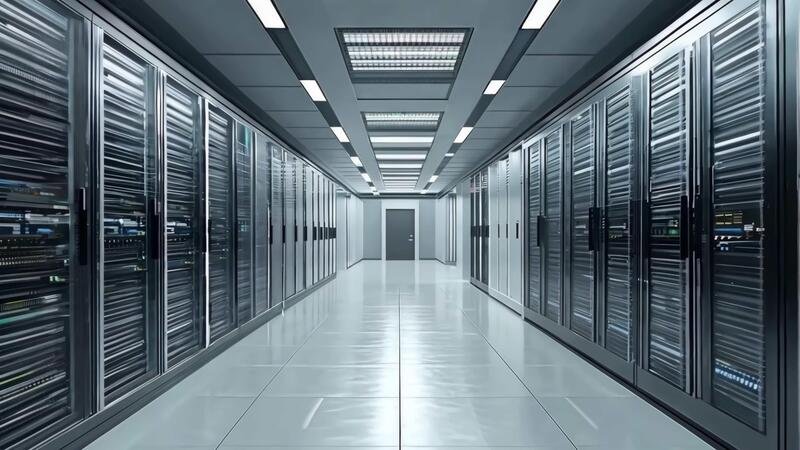
You want to buy a server for your business. The first thing you probably look at is the price tag. Most business owners make this mistake. They focus only on how much money they need to spend right now. But here’s the truth: a cheap server can cost you way more in the long run.
Technology is your business’s backbone, dependable and flawless. Having a server that is down will result in losing sales and making customers lose trust. Inefficient hardware causes your staff to work more slowly. Risky security measures compromise your information. Savvy purchasers take into account not only the price but also the long-term cost. They consider factors that truly impact their operations.
Let’s talk to understand in detail!
1. Performance and Processing Power: The Engine Behind Your Operations
Performance determines how well your server handles daily tasks. You need a machine that keeps up with your workload demands. So, when making a server purchase prioritize a processor that delivers consistent speed under load and supports your current and future workloads.
Your server’s processor acts as its brain. A powerful CPU handles multiple requests at once. Modern processors come with multiple cores. Each core processes tasks independently. Your business applications run smoothly with better processing power.
Consider these performance factors:
- Clock speed is measured in GHz.
- Cache memory for faster data access.
- Compatibility with your software requirements.
2. Memory Capacity: Your Server’s Working Space
RAM determines how many tasks your server handles simultaneously. Think of memory as your server’s desk space. More RAM means more room to work efficiently.
Your applications need sufficient memory to run properly. Databases require substantial RAM for optimal performance. Virtual machines eat up memory resources quickly. Email servers benefit from generous RAM allocation.
Key memory considerations include:
- Current application requirements.
- Room for future software additions.
- Operating system overhead.
- Peak usage demands.
- Memory speed and type compatibility
Insufficient memory causes system crashes. Applications slow to a crawl. Users experience frustrating lag times. Your business productivity suffers.
The global IT server market is projected to exceed $237.00 billion by 2032; thus, purchasing a dependable server would guarantee perfect performance, scalability, and durability in operational activities for the long run.
3. Storage Solutions: Where Your Data Lives
Storage type and capacity affect everything your server does. Modern servers offer various storage options. Each type serves different purposes.
Choosing Between Storage Technologies
Traditional hard drives provide massive capacity at lower costs. Solid-state drives provide an extremely fast performance. The NVMe drives are the ones that deliver the highest performance. It is your situation and requirements that will determine the drive selection.
Storage decisions impact:
- Application loading speeds.
- Database query performance.
- Backup and recovery times.
- Overall system responsiveness.
- Long-term data retention costs.
Think about your data growth rate. Most businesses underestimate storage needs. Your data volume increases steadily over time. Plan for at least three years of growth. Consider redundancy for data protection. RAID configurations protect against drive failures.
4. Reliability and Uptime Guarantees: Keeping Your Business Running
Server downtime costs money. A disadvantage is that for every minute your server is offline, you lose revenue. Reliability is worth more of your time than doing the computation to save yourself a couple of dollars upfront.
Look for these reliability features:
- Redundant power supplies for continuous operation.
- Enterprise-grade components built for 24/7 use.
- Vendor reputation for quality.
Calculating the True Cost of Downtime
Your business loses money when servers fail. Calculate your hourly revenue. Multiply that by potential downtime hours. The result shows why reliability trumps initial savings. A reliable server pays for itself through consistent uptime.
5. Scalability: Growing With Your Business
Your business needs to change over time. A server that fits today might become inadequate tomorrow. Scalability lets you expand without replacing everything.
Modern servers support various upgrade paths. You can add more memory as needed. Additional storage drives expand capacity. Some models allow processor upgrades. Network cards improve connectivity speeds.
Plan for growth in these areas:
- Memory expansion slots.
- Drive bay availability.
- PCIe slots for additional cards.
- Power supply capacity for upgrades.
- Chassis space for components.
A scalable server protects your investment. You avoid costly replacements every few years. Small upgrades extend server lifespan. Your total cost of ownership decreases.
6. Security Features: Protecting Your Digital Assets
As per a report, worldwide, more than 600 million cyberattacks occur each day. Cyberattacks and Data breaches devastate businesses. Security has to be a priority from the very beginning. The hardware security measures will guard you against the worst threats.
New generation servers come with the security tools integrated. TPM chips secure encryption keys. Hardware encryption accelerates the protection of data. Secure boot guarantees that unauthorized software cannot load. Remote management tools need secure access controls.
Essential security elements include:
- TPM modules for encryption support.
- Secure boot capabilities.
- BIOS-level password management for the system BIOS
- Physical security is an extra key to use for raising the shutters.
- Security Firmware Upgrade protocols.
7. Support and Warranty Coverage: Your Safety Net
Every server eventually experiences technical issues. The presence of quality support differentiates the situation where the problems are fixed quickly from the one where the servers are down for a longer period.
Support from vendors can differ a lot. There are companies that offer help around the clock. Besides, there are others that only give email support during office hours. The time it takes to respond affects the duration of the issues. On-site service can make you operational faster than mailing in your device for repair.
Compare support options carefully:
- Support availability hours.
- Response time guarantees.
- Warranty duration and coverage.
- Parts replacement speed.
Conclusion
Price matters, but it shouldn’t drive your server decision alone. So, when making a server purchase, determine your server’s real value. Performance keeps operations running smoothly. Adequate memory prevents bottlenecks. Smart storage choices boost speed and capacity. Reliability minimizes costly downtime. Scalability protects future investments. Security safeguards your business assets. Quality support resolves problems quickly. These elements combine to create the total cost of ownership.
Consider how each factor impacts your specific needs. The right server becomes a business asset that pays dividends for years. Choose wisely, and your investment rewards you daily.
