

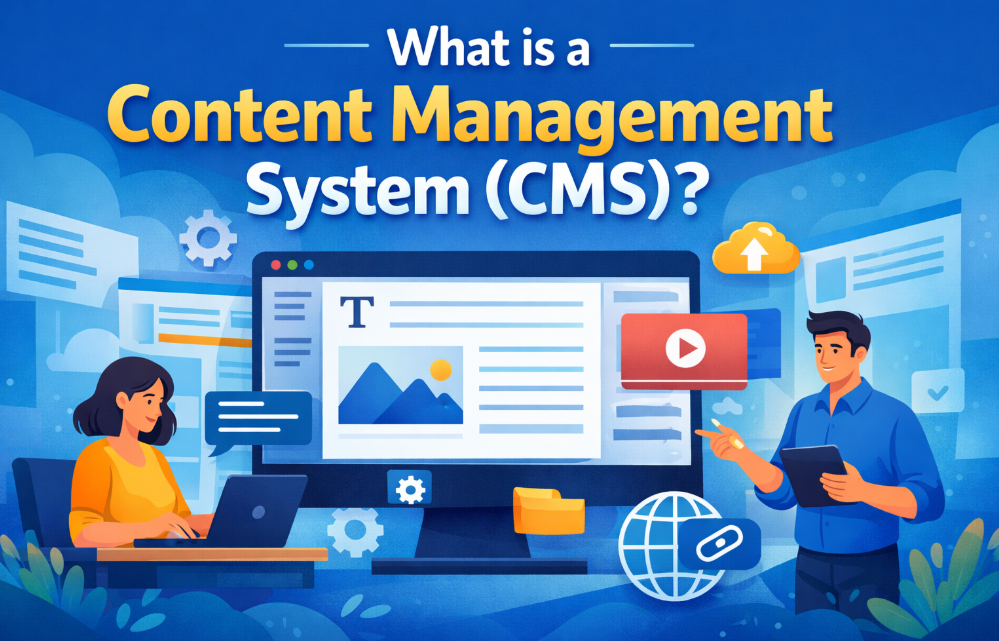
A website is a necessity in the digital world of almost every business or blogger or organization today. However, not all people know how to write codes or control technical systems. Here is where a Content Management System (CMS) enters into the picture. Any person can easily create, maintain, and update content on the web site without having hard technical knowledge with a CMS. The web development sites such as WP-1Click have also made the control of the sites simpler through the provision of easy to use solutions to content designers and even business owners.
The article will provide the definition of a CMS, its functionality, advantages, its types, some examples of the popular ones, and the ways of identifying the proper CMS that fits your requirements in the simplest and easiest to understand language.
Understanding the Basics of a CMS
A Content Management System (CMS) is software that assists users to author, edit, manage and publish digital content, typically to websites. Users are able to handle content via a visual dashboard as opposed to writing code.
In simple terms, a CMS:
- Stores your content (text, images, videos)
- Helps you design how that content appears on your website
- Allows updates without touching code
Even non-technical users can manage websites using a CMS, which is why CMS platforms power millions of websites across the internet.
How Does a Content Management System Work?
A CMS typically works using two main parts:
1. Content Management Application (CMA)
This is the part users interact with. It allows you to:
- Write and edit content
- Upload images and media
- Format pages and posts
- Schedule or publish content
You don’t need coding knowledge to use the CMA.
2. Content Delivery Application (CDA)
The CDA works behind the scenes. It:
- Stores content in a database
- Retrieves content when someone visits your site
- Displays content correctly on different devices
Together, the CMA and CDA ensure your content is created easily and displayed properly to visitors.
Why Is a CMS Important?
Prior to the advent of CMS platforms, web development would take technical expertise such as HTML, CSS, and server administration. The CMS platforms transformed the situation by enabling everyone to manage websites.
Key Reasons CMS Is Important
- Saves time and effort
- Reduces development costs
- Enables quick updates
- Makes collaboration easy
- Supports business growth
Whether you run a blog, an online store, or a corporate website, a CMS helps you stay in control of your content.
Key Features of a Content Management System
Most CMS platforms share a set of core features designed to simplify website management.
User-Friendly Dashboard
A clean and intuitive dashboard allows users to manage content, settings, and users from one place.
Content Editor
CMS platforms provide visual editors where you can write, format, and preview content before publishing.
Media Management
Upload, organize, and reuse images, videos, and files easily.
Themes and Templates
Themes control the design and layout of your website without coding.
Plugins and Extensions
Plugins add extra features such as SEO tools, contact forms, security, and analytics.
User Roles and Permissions
Different users can have different access levels (admin, editor, author, etc.).
Types of Content Management Systems
Not all CMS platforms are the same. They are designed for different use cases.
Traditional CMS
These systems manage both content creation and content display in one platform.
- Example: WordPress, Joomla
Headless CMS
Content is managed in one place but delivered to multiple platforms (web, mobile apps, IoT).
- Example: Contentful, Strapi
Cloud-Based CMS
Hosted on the cloud, requiring minimal setup and maintenance.
- Example: Wix, Squarespace
Enterprise CMS
Designed for large organizations with advanced needs.
- Example: Adobe Experience Manager
Popular CMS Platforms Explained
Here’s a quick overview of some widely used CMS platforms:
WordPress
The most popular CMS in the world. It’s flexible, beginner-friendly, and supports millions of plugins and themes.
Joomla
More advanced than WordPress, suitable for developers who want more control.
Drupal
Highly secure and scalable, often used by large organizations and governments.
Wix and Squarespace
All-in-one solutions with drag-and-drop builders, ideal for beginners.
CMS vs Website Builder: What’s the Difference?
Many people confuse CMS platforms with website builders. While they overlap, there are differences.
| Feature | CMS | Website Builder |
| Flexibility | High | Limited |
| Customization | Advanced options | Predefined layouts |
| Technical Control | More control | Less control |
| Learning Curve | Moderate | Very easy |
| Scalability | High | Limited |
A CMS is better for long-term growth, while website builders are suitable for simple, quick projects.
Benefits of Using a Content Management System
Easy Content Updates
Change text, images, or pages anytime without developer help.
Cost-Effective
Reduces development and maintenance costs over time.
SEO-Friendly
Most CMS platforms offer built-in or plugin-based SEO tools.
Scalable
Add new pages, features, or users as your website grows.
Collaboration
Multiple users can work together on the same website.
CMS for Beginners: Is It Hard to Learn?
Most modern CMS platforms are designed with beginners in mind. You can:
- Learn basic operations in a few hours
- Manage content without technical knowledge
- Use tutorials and documentation for help
For example, WordPress allows users to manage posts and pages through simple editors, including options like WordPress Writing Settings, which control formatting and default content behavior to make writing easier and more consistent.
Security and Maintenance in a CMS
A CMS needs regular care to stay secure and fast.
Common Maintenance Tasks
- Updating core software
- Updating plugins and themes
- Backing up data
- Monitoring performance
- Improving security
Neglecting maintenance can lead to slow performance or security risks. This is why many website owners choose professional maintenance solutions.
How to Choose the Right CMS for Your Needs
Before selecting a CMS, ask yourself these questions:
What Is Your Website Purpose?
- Blog
- Business website
- Online store
- Portfolio
How Much Control Do You Need?
More control often means a steeper learning curve.
Budget Considerations
Some CMS platforms are free but require hosting and paid plugins.
Future Growth
Choose a CMS that can scale as your website grows.
Support and Community
Large communities mean better support and more resources.
Common CMS Myths Debunked
“CMS Is Only for Bloggers”
False. CMS platforms power eCommerce, corporate, and enterprise websites.
“CMS Is Not Secure”
Security depends on maintenance, updates, and best practices.
“You Need Coding Skills”
Basic usage requires no coding knowledge.
The Future of Content Management Systems
CMS platforms are evolving rapidly. Future trends include:
- AI-powered content suggestions
- Headless and hybrid CMS growth
- Improved performance and security
- Better mobile and multi-channel support
As digital content becomes more important, CMS platforms will continue to play a vital role.
Final Thoughts
The modern websites are based on a Content Management System (CMS). It also allows users to publish, manage and create content easily without technical impediments. CMS systems have scaled to both large business sites and small blogs with flexibility, scalability and efficiency.
Professional assistance would go a long way to ensure that your CMS is maintained in a healthy and secure manner over a period of time. It is better to invest into the reliable services such as Best WordPress Maintenance Services so that your site is always updated, safe and optimized so that you can concentrate on the creation of excellent content rather than be connected with the malfunctioning technicalities.
