

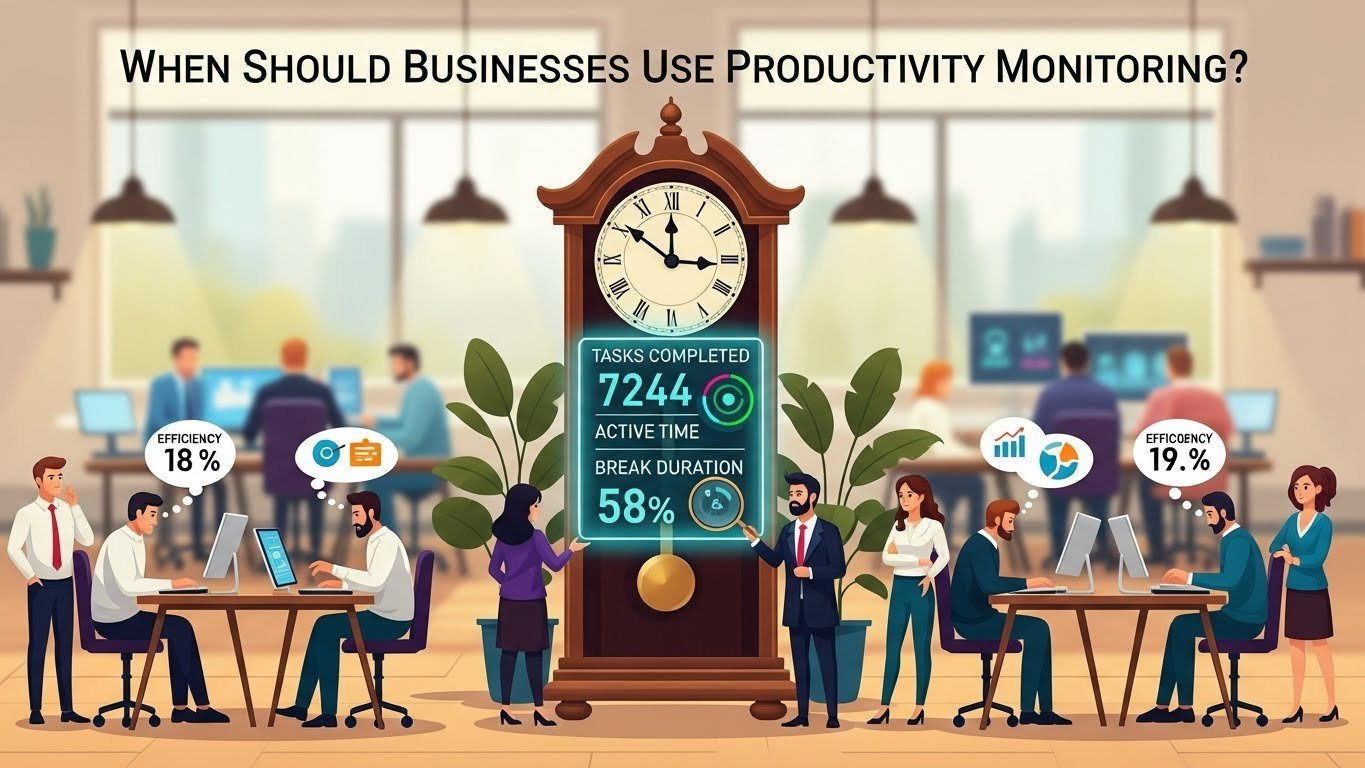
Productivity monitoring for improving the productivity and profitability of your employees and business is good. However, you need specific reasons for when you should and when you should not monitor employee productivity. That’s why you need to be extremely careful, as productivity monitoring without the need for it will only cost you your time and money. However, since we don’t want that to happen to your business, we are here with all the information you need to get started with it.
6 Situations That Signal You Need to Monitor Productivity
Here are the 6 situations that arise in your organization means that you need to start monitoring the productivity of your employees, workers, and teams. However, to monitor for these 6 situations, you need another tool, which is known as workforce management software.
1. Remote & Hybrid Team Management
Managing remote and hybrid teams and workers is not as easy as monitoring and handling in-office staff members. Especially when you have 1000s of employees spread globally. This can cause a problem when you need each of their reports. Tracking the individual updates of each of these employees can be time-consuming and downright overwhelming. Instead, use online productivity monitoring software to know who is doing what, how much, and when.
2. Improving Workflows & Efficiency
If you are using the same workflows for a long time, you will start to face problems. With the ever-changing consumer and market demands, you also need to change your workflow to an improved one and boost employee efficiency. However, you can’t micromanage your employees or waste your time doing so. Again, use productivity monitoring software to get reports, insights, and details on:
- Workflow gaps
- Employee efficiency levels
- Work output and expectation match levels
- Time deviations
- Employee productivity levels and gaps
This data helps identify where and how you need to improve workflows and efficiency.
3. Accountability & Performance Boosts
When you feel that your employees are not accountable enough, it’s time to take action to make them accountable, responsible, and boost performance. However, there are some restrictions. Physical monitoring, spying, scolding, and micromanagement will not work anymore. You need to use the best real-time software for productivity monitoring.
4. Resource Allocation & Planning
The wise way to allocate resources and plan accordingly is to assign your most productive users to the most critical tasks. However, how will you know who is the most productive? One wrong allocation can cost you extensive time and money. Productivity monitoring software will give you unbiased insights here that help you know all you need to know for optimizing resource allocation and planning to save time and money.
5. Compliance & Security Assurance
When you feel that your employees are not complying with your internal business policies, you also need to monitor their productivity. Doing so the right way with an ideal software solution for monitoring productivity will also ensure data, asset, and worker security with:
- Real-time screenshot monitoring
- Behavior analytics
- GPS Tracking
- Geofencing
6. When Performance Reviews Have No Data
Performance reviews must be made on data and not on biased judgment or feedback. However, what if you don’t have enough data or think that it is biased? In such cases, you need to use productivity monitoring software to monitor employee work based on the workflows and their offline and online activities for completing their assigned jobs.
6 Useful Tips to Ethically Monitor Your Employees
Employee monitoring and ethics go a long way. So, here are 6 useful tips for you to ethically monitor your employees, workers, and teams.
1. Transparent Monitoring
Your employees must have full clarity on what you are monitoring, when, and for how much time. You need to have employees’ consent before you can start tracking employee work. Otherwise, it will break their trust and boost the turnover rates in your organization.
2. Focus on Insights
The next tip is to focus on insights and not biased judgment that you hear from others. This is because insights never lie as they come from the work patterns of the individual systems of your human resources.
3. Contextualize Data
Sometimes you also need to analyze data with its intent. For example, unusual work patterns can either be insider threats or employee pain points.
4. Talk to Employees First
As we mentioned before, you need to ask your employees first and have their written consent before you can start monitoring ṭheir systems for productivity levels.
5. Protect Data
Furthermore, use the screenshot monitoring feature of your productivity tracking tool to prevent insider threats and keep your valuable data safe.
6. Keep Caution
It is important to improve and never implement extensive employee monitoring.
Conclusion
With that, we are done putting our post for this title, When Should Businesses Use Productivity Monitoring, under wraps. To conclude, summarize, and provide you with a final word, we would say that simply implementing productivity monitoring software to boost efficiency without knowing whether you need to do it or not is a waste of your time. You need to know when to monitor employee productivity to successfully skyrocket it. Plus, increasing work-time utilization efficiency is key. Do both from DeskTrack’s all-in-one employee monitoring and time tracking software.
