

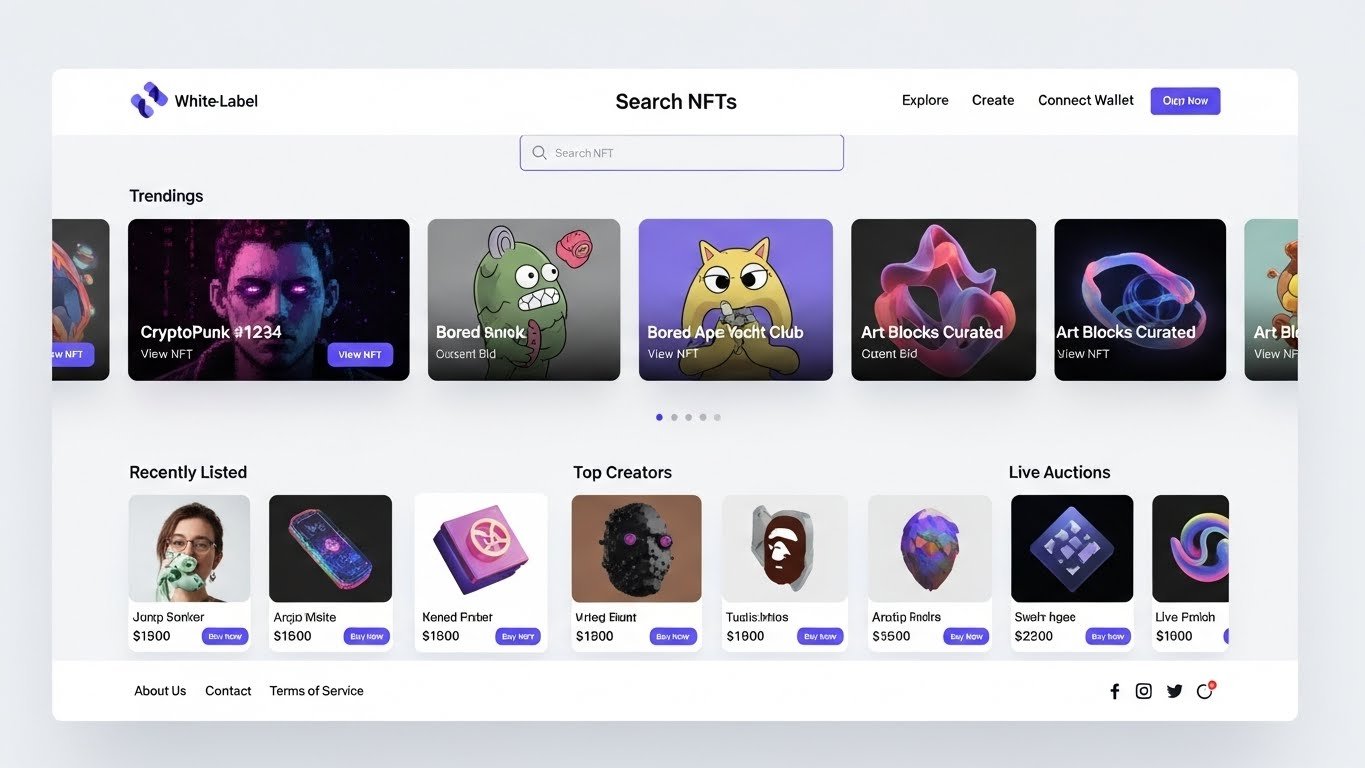
White label NFT marketplaces are transforming how brands approach digital ownership, audience interaction, and international growth. As NFTs gain traction across industries, organizations are increasingly looking for structured, scalable, and brand-controlled platforms to enter this space without excessive development overhead. White label solutions offer a practical foundation that supports customization, security, and global accessibility. By enabling brands to launch NFT ecosystems under their own identity, these platforms help companies engage digital audiences, explore new revenue models, and strengthen brand presence across multiple markets while maintaining operational efficiency and long-term scalability.
Understanding the Concept of White Label NFT Marketplaces
White label NFT marketplaces represent a turnkey approach to entering the blockchain ecosystem while retaining full control over branding and functionality. These platforms are developed with core NFT features already in place, allowing businesses to avoid the complexities of building infrastructure from the ground up. By adopting a white label model, brands can focus on strategic growth, creative execution, and user engagement rather than technical challenges. This approach is particularly beneficial for organizations seeking rapid deployment, flexibility, and the ability to tailor their marketplace to diverse global audiences without compromising performance or security.
- Pre-built NFT ecosystem
White label platforms include essential functionalities such as NFT minting, smart contracts, wallet integration, and transaction handling. This provides brands with a ready-to-launch environment that minimizes technical barriers. - Brand-focused customization
The marketplace interface, workflows, and visual elements can be adapted to match brand identity. This ensures a seamless and recognizable experience for users. - Support for multiple blockchain networks
Brands can choose blockchains based on cost, scalability, and regional relevance, enabling smoother adoption across global markets.
The Role of NFTs in Global Brand Expansion
NFTs have emerged as powerful tools for brands aiming to expand their reach beyond traditional boundaries. Through tokenized digital assets, organizations can connect with audiences across regions while maintaining consistency in brand messaging and ownership. White label NFT marketplaces support this expansion by offering centralized control with localized execution. Brands can design region-specific campaigns while operating within a unified global framework. This balance allows businesses to grow internationally, foster community participation, and create shared value across markets without losing strategic oversight.
- Borderless digital ownership
NFTs enable participation from users worldwide, allowing brands to build inclusive communities without geographical constraints. - Localized campaign execution
Brands can tailor NFT drops to cultural and regional preferences while maintaining global brand cohesion. - Strengthened brand authority
A dedicated NFT marketplace enhances credibility and positions brands as leaders in digital innovation.
How White Label Marketplaces Enable Scalable Digital Engagement
Scalable digital engagement is essential for brands managing large and diverse audiences. White label NFT marketplaces are designed to handle increasing user activity while maintaining platform stability and experience quality. These platforms support continuous growth by offering flexible architectures that adapt to changing engagement patterns. By enabling interactive features, exclusive access models, and dynamic content distribution, white label solutions help brands sustain long-term engagement. This scalability ensures that brands can grow their digital communities without technical limitations or performance challenges.
- High-performance infrastructure
Platforms are optimized to support large transaction volumes and user traffic during major launches or campaigns. - Engagement-driven platform features
Utilities such as gated access, membership NFTs, and exclusive content encourage repeat participation. - Seamless expansion capabilities
New collections, features, or integrations can be added without disrupting existing operations.
Customization Capabilities That Support Brand Differentiation
Customization is a defining advantage of white label NFT marketplaces, enabling brands to create experiences aligned with their identity and audience expectations. These platforms allow organizations to design unique interfaces, workflows, and engagement models that differentiate them in competitive markets. Customization also supports strategic alignment with regional needs, ensuring relevance across diverse user bases. By offering flexibility in design and functionality, white label solutions empower brands to deliver consistent yet adaptable digital experiences that strengthen recognition and loyalty.
- User interface and experience design
Brands can tailor layouts, navigation, and visual elements to reflect their identity and storytelling approach. - Utility-driven NFT configurations
NFTs can include access rights, rewards, or privileges that enhance their functional value. - Integration with existing digital systems
Marketplaces can connect with CRM tools, loyalty programs, and analytics platforms.
Enhancing Customer Loyalty Through NFT-Based Experiences
NFT-based engagement shifts customer relationships from transactions to long-term participation. White label NFT marketplaces provide the tools needed to build loyalty-driven ecosystems that reward involvement and ownership. By offering exclusive benefits, interactive rewards, and community participation, brands can deepen emotional connections with their audiences. These experiences encourage users to remain engaged over time, transforming NFTs into ongoing touchpoints rather than one-time assets. Loyalty-focused NFT strategies help brands retain users while increasing lifetime value.
- Exclusive ownership benefits
NFT holders gain access to premium content, events, or privileges tied to the brand. - Gamified loyalty mechanisms
Reward-based NFTs encourage ongoing participation and engagement. - Community-centric engagement models
Shared ownership experiences strengthen connections between users and brands.
Security, Transparency, and Ownership Control
Trust is fundamental to digital ecosystems, especially when dealing with valuable digital assets. White label NFT marketplaces leverage blockchain technology to provide transparency, security, and verifiable ownership. These platforms ensure that transactions are traceable, assets are protected, and governance remains under brand control. By implementing smart contracts and secure asset management systems, white label solutions help brands establish credibility while safeguarding both users and intellectual property across global markets.
- Smart contract automation
Automated contracts manage minting, transfers, and royalties with accuracy and transparency. - Secure asset management
Integrated wallet solutions protect user assets while supporting smooth transactions. - Platform governance control
Brands maintain authority over policies, content moderation, and user access.
Cost Efficiency and Faster Market Entry
Launching an NFT marketplace independently requires significant time and financial investment. White label solutions reduce these challenges by offering ready-made platforms that accelerate deployment. This efficiency allows brands to allocate resources toward marketing, partnerships, and innovation instead of infrastructure development. Faster launches enable businesses to test ideas, refine strategies, and achieve returns more quickly while leveraging the best white label nft marketplace solutions for scalable growth.
- Reduced development overhead
Pre-built systems eliminate the need for extensive custom development. - Lower operational complexity
Maintenance and updates are streamlined, reducing internal workload. - Accelerated launch timelines
Brands can enter the market quickly and respond to opportunities effectively.
Industry Applications of White Label NFT Marketplaces
White label NFT marketplaces offer versatile applications across industries, supporting innovation and engagement in diverse sectors. Their adaptability allows brands to experiment with new digital models while maintaining scalable operations. From creative industries to enterprise ecosystems, these platforms provide a foundation for customized NFT strategies that align with industry-specific goals and audience behaviors.
- Fashion and luxury sectors
Digital collectibles and exclusive drops enhance brand prestige and engagement. - Entertainment and media industries
NFTs support fan interaction, content monetization, and intellectual property control. - Sports and gaming ecosystems
Tokenized assets strengthen fan loyalty and create recurring revenue streams.
Leveraging Data and Analytics for Long-Term Growth
Data and analytics play a critical role in refining NFT strategies and improving engagement outcomes. White label NFT marketplaces generate insights into user behavior, transaction patterns, and regional performance. These insights help brands optimize content, personalize experiences, and plan future initiatives. A data-driven approach ensures continuous improvement and supports informed decision-making across global markets.
- User engagement analysis
Brands track interactions to understand preferences and participation trends. - Performance benchmarking across regions
Comparative insights guide regional strategy adjustments. - Personalized engagement optimization
Data supports tailored experiences that increase retention.
Future-Ready Innovation and Market Adaptability
As blockchain ecosystems evolve, brands must remain flexible and forward-looking. White label NFT marketplaces are designed to support innovation without disrupting existing operations. These platforms can adapt to emerging standards, integrations, and digital experiences, ensuring long-term relevance. By adopting future-ready infrastructure, brands using the best white label nft marketplace solutions can remain competitive while exploring new opportunities for growth and engagement.
- Support for evolving NFT standards
Platforms adapt to new token formats and utilities. - Interoperability and ecosystem expansion
NFTs can integrate with the metaverse and virtual environments. - Sustainable growth strategies
Scalable systems support long-term brand expansion.
Conclusion
White label NFT marketplaces provide a structured and scalable pathway for brands seeking global expansion and meaningful digital engagement. By combining customization, security, analytics, and operational efficiency, these platforms empower organizations to build strong digital identities and long-term audience relationships. As NFTs continue to influence branding and engagement strategies, adopting the best white label NFT marketplace solutions enables businesses to innovate confidently while maintaining consistency, control, and adaptability across international markets.
