

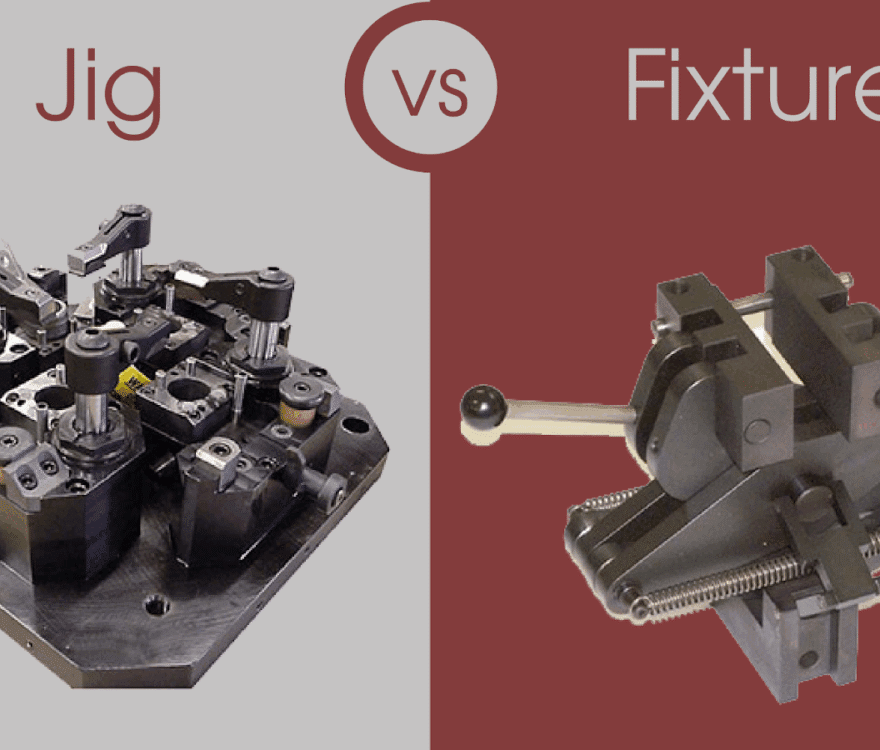
In CNC machining, reliable output depends on how accurately a workpiece is positioned and held during every operation. Even the most advanced machine cannot compensate for unstable or inconsistent part location. This is why jigs and fixtures remain a critical success factor for manufacturers focused on precision, repeatability, and controlled production outcomes. Proper workholding establishes a stable machining environment where cutting forces are managed and dimensional accuracy is protected.
As CNC applications expand across industries, manufacturers face increasing pressure to deliver tighter tolerances with shorter lead times. Strategic use of jigs and fixtures tooling supports this demand by reducing setup variation and improving process reliability. When workholding is engineered with intent, businesses gain predictable results, lower rejection rates, and stronger confidence in meeting customer specifications.
Operational Value of Jigs and Fixtures in CNC Manufacturing
Establishing Accurate Workpiece Location
Accurate workpiece location is the starting point of any successful CNC process. Jigs and fixtures locating methods define precise reference points that align the part with the machine coordinate system. This alignment removes uncertainty and ensures that every machining operation begins from a consistent datum. When location is controlled, dimensional accuracy becomes easier to maintain across multiple production cycles.
Consistent location also improves communication between design and production teams. When fixtures define how parts are positioned, machining programs become more reliable and easier to replicate across different machines or facilities. This clarity supports stable production planning and predictable outcomes.
Supporting Repeatable Production Performance
Repeatability is essential for scalable manufacturing. Once a fixture is validated, it allows operators to load parts repeatedly without re-measuring or adjusting alignment. This repeatable process ensures that each part experiences the same machining conditions, resulting in uniform quality.
From a business perspective, repeatability reduces inspection complexity and supports statistical process control. Stable production data makes it easier to identify trends and improve processes without disrupting ongoing operations.
Fundamentals of Effective Jig and Fixture Design
Locating Strategy and Constraint Management
Sound jig and fixture design focuses on managing part constraints correctly. The goal is to restrict unnecessary movement while avoiding excessive constraint that can introduce stress. Designers select locating surfaces that reflect functional requirements rather than cosmetic features. This approach ensures alignment that supports machining intent.
Important locating considerations include:
- Defining primary, secondary, and tertiary datums
- Controlling all degrees of freedom with minimal contact
- Using wear-resistant materials for long-term accuracy
When these principles are applied, fixtures become dependable references that maintain precision throughout production.
Clamping Design and Force Distribution
Clamping secures the workpiece against locating elements during machining. Effective clamping applies balanced force that resists cutting loads without distorting the part. Designers consider material thickness, rigidity, and tool engagement when determining clamping locations and force levels.
Proper force distribution improves surface finish and reduces vibration. This stability protects both the part and cutting tools, contributing to consistent quality and extended tool life.
Productivity Impact of Jigs and Fixtures Tooling
Minimizing Setup Time and Variability
Setup time directly affects CNC productivity. Purpose-built jigs and fixtures tooling reduces setup complexity by embedding alignment into the fixture itself. Operators can load parts quickly with confidence, reducing machine idle time between jobs.
Reduced setup variability also lowers the risk of errors. When positioning is controlled by the fixture rather than manual adjustment, consistency is achieved regardless of operator experience. This reliability supports higher throughput and smoother scheduling.
Improving Shop Floor Workflow
Well-designed fixtures improve overall workflow by simplifying part handling. Clear orientation and accessible clamping points allow operators to work efficiently and safely. Reduced complexity leads to fewer mistakes and faster cycle starts.
Improved workflow benefits the entire operation. When machines spend more time cutting and less time waiting, production targets become easier to achieve without additional resources.
Integration With Advanced CNC Machining Practices
Supporting Multi-Axis Machining Efficiency
Multi-axis CNC machines enable complex parts to be machined in fewer setups, but only when supported by suitable workholding. Fixtures for these machines must provide rigid support while allowing unrestricted tool access. Advanced jig and fixture design considers machine motion, tool paths, and clearance requirements.
By reducing the number of setups, these fixtures improve accuracy and shorten cycle times. Fewer repositioning steps reduce cumulative error and result in smoother surface transitions on finished components.
Enabling Automation and Scalable Output
Automation depends on repeatability and consistency. In automated CNC cells, fixtures must position parts accurately for robotic loading and unloading. Even small deviations can disrupt automated workflows and reduce efficiency.
Automation-focused fixtures often include standardized mounting interfaces and self-locating features. These characteristics support unattended operation and enable manufacturers to scale production without proportional increases in labor.
Application-Specific Jig and Fixture Design Devices
Meeting High-Precision Manufacturing Demands
Industries such as aerospace, energy, and advanced industrial equipment require strict tolerance control. In these applications, jig and fixture design devices must account for thermal expansion, vibration, and extended machining cycles. High-rigidity materials and precision-machined locating surfaces help maintain stability under demanding conditions.
These fixtures support compliance with rigorous standards. By reducing process variation, they help manufacturers meet contractual requirements and maintain long-term client trust.
Managing Complex and Non-Standard Parts
Complex part geometries often require custom workholding solutions. Thin walls, asymmetrical shapes, and curved surfaces cannot always be supported by standard fixtures. Custom devices are designed to match part geometry and distribute forces evenly.
This tailored support reduces deformation and chatter. As a result, manufacturers can machine challenging components accurately and expand their service capabilities with confidence.
Long-Term Business Benefits of Custom Jig and Fixture Design
Cost Efficiency Across Production Lifecycles
Although custom fixtures require an initial investment, they deliver long-term financial benefits. Reduced scrap, fewer rejected parts, and shorter cycle times lower the overall cost per unit. Over the full production lifecycle, these savings often exceed the upfront cost of tooling.
Custom fixtures also protect cutting tools by minimizing vibration and uneven loading. Improved tool life reduces consumable expenses and supports stable cost forecasting.
Strengthening Quality and Process Control
Consistent processes are easier to manage and improve. Custom jig and fixture design ensures that each part is produced under controlled and repeatable conditions. This uniformity simplifies inspection and supports data-driven quality management.
From a B2B perspective, reliable quality reduces customer complaints and strengthens brand credibility. Stable production processes also make continuous improvement initiatives more effective.
Future Direction of Jigs and Fixtures in CNC Manufacturing
Digital Design and Virtual Optimization
Digital design tools are transforming how fixtures are developed. CAD and simulation software allow engineers to validate concepts virtually before production begins. This reduces development time and minimizes costly design changes.
Virtual optimization enables designers to refine locating and clamping strategies without physical trials. The result is more efficient, reliable fixtures delivered in shorter lead times.
Modular Systems and Manufacturing Flexibility
Manufacturing environments are becoming increasingly dynamic. Modular jigs and fixtures tooling allows components to be reconfigured for different parts while maintaining accuracy. This flexibility supports high-mix, low-volume production models. Modular systems reduce lead times and improve responsiveness to changing customer requirements. By combining adaptability with sound design principles, manufacturers achieve both versatility and precision.
By applying structured jig and fixture design practices, CNC manufacturers can improve accuracy, repeatability, and operational efficiency. Thoughtful workholding strategies turn fixtures into a strategic asset that supports sustainable growth, consistent quality, and long-term competitiveness in modern manufacturing.
