

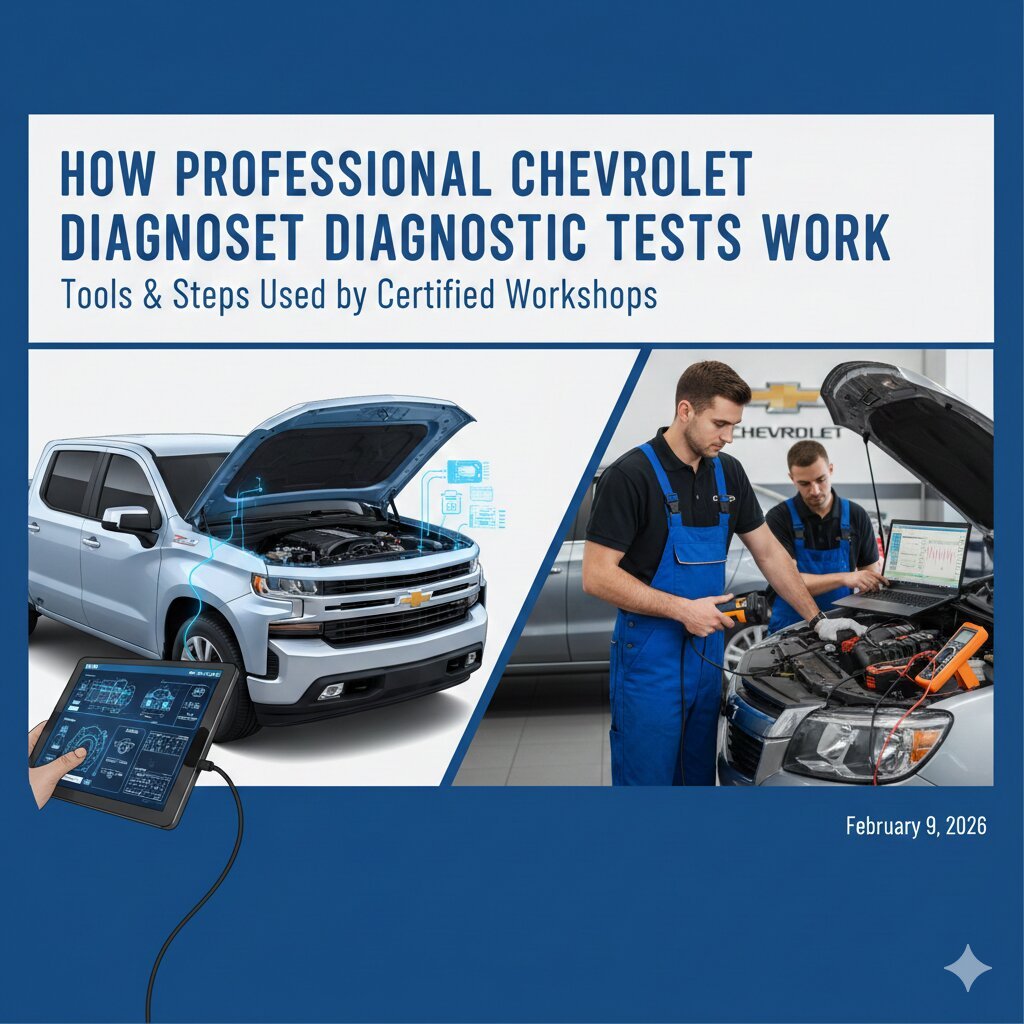
Chevrolet vehicles are built with sophisticated electronic systems designed to detect and report problems before they become serious issues. However, decoding those signals and identifying the root cause requires specialised knowledge and professional-grade equipment. If you’ve ever wondered what happens when you take your Chevrolet to a certified workshop for diagnostics, this guide will walk you through the entire process.
Whether you’re experiencing unusual warning lights, strange noises, or performance issues, understanding how professional diagnostic testing works can help you make informed decisions about your vehicle’s care. In markets like Dubai, where extreme heat and demanding driving conditions challenge vehicles year-round, reliable diagnostic testing from certified technicians becomes even more crucial. A proper diagnostic procedure can save thousands of dirhams by identifying problems early and preventing expensive repairs later.
What Makes Professional Diagnostics Different?
Many vehicle owners attempt DIY diagnostics using basic code readers they purchase online. While these tools can retrieve error codes, they only tell part of the story. A professional diagnostic at a certified workshop goes far deeper. Technicians use the same diagnostic software and hardware that vehicle manufacturers employ, combined with extensive training and years of experience.
When you bring your Chevrolet car repair in Dubai to a qualified technician, you’re accessing a comprehensive evaluation process that standard code readers simply cannot provide. The difference lies not just in the tools themselves, but in the expertise required to interpret the data correctly and recommend appropriate solutions.
Essential Diagnostic Tools Used in Professional Workshops
1. Computer Diagnostic Scanners
The foundation of modern vehicle diagnostics begins with computerised scan tools. These sophisticated devices connect directly to your Chevrolet’s onboard diagnostic (OBD) system, reading thousands of data points from various vehicle systems. Unlike consumer-grade scanners that only display basic trouble codes, professional-grade equipment can access manufacturer-specific information, real-time sensor data, and system parameters.
Modern diagnostic scanners used in certified Chevrolet workshops can read data from the engine control module (ECM), transmission control module (TCM), body control module (BCM), and dozens of other systems. They can even perform active tests, commanding specific components to respond so technicians can verify whether they’re functioning correctly.
2. Oscilloscopes and Multimeters
For electrical system diagnostics, technicians use oscilloscopes and digital multimeters. These tools measure voltage, resistance, and amperage across circuits, helping identify electrical faults that might not trigger stored trouble codes. Many modern Chevrolet problems stem from weak battery connections, corroded terminals, or failing sensors, and these specialised instruments can pinpoint such issues precisely.
3. Fuel System Testing Equipment
When fuel system problems are suspected, certified workshops use specialised analysers that measure fuel pressure, flow rates, and injector operation. A portable fuel pressure gauge can determine if the fuel pump is delivering adequate pressure, while fuel quality tests reveal whether contamination or poor-quality fuel is causing performance issues.
4. Engine Compression and Leak-Down Testers
These mechanical diagnostic tools provide critical information about the engine’s internal condition. A compression test measures how much pressure the engine builds during the combustion cycle, revealing problems with piston rings, valves, or gaskets. Leak-down testers quantify how much air escapes from the combustion chamber, helping technicians understand whether problems are in the rings, valves, or cylinder head gasket.
5. Thermal Imaging Cameras
Advanced workshops invest in thermal cameras that detect temperature variations across engine components and electrical systems. Overheating components often indicate failing parts or excessive resistance in circuits. This technology helps identify problems like failing alternators, short circuits, or coolant system malfunctions that might otherwise go undetected.
6. Smoke Testing Equipment
For locating air leaks in fuel systems, vacuum lines, and crankcase ventilation systems, shops use smoke testing machines. These devices introduce visible smoke into sealed systems, allowing technicians to watch exactly where the smoke escapes and identify leak locations instantly.
The Professional Diagnostic Process: Step by Step
Step 1: Initial Vehicle Inspection and History Review
Before connecting any diagnostic equipment, certified technicians begin with a thorough external inspection. They examine the vehicle’s overall condition, check for fluid leaks, inspect belts and hoses, and listen to how the engine sounds. They also review the vehicle’s maintenance history and discuss specific symptoms the owner has noticed. This conversation is critical because driver observations often provide crucial clues that help guide the diagnostic process.
Step 2: Reading and Analysing Trouble Codes
The technician connects a professional diagnostic scanner to retrieve all stored and pending trouble codes. However, they don’t stop at simply reading the codes. Each code is analysed in context, considering the vehicle’s operating conditions when the code was triggered. A single symptom might generate codes from multiple systems, but the root cause could be something entirely different. For example, a misfire code might result from bad spark plugs, weak fuel pressure, or a vacuum leak, so the technician must investigate further.
Step 3: Reviewing Live Data and System Parameters
Modern Chevrolet vehicles continuously monitor hundreds of parameters. Professional technicians access this live data, watching real-time values from oxygen sensors, coolant temperature sensors, fuel pressure, ignition timing, and countless other inputs. By observing how these parameters change during idle, acceleration, and cruising, technicians can identify which systems are operating normally and which are behaving abnormally.
Step 4: Performing Specific System Tests
Based on the codes and live data, technicians perform targeted tests on suspect systems. If fuel system problems are suspected, they test fuel pressure and volume. If ignition issues are indicated, they might perform compression and spark plug tests. If transmission problems are present, they may conduct transmission pressure tests or check solenoid resistance. Each test is designed to isolate specific components and confirm whether they’re the source of the problem.
Step 5: Visual and Physical Inspection of Components
Diagnostic equipment tells a story, but physical inspection confirms it. Technicians examine spark plugs for fouling, check hoses for cracks and leaks, inspect battery terminals for corrosion, and examine belts for wear. They may test specific components like the alternator, starter, or water pump with dedicated equipment. Many problems that show up as codes on the scanner have physical causes that only become obvious upon visual inspection.
Step 6: Road Testing and Symptom Reproduction
In some cases, technicians need to drive the vehicle to reproduce the symptoms or verify that repairs have solved the problem. They conduct controlled road tests while monitoring live data on a secondary scanner device. This real-world testing often reveals intermittent problems or conditions that only occur under specific driving scenarios.
Why Professional Diagnostics Save Money
At first glance, paying for a comprehensive diagnostic test might seem expensive. However, professional diagnostics actually save money by preventing guesswork and unnecessary parts replacement. Without proper diagnostics, vehicle owners might replace expensive components like catalytic converters, transmission solenoids, or engine control modules based on assumptions rather than confirmed problems. A proper Chevrolet car repair in Dubai begins with accurate diagnostics, and that investment typically pays for itself many times over.
Consider this scenario: a vehicle displays a code for a faulty oxygen sensor. A do-it-yourself approach might result in replacing the oxygen sensor for a few hundred dirhams, only to discover the problem was actually a vacuum leak that costs fifty dirhams to repair. Professional diagnostics would have identified the real problem and saved considerable money and time.
The Importance of Certified Technicians
Not all technicians can interpret diagnostic data effectively. Chevrolet-certified technicians have received specialised training from the manufacturer, understand the specific characteristics of different model years and engine types, and stay current with recalls and technical service bulletins. They know which codes are commonly caused by specific problems, which sensors fail most frequently, and which repairs address root causes rather than just symptoms.
When seeking professional diagnostic services, always choose certified shops. They have access to manufacturer-specific diagnostic software, know the latest recall information, and understand model-specific quirks that independent technicians might miss. The peace of mind that comes with certified diagnostics is worth the investment.
Conclusion
Professional Chevrolet diagnostic testing is a systematic process that combines advanced equipment with expert knowledge. By understanding the tools and procedures involved, you can appreciate why certified workshops charge what they do and why proper diagnostics are worth the investment. Rather than gambling on expensive parts replacements or driving around with undiagnosed problems, professional diagnostics provide the accurate information needed to address vehicle problems efficiently and cost-effectively. Whether you need Chevrolet car repair in Dubai or anywhere else, starting with a comprehensive professional diagnostic is always the right choice.
Thanks, atechvibe.com
