

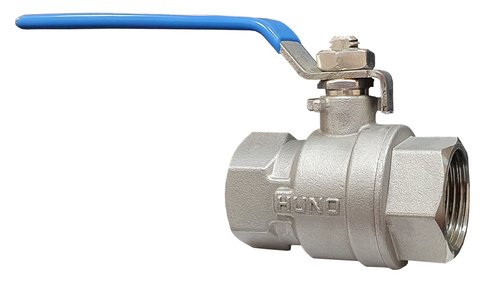
In modern piping and fluid handling systems, precision and reliability are critical. Among the many types of valves available, ball valves are considered one of the most efficient and dependable solutions for controlling the flow of liquids and gases. Their simple design, quick operation, and tight sealing capability make them a preferred choice across industries such as oil & gas, chemical processing, water treatment, power generation, and manufacturing.
Ball valves are designed for durability and performance, offering long service life even in demanding environments. Whether for isolation, shut-off, or flow control applications, they provide excellent operational efficiency.
What Are Ball Valves?
A ball valve is a quarter-turn valve that uses a hollow, perforated spherical ball to regulate flow. When the bore (hole) in the ball aligns with the pipeline, fluid flows freely. When rotated 90 degrees, the solid side of the ball blocks the passage completely.
This straightforward mechanism ensures quick shut-off and minimal pressure drop, making ball valves ideal for applications that require rapid operation and reliable sealing.
How Ball Valves Work
The working principle of a ball valve is simple yet highly effective. The valve handle or actuator rotates the internal ball via a stem connection. The rotation changes the alignment of the bore:
- Parallel to the pipe – Valve is open
- Perpendicular to the pipe – Valve is closed
Because of this quarter-turn action, ball valves are commonly used where quick shut-off is required, such as emergency isolation systems.
Types of Ball Valves
Ball valves are available in various configurations to suit different applications:
1. Floating Ball Valve
The ball is held in place by seats and moves slightly under pressure to create a tight seal. Suitable for low to medium pressure systems.
2. Trunnion Ball Valve
The ball is supported by mechanical anchors (trunnions) at the top and bottom. This design is ideal for high-pressure and large-diameter pipelines.
3. Full Port Ball Valve
Offers a bore size equal to the pipe diameter, ensuring unrestricted flow and minimal pressure loss.
4. Reduced Port Ball Valve
Has a smaller internal bore, which slightly restricts flow but is more compact and cost-effective.
5. V-Port Ball Valve
Designed for better flow regulation and control in throttling applications.
Materials Used in Ball Valves
Ball valves are manufactured using different materials depending on operating conditions:
- Carbon steel
- Cast iron
- Brass
- Alloy steel
- PVC
- Stainless steel ball valves
Among these, stainless steel ball valves are widely preferred for their excellent corrosion resistance, strength, and durability. They are especially suitable for harsh environments, chemical handling, marine applications, and hygienic industries such as food and pharmaceuticals.
Advantages of Ball Valves
1. Quick Operation
Only a 90-degree turn is required to fully open or close the valve.
2. Tight Sealing
Ball valves provide excellent leak-proof performance, even after long-term use.
3. Low Pressure Drop
Full port designs allow smooth fluid flow with minimal resistance.
4. Long Service Life
Durable materials and simple design reduce wear and maintenance requirements.
5. Versatility
Suitable for liquids, gases, steam, and slurry applications.
Applications of Ball Valves
Ball valves are used across multiple industries due to their adaptability:
Oil & Gas Industry
Used in upstream, midstream, and downstream operations for safe flow control.
Chemical Processing
Handle aggressive and corrosive fluids efficiently.
Water Treatment Plants
Control water supply and wastewater systems.
Power Plants
Regulate steam and cooling water systems.
Food & Beverage Industry
Ensure hygienic fluid management with corrosion-resistant materials.
Marine Industry
Resist saltwater corrosion and extreme conditions.
In many of these industries, stainless steel ball valves are selected to ensure durability and resistance against corrosion and high temperatures.
Factors to Consider When Selecting Ball Valves
Choosing the right ball valve requires careful consideration of:
- Operating pressure and temperature
- Type of fluid being handled
- Corrosion resistance requirements
- Connection type (threaded, flanged, welded)
- Manual or automated operation
- Maintenance accessibility
Proper selection ensures optimal performance and long-term reliability.
Maintenance and Care
Ball valves require minimal maintenance compared to other valve types. However, regular inspection helps maintain performance. Maintenance practices include:
- Checking seat and seal integrity
- Ensuring smooth handle movement
- Inspecting for corrosion or leakage
- Cleaning internal components if required
High-quality valves, when properly maintained, can operate efficiently for many years.
Why Ball Valves Are a Preferred Choice
Ball valves are often chosen over gate or globe valves because they provide faster operation and superior sealing capability. Their compact design and efficient flow characteristics make them suitable for both isolation and limited flow control applications.
They are particularly effective in systems where quick shut-off is essential for safety and operational efficiency.
Conclusion
Ball valves play a vital role in modern fluid control systems. Their simple design, reliable sealing performance, and long service life make them indispensable across various industries. With multiple types and material options available, they can be tailored to meet specific operational requirements.
Whether used in heavy industrial plants or commercial systems, ball valves continue to deliver dependable performance, ensuring safe and efficient flow control in even the most demanding environments.
