

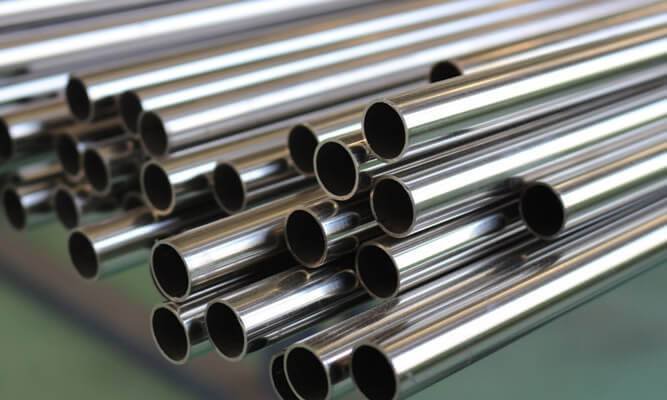
Stainless Steel Welded Pipes are one of the most widely used piping solutions across industries such as construction, oil & gas, chemical processing, water treatment, and manufacturing. Known for their strength, corrosion resistance, and cost-effectiveness, these pipes provide reliable performance in both structural and fluid transportation applications.
Unlike seamless pipes, ss welded pipes are manufactured by rolling stainless steel plates or coils into a cylindrical shape and welding the seam. Modern welding technologies ensure strong joints and high-quality finishes, making welded pipes suitable for a wide range of industrial requirements.
In this blog, we’ll explore the manufacturing process, advantages, properties, and applications of stainless steel welded pipes in detail.
What Are Stainless Steel Welded Pipes?
Stainless Steel Welded Pipes are pipes formed by bending stainless steel sheets or strips into a round shape and joining the edges through welding. The welding process is usually done using advanced methods such as:
- TIG (Tungsten Inert Gas) Welding
- ERW (Electric Resistance Welding)
- Laser Welding
After welding, the pipes may undergo heat treatment, pickling, polishing, and testing to ensure structural integrity and corrosion resistance.
These pipes are available in various grades such as:
- SS 304 / 304L
- SS 316 / 316L
- SS 310 / 310S
- SS 321
- Duplex & Super Duplex grades
Key Features of Stainless Steel Welded Pipes
1. Excellent Corrosion Resistance
Stainless steel naturally forms a protective chromium oxide layer on its surface. This layer protects the pipe from:
- Rust
- Oxidation
- Moisture damage
- Chemical corrosion
Grades like 316 and 316L offer enhanced resistance in chloride and marine environments.
2. Smooth Surface Finish
Welded pipes often have a smoother finish compared to seamless pipes, especially in decorative or structural applications. They are available in:
- Polished finish
- Matte finish
- Mirror finish
- Pickled and passivated finish
3. Cost-Effective Solution
Compared to seamless pipes, stainless steel welded pipes are generally more economical. For applications that do not require extremely high pressure resistance, welded pipes provide a practical and budget-friendly option.
4. Uniform Wall Thickness
Welded pipes offer consistent wall thickness and dimensional accuracy, making them ideal for structural and fabrication purposes.
5. Easy Fabrication and Installation
These pipes are easy to cut, bend, and weld, making them suitable for construction and custom fabrication projects.
Manufacturing Process of SS Welded Pipes
The production of stainless steel welded pipes typically follows these steps:
- Stainless steel coils or plates are selected.
- The material is rolled into a cylindrical shape.
- The seam is welded using TIG or ERW welding methods.
- Heat treatment may be applied to reduce stress.
- Surface finishing processes such as polishing or pickling are performed.
- Pipes undergo quality testing like hydro testing, ultrasonic testing, and visual inspection.
Modern manufacturing ensures that the welded seam is strong and nearly invisible after finishing.
Applications of Stainless Steel Welded Pipes
Because of their versatility, stainless steel welded pipes are used in multiple industries.
1. Construction & Structural Industry
Welded pipes are widely used for:
- Handrails
- Structural frames
- Architectural designs
- Support columns
- Decorative installations
Their aesthetic finish makes them ideal for visible structures.
2. Water Supply & Plumbing Systems
SS welded pipes are used in:
- Water pipelines
- Drainage systems
- Irrigation systems
- Wastewater treatment plants
Their corrosion resistance ensures long-term durability in wet environments.
3. Oil & Gas Industry
While seamless pipes are preferred for very high-pressure systems, welded pipes are used in:
- Low to medium pressure pipelines
- Storage tanks
- Process lines
4. Food & Beverage Industry
Stainless steel welded pipes are suitable for hygienic applications such as:
- Dairy processing
- Beverage production
- Food transport lines
Their smooth internal surface prevents contamination and bacterial growth.
5. Chemical & Pharmaceutical Industry
Certain grades like SS 316L welded pipes are used in chemical plants due to their resistance to corrosive chemicals.
Advantages of Stainless Steel Welded Pipes
- Affordable compared to seamless pipes
- Available in large diameters
- Better surface finish
- Easier customization
- Suitable for structural and decorative use
- Reliable performance in low to medium pressure applications
Welded vs Seamless Pipes: Quick Comparison
Welded Pipes
- Manufactured by welding rolled sheets
- Cost-effective
- Ideal for structural and general use
- Available in larger diameters
Seamless Pipes
- Manufactured without welding
- Higher pressure resistance
- More expensive
- Used in critical high-pressure systems
The choice depends on application requirements, pressure conditions, and budget.
Available Sizes & Specifications
Stainless Steel Welded Pipes are available in:
- Various outer diameters (small to large)
- Multiple wall thicknesses (Schedule 10, 40, 80, etc.)
- Standard lengths (6 meters, 12 meters)
- Custom sizes as per project requirements
Common standards include ASTM A312, ASTM A358, and ASME specifications.
Final Thoughts
Stainless Steel Welded Pipes offer an excellent balance of strength, corrosion resistance, cost-efficiency, and aesthetic appeal. Whether used in construction, industrial pipelines, or decorative structures, these pipes deliver consistent performance and long service life.
For applications that require reliability without extreme pressure demands, stainless steel welded pipes remain a practical and widely trusted solution across industries.
