

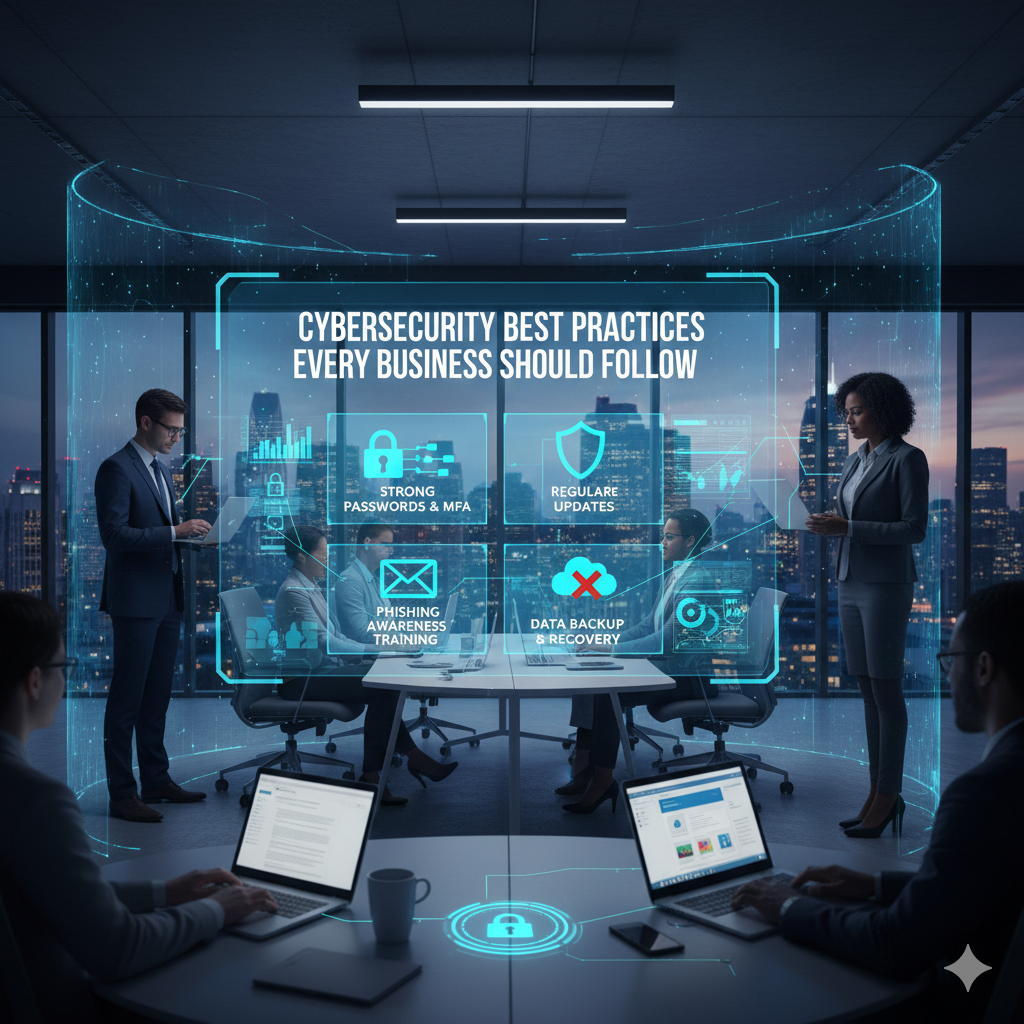
In today’s digital age, cybersecurity has become a top priority for businesses of all sizes. With cyberattacks becoming more sophisticated and frequent, protecting sensitive data and IT infrastructure is no longer optional it’s a necessity. The cost of a security breach can be devastating, from financial losses to damage to a company’s reputation. In fact, according to a report by Cybersecurity Ventures, global cybercrime costs are expected to reach $10.5 trillion annually by 2025. In this article, we’ll explore the essential cybersecurity best practices that every business should follow to safeguard their operations.
1. Regularly Update and Patch Software
One of the simplest and most effective cybersecurity best practices is ensuring that all software, including operating systems, applications, and third-party tools, is regularly updated and patched. Cybercriminals often exploit vulnerabilities in outdated software to gain unauthorized access to networks. According to the 2025 Verizon Data Breach Investigations Report, 60% of breaches were caused by unpatched vulnerabilities.
By setting up automatic updates or routinely checking for available patches, businesses can close the gaps that hackers might exploit. This applies not only to on-premise software but also to cloud-based applications. Make sure your team is aware of the importance of keeping all software up to date to prevent cyberattacks.
2. Implement Strong Access Controls
In many cases, cybersecurity breaches happen due to weak access controls. Businesses must implement strong authentication methods to ensure that only authorized personnel have access to sensitive information and systems. This includes using multi-factor authentication (MFA), which requires users to verify their identity through two or more verification methods.
By adopting strict access controls, businesses can significantly reduce the risk of unauthorized access to systems and sensitive data. Limiting access based on job roles and responsibilities ensures that employees only have access to the information they need to perform their tasks. This minimizes the potential damage caused by a compromised account.
3. Conduct Regular Security Training for Employees
Employees are often the first line of defense against cybersecurity threats, but they can also be the weakest link if they are not properly trained. A common threat is phishing, where cybercriminals impersonate legitimate entities to trick employees into revealing login credentials or downloading malicious software. According to a report by the Ponemon Institute, 56% of data breaches are caused by human error, such as falling for phishing scams.
To mitigate this risk, businesses should conduct regular cybersecurity training sessions. Employees should be educated on how to identify phishing emails, create strong passwords, and follow best practices for data protection. Ongoing training ensures that employees stay vigilant and can recognize potential threats before they cause harm.
4. Backup Critical Data Regularly
Data loss can occur for many reasons cyberattacks, hardware failures, or natural disasters. Regardless of the cause, it’s crucial to back up critical data regularly to minimize the impact of data loss. Ransomware attacks, in which hackers demand payment for the release of encrypted data, have become increasingly common, making data backup even more essential.
Businesses should implement a reliable backup strategy, ensuring that data is backed up in multiple locations. Cloud-based backups offer a secure offsite solution, while physical backups on external drives can be kept as an additional layer of protection. It’s also important to test backup systems regularly to ensure they are functioning correctly and that data can be restored quickly in the event of an attack or failure.
5. Use Encryption to Protect Sensitive Data
Encryption is one of the most effective ways to protect sensitive data both in transit and at rest. When data is encrypted, it’s rendered unreadable to anyone who doesn’t have the decryption key. This ensures that even if hackers manage to intercept sensitive information, they won’t be able to access it.
Businesses should implement encryption protocols for email communication, file storage, and data transfer. Additionally, end-to-end encryption should be used for sensitive communications, such as financial transactions, to protect customer data from being compromised.
6. Monitor Networks and Systems 24/7
Proactive monitoring is a key component of an effective cybersecurity strategy. Cyberattacks often go undetected for extended periods, allowing hackers to wreak havoc on systems without being noticed. By monitoring networks and systems 24/7, businesses can detect unusual activity early and take action before a breach occurs.
There are several tools available that provide real-time monitoring of network traffic, log files, and system performance. These tools can detect anomalies, such as unauthorized login attempts, suspicious data transfers, or malware activity, and send alerts to IT teams. Quick detection allows businesses to minimize the impact of a potential attack and respond quickly to mitigate damage.
7. Implement a Strong Firewall and Antivirus Software
Firewalls and antivirus software are the first line of defense against external threats. Firewalls help filter out malicious traffic from entering a network, while antivirus software scans for and removes any malware that may have made its way through.
Businesses should ensure that firewalls and antivirus software are installed on all endpoints, including servers, desktops, and mobile devices. These tools should be updated regularly to protect against the latest threats. Additionally, companies should consider using advanced firewall technologies, such as next-generation firewalls (NGFW), which offer enhanced protection against evolving threats.
8. Develop a Cybersecurity Incident Response Plan
Even with all the preventive measures in place, cybersecurity breaches can still occur. That’s why it’s essential for businesses to have an incident response plan in place. This plan should outline the steps to take in the event of a cyberattack, including how to contain the breach, communicate with stakeholders, and recover from the attack.
A well-defined incident response plan helps businesses minimize the damage of a breach and ensures that all team members know their roles and responsibilities. Regularly testing and updating the plan will ensure that it remains effective and ready for action when needed.
Conclusion
In 2026, cybersecurity is more critical than ever before. With cyberattacks becoming increasingly sophisticated, businesses must take proactive steps to protect their systems, data, and reputation. By following these best practices regular software updates, strong access controls, employee training, data backups, encryption, network monitoring, antivirus software, and a solid incident response plan businesses can significantly reduce the risk of a cyberattack.
As the digital landscape continues to evolve, staying ahead of potential threats is vital for ensuring long-term business success. By prioritizing cybersecurity, businesses can not only protect their assets but also build trust with customers and stakeholders, fostering a secure environment for growth and innovation.
