

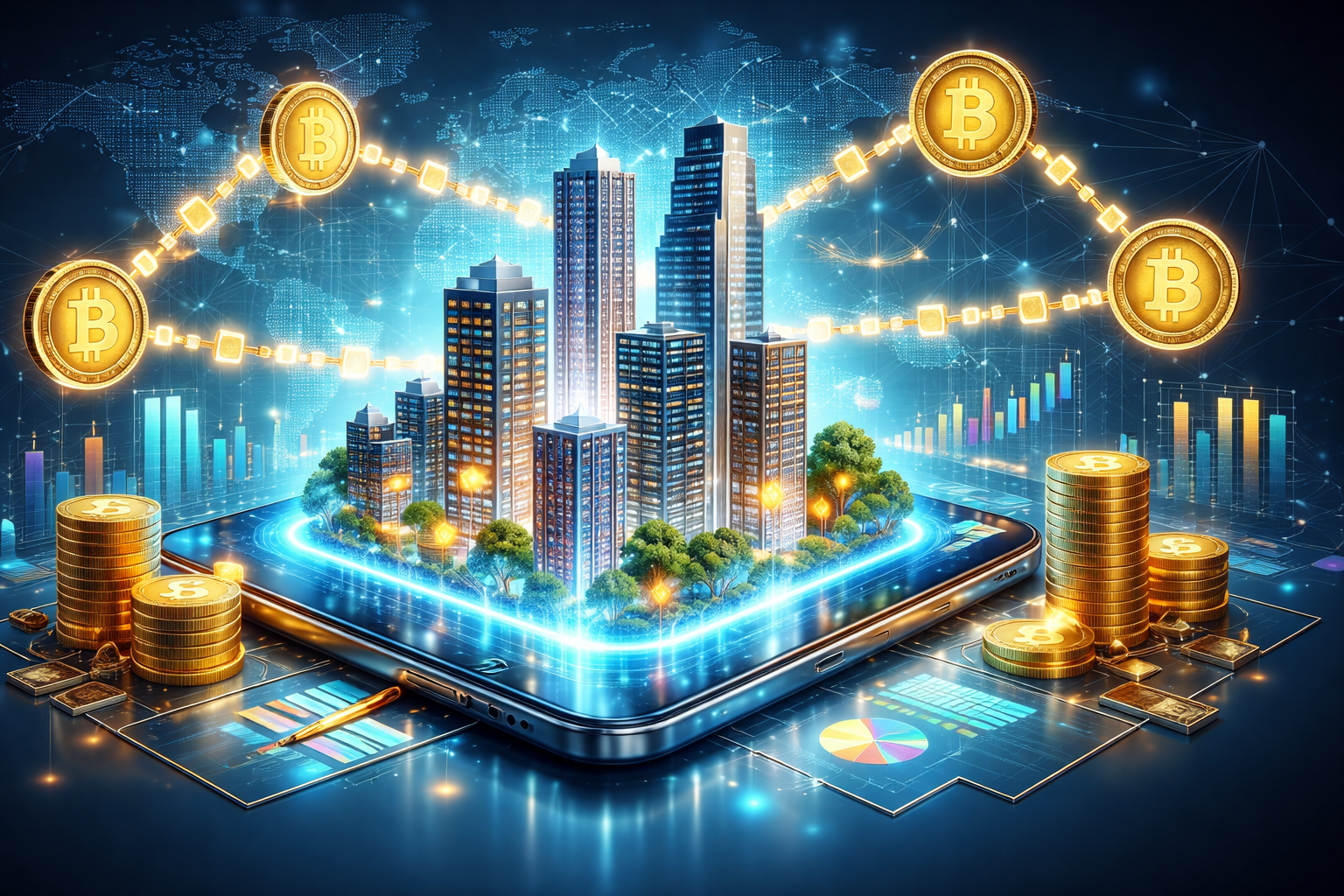
The real estate sector has traditionally been slow to embrace technological innovation. Buying or selling property involves extensive paperwork, legal verification, broker fees, and lengthy transaction timelines. For investors, these hurdles translate into high costs, low liquidity, and limited transparency. In recent years, blockchain technology and real estate tokenization have emerged as transformative solutions, creating an ecosystem where property trading is fast, transparent, and seamless. By converting physical real estate assets into digital tokens, investors can now buy, sell, or trade properties in a manner similar to liquid financial instruments, redefining how the global real estate market functions.
Understanding Real Estate Tokenization
Real estate tokenization is the process of transforming ownership rights of a property into digital tokens recorded on a blockchain. Each token represents a fractional share of the underlying asset, enabling investors to participate in property ownership without purchasing the entire property. Blockchain technology ensures that each transaction is secure, transparent, and verifiable. Smart contracts automate the rules of ownership, profit distribution, and transfer processes, eliminating the need for intermediaries and reducing operational costs.
By tokenizing real estate, previously illiquid assets become divisible and tradable on digital marketplaces. This allows smaller investors to access high-value properties, broadening the pool of participants and democratizing property investment. Tokenization also creates an immutable digital record of ownership and transaction history, enhancing security and transparency in trading.
How Tokenization Streamlines Property Trading
The process of buying and selling traditional real estate can take weeks or even months, often requiring legal scrutiny, title verification, and broker mediation. Tokenization simplifies these steps by digitizing ownership records and automating transactions through blockchain technology. When a property is tokenized, buyers and sellers interact via a secure digital platform where tokens representing fractional ownership can be traded instantly.
Smart contracts play a central role in this process. These self-executing agreements are programmed to enforce predefined rules for property transfers, payments, and dividend distribution. When a token is sold, the smart contract automatically executes the transaction, transfers ownership on the blockchain, and distributes proceeds to the relevant parties. This reduces reliance on traditional legal frameworks, minimizes human error, and ensures transactions are completed efficiently.
Enhancing Liquidity in Real Estate Markets
Liquidity has historically been a challenge in real estate investing. Selling a property requires time, negotiation, and substantial transaction costs, making it difficult for investors to quickly access capital. Tokenization addresses this issue by enabling fractional ownership and secondary trading of property tokens on digital marketplaces. Investors can buy or sell tokens representing a portion of the property, making it easier to enter or exit positions without needing to transact the entire asset.
The liquidity offered by tokenized properties also supports real-time pricing and valuation. As tokens are actively traded on digital platforms, market forces such as demand, supply, and investor sentiment dynamically influence token prices. This creates a system where asset values are continuously updated, allowing investors to make informed decisions and improving overall market efficiency.
Transparency and Security in Digital Trading
Blockchain technology ensures that all transactions related to real estate tokenization are transparent, traceable, and immutable. Each token transfer is recorded on a decentralized ledger accessible to all participants, creating a verifiable audit trail. This reduces the risk of fraud, mitigates disputes over ownership, and increases trust between buyers and sellers.
Security is also enhanced through cryptographic protocols. Digital tokens are resistant to tampering, and smart contracts enforce contractual obligations automatically. Investors no longer need to rely solely on intermediaries for verification or enforcement, as the blockchain provides a secure, self-executing mechanism for managing property trades. By combining transparency and security, tokenization facilitates a seamless and trustworthy digital trading environment.
Integration with Real-Time Data and Analytics
The true power of seamless digital trading emerges when tokenization is integrated with real-time data and analytics. Property performance metrics such as rental income, occupancy rates, maintenance costs, and market trends can be fed into smart contracts and valuation algorithms. This allows token prices to reflect not only market conditions but also operational performance, providing investors with an accurate and up-to-date view of the property’s value.
For example, if a tokenized commercial building sees an increase in tenant occupancy, smart contracts can automatically adjust the value of the property tokens to reflect higher expected revenue. This real-time feedback loop ensures that investors have access to current data, enabling them to make informed trading decisions without relying on delayed appraisals or third-party evaluations.
Democratizing Access to Property Markets
Real estate tokenization lowers traditional entry barriers, making property investment accessible to a wider range of participants. Fractional ownership allows small and medium investors to acquire portions of high-value assets that were previously limited to wealthy individuals or institutions. With digital marketplaces facilitating token trading, investors from different geographies can participate seamlessly, expanding the investor base and increasing market efficiency.
The transparency and real-time data integration inherent in tokenized platforms also provide confidence to new investors. By seeing current property valuations, rental performance, and transaction history, investors can make informed decisions without needing to rely heavily on brokers or intermediaries. This democratization fosters a more inclusive property market while stimulating trading activity in previously illiquid assets.
Reducing Costs and Operational Inefficiencies
Traditional real estate trading involves multiple intermediaries, including brokers, lawyers, banks, and escrow agents. Each intermediary adds costs, delays, and complexity to the process. Tokenization streamlines property trading by reducing or eliminating the need for many of these intermediaries. Transactions are executed directly on blockchain platforms via smart contracts, reducing legal, administrative, and operational expenses.
Additionally, the automated nature of tokenized trading minimizes human errors and delays associated with paperwork, verification, and fund transfers. This efficiency not only reduces costs for investors but also accelerates the speed of transactions, making real estate trading as seamless and fast as trading other digital assets like stocks or cryptocurrencies.
Global Reach and 24/7 Trading
One of the advantages of digital property trading is its global accessibility. Tokenized properties can be listed on blockchain marketplaces that are accessible from anywhere in the world, allowing investors to trade property tokens across borders without geographic limitations. Moreover, digital platforms operate 24/7, enabling trading at any time, unlike traditional real estate markets that are constrained by business hours and local regulations.
This global reach also fosters competition, as buyers and sellers from different regions can interact seamlessly. The broader investor base improves liquidity, ensures fair pricing, and increases the chances of timely transactions. Investors benefit from continuous market activity and the ability to respond quickly to market trends or changes in property performance.
Regulatory Compliance and Legal Considerations
While real estate tokenization provides seamless trading, it also operates within a complex regulatory framework. Tokenized properties are often treated as digital securities, requiring compliance with local and international securities laws, anti-money laundering regulations, and Know Your Customer (KYC) procedures. Platforms facilitating token trading must ensure that investors meet regulatory requirements before participating in transactions.
Blockchain technology can assist with regulatory compliance by embedding rules into smart contracts and maintaining an immutable record of all transactions. Automated compliance checks, digital identity verification, and audit-ready transaction histories reduce administrative burdens and increase trust among investors and regulators. This ensures that digital property trading is not only seamless but also legally secure and transparent.
Real-World Examples of Digital Property Trading
Several pioneering projects have demonstrated the effectiveness of real estate tokenization in enabling seamless digital trading. Tokenized commercial complexes, luxury residential developments, and mixed-use properties are increasingly being listed on blockchain platforms. Investors can purchase tokens representing fractional ownership, track asset performance, and trade their holdings on secondary markets.
For instance, a tokenized residential building may allow investors to buy tokens corresponding to individual apartments. Rental income from these apartments is distributed automatically via smart contracts, while token prices adjust dynamically based on occupancy rates and market conditions. Secondary trading platforms enable investors to sell or buy tokens at any time, creating a liquid, transparent, and accessible marketplace for real estate.
Challenges and Limitations
Despite its advantages, digital property trading via tokenization faces certain challenges. Market adoption is still in the early stages, and secondary token markets may experience periods of low liquidity. Integrating smart contracts, real-time data feeds, and IoT devices requires technical infrastructure and ongoing maintenance. Furthermore, regulatory uncertainty in some regions may slow adoption or limit cross-border trading opportunities.
Nonetheless, these challenges are gradually being addressed as technology matures, regulatory frameworks evolve, and more investors and developers embrace tokenization. The benefits of seamless trading, fractional ownership, transparency, and efficiency make real estate tokenization a compelling innovation for the property market.
The Future of Seamless Property Trading
As blockchain technology, tokenization, and real-time data analytics continue to evolve, seamless digital property trading is likely to become the standard for real estate investment. Tokenization will enable entire portfolios or even global property markets to be traded digitally, with valuations updated continuously based on real-time data.
Future integrations with decentralized finance (DeFi) platforms could allow tokenized properties to serve as collateral for loans, participate in automated lending markets, or be combined into diversified investment products. Predictive analytics and machine learning algorithms may further enhance valuation accuracy, risk assessment, and market forecasting, creating a highly responsive and efficient property trading ecosystem.
Conclusion
Real estate tokenization is revolutionizing property trading by converting physical assets into digital tokens that can be bought, sold, and traded seamlessly on blockchain platforms. By enabling fractional ownership, enhancing liquidity, and integrating real-time data analytics, tokenization creates a market where property trades are efficient, transparent, and secure. Investors benefit from lower costs, faster transactions, and global access, while developers can tap into a broader pool of capital and streamline operations.
Although challenges such as regulatory compliance and technological integration remain, the advantages of tokenized property trading are compelling. As adoption grows, seamless digital trading of tokenized real estate is poised to transform the way investors, developers, and regulators interact with one of the world’s most valuable asset classes, creating a more inclusive, efficient, and transparent real estate market for all participants.
