

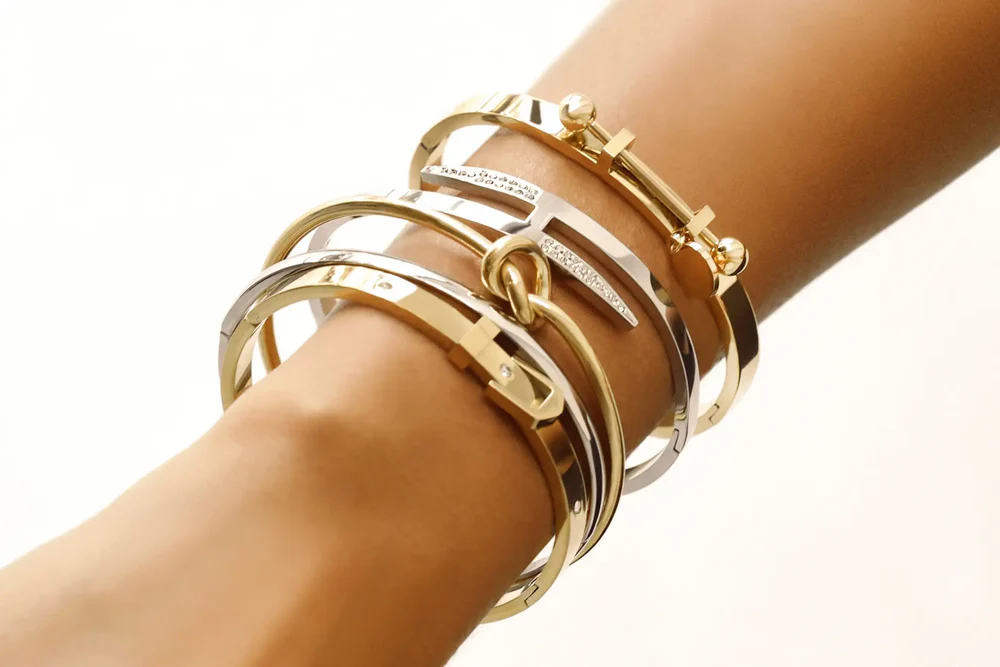
Nothing kills the vibe of a beautiful bracelet faster than looking down and seeing a green ring around your wrist. Or realizing your once-shiny silver bracelet now looks dull and tarnished. Or finding your gold chain tangled beyond repair.
Good jewelry care isn’t complicated, but most people either don’t know the basics or forget to actually do them. At Zuha Jewellery, we see beautiful pieces get ruined by simple mistakes that are totally preventable.
Here’s everything you need to know to keep your bracelets looking new, plus what to do when things go wrong.
Why Does Jewelry Turn Your Skin Green Anyway?
Let’s start with the most common problem. That green stain isn’t dirt and it doesn’t mean your jewelry is fake or cheap. It’s actually a chemical reaction.
Most jewelry metals contain copper. When copper comes into contact with your skin’s natural oils, sweat, and the acids in lotions or perfumes, it oxidizes. That oxidation creates copper salts, which are green.
Sterling silver is 92.5% silver and 7.5% copper. Gold below 24k has other metals mixed in, often including copper. Even some costume jewelry uses copper as a base metal.
The green stain is totally harmless to your skin. It’s just annoying and looks bad. The solution isn’t to avoid copper-containing metals (that would eliminate most jewelry), it’s to create a barrier between the metal and your skin.
The Put-It-On-Last Rule
This is the single most important thing you can do to protect your jewelry: put it on last.
Moisturize your skin, apply your perfume, use your hairspray, let everything dry and absorb, and then put on your jewelry. Products like lotion, perfume, and sunscreen contain chemicals that accelerate tarnishing and can cause that green discoloration.
At Zuha Jewellery, we tell customers this constantly. Your morning routine should go: shower, skincare, makeup, perfume, get dressed, then jewelry. Your bracelet should be the last thing you put on before walking out the door.
This goes double for sunscreen. If you’re going to the beach, put your jewelry on after you’ve applied and absorbed your sunscreen. Or better yet, leave your good jewelry at home and wear something you don’t care as much about.
The Take-It-Off-First Rule
Just as important as putting jewelry on last is taking it off first for certain activities.
Take your bracelets off before: showering, swimming (pools and oceans), working out, washing dishes, cleaning your house, gardening, or applying hand lotion.
Water itself isn’t the enemy. But chlorine in pools will damage gold and can cause discoloration. Salt water accelerates tarnishing. Sweat from working out has acids that cause oxidation. Household cleaners are harsh chemicals that can damage metal and stones.
Get in the habit of having a small dish near your sink where you can put your bracelets when you need to take them off. That way you won’t lose them or forget where you put them.
How to Store Your Bracelets Properly
Throwing all your jewelry in one drawer is asking for trouble. Pieces get tangled, metals scratch each other, and everything tarnishes faster when exposed to air.
The best way to store bracelets is separately, in individual compartments or small bags. At Zuha Jewellery, we include anti-tarnish pouches with our sterling silver pieces because they actually make a difference.
If you’re storing gold bracelets, a fabric-lined jewelry box works great. Keep them separated so they don’t scratch each other. For charm bracelets or anything with delicate chains, fasten the clasp before storing so the chain doesn’t tangle.
Store your jewelry in a cool, dry place. Not the bathroom (too much humidity), not in direct sunlight (can fade certain stones or damage some materials).
And here’s something most people don’t know: storing silver with a piece of chalk or a silica gel packet helps absorb moisture and slow down tarnishing. Weird but effective.
Cleaning Silver Bracelets
Sterling silver tarnishes. That’s just what it does. The good news is that tarnish is only on the surface and it’s easy to remove.
For light tarnish, use a silver polishing cloth. These are specially treated cloths that remove tarnish without being abrasive. Keep one in your jewelry box and give your silver a quick wipe every few weeks.
For heavier tarnish, you need a silver cleaning solution. You can buy commercial silver cleaners or make your own. The homemade version: line a bowl with aluminum foil, add hot water and a tablespoon of baking soda, drop your silver in for a few minutes, rinse, and dry thoroughly.
At Zuha Jewellery, our sterling silver bracelets are designed with minimal crevices where tarnish can build up, which makes them easier to clean. But even the best silver will tarnish eventually. It’s not a defect, it’s the nature of the metal.
Never use toothpaste to clean silver, no matter what the internet says. It’s abrasive and will cause tiny scratches that make your jewelry look dull over time.
Cleaning Gold Bracelets
Gold doesn’t tarnish like silver, but it does get dirty. Skin oils, lotion residue, and general grime build up and make gold look dull.
The easiest way to clean gold is with warm water and a few drops of mild dish soap. Let your bracelet soak for 10-15 minutes, gently scrub with a soft toothbrush (emphasis on soft), rinse thoroughly, and dry with a soft cloth.
For gold with gemstones, be careful about what cleaning solution you use. Some stones are porous and can be damaged by harsh chemicals. When in doubt, stick with the mild soap and water method.
Zuha Jewellery’s gold pieces are solid gold, not plated, which means you can clean them more aggressively if needed. But gentle cleaning on a regular basis is better than waiting until they’re really dirty and scrubbing hard.
If your gold bracelet has intricate detailing or settings, take it to a professional jeweler once a year for an ultrasonic cleaning. They have equipment that gets into tiny spaces better than you can at home.
What About Gold-Plated and Gold-Filled?
Gold-plated jewelry has a very thin layer of gold over a base metal. This plating will wear off over time, especially on bracelets because they get more friction than, say, earrings.
To make plated jewelry last longer: avoid water and chemicals, take it off before sweating, store it carefully, and don’t clean it aggressively. Gentle wiping with a soft cloth is all you should do.
Gold-filled is more durable than plated because it has a thicker layer of gold bonded to the base metal. It can handle a bit more wear and tear, but you still need to treat it gently.
At Zuha Jewellery, when we offer plated pieces, we’re clear about it. Plating is great for trying trends or getting the look of gold at a lower price point, but go in knowing it won’t last forever with daily wear.
Dealing with Delicate Chains
Thin chain bracelets are beautiful and versatile, but they tangle easily and can break if you’re not careful.
When you take off a chain bracelet, fasten the clasp before putting it away. This prevents the chain from forming knots. If it does get tangled, lay it flat on a table, put a drop of baby oil on the knot (this helps the chain slide), and use two straight pins or needles to gently work the knot loose.
Never pull hard on a tangled chain. You’ll make it worse or break it.
For very delicate chains, consider having a jeweler add a spring ring or lobster clasp if it doesn’t have one. These clasps are more secure and less likely to come undone accidentally.
When to Take Your Bracelet to a Professional
Some jewelry care needs professional help. Take your bracelets to a jeweler if:
The clasp is loose or broken (don’t risk losing your bracelet) The chain is kinked or damaged Stones are loose in their settings There’s significant buildup you can’t clean yourself You notice any structural damage
At Zuha Jewellery, we offer repair services for pieces purchased from us. It’s worth investing in repairs for jewelry you love rather than letting damage get worse.
The Anti-Tarnish Solution for Preventing Green Skin
If you have a bracelet that always turns your wrist green, you can coat the inside with clear nail polish. This creates a barrier between the metal and your skin.
Reapply the nail polish every few months as it wears off. It’s not the most elegant solution, but it works.
Another option is to look for jewelry marked “nickel-free” if you have sensitive skin. Nickel is another common metal that can cause reactions.
Zuha Jewellery uses hypoallergenic materials in most of our pieces specifically to avoid skin reactions. But if you have very sensitive skin, stick with higher karat gold or platinum, which have less alloy metals mixed in.
Creating a Jewelry Care Routine
The best way to keep your bracelets looking good is to make care automatic.
Weekly: Wipe down your most-worn pieces with a soft cloth to remove oils and buildup.
Monthly: Clean your bracelets properly with appropriate solutions for their metal type.
Quarterly: Inspect for damage like loose clasps or stones. Better to catch problems early.
Yearly: Take your favorite pieces to a professional jeweler for cleaning and inspection.
At Zuha Jewellery, we want you to wear and enjoy your bracelets for years. That only happens if you take care of them properly.
What to Do If Things Go Wrong
Sometimes despite your best efforts, things happen. Your silver tarnishes badly, your gold gets scratched, your bracelet breaks.
Deep tarnish can be removed professionally. Scratches in gold can be buffed out by a jeweler (though this removes a tiny amount of metal, so don’t do it constantly). Broken chains can usually be soldered. Loose stones can be reset.
Don’t throw away damaged jewelry. Get it assessed by a jeweler first. Most damage is repairable, especially if the piece is well-made to begin with.
The bottom line is this: good jewelry care is mostly about prevention. Put your bracelets on last, take them off for risky activities, store them properly, and clean them regularly. Do those four things and your jewelry will look great for years.
Your bracelets are an investment, whether you spent $50 or $500 on them. Treat them like the valuable accessories they are. At Zuha Jewellery, we design our pieces to last, but longevity also depends on how you treat them. Take care of your jewelry and it’ll take care of you.
