

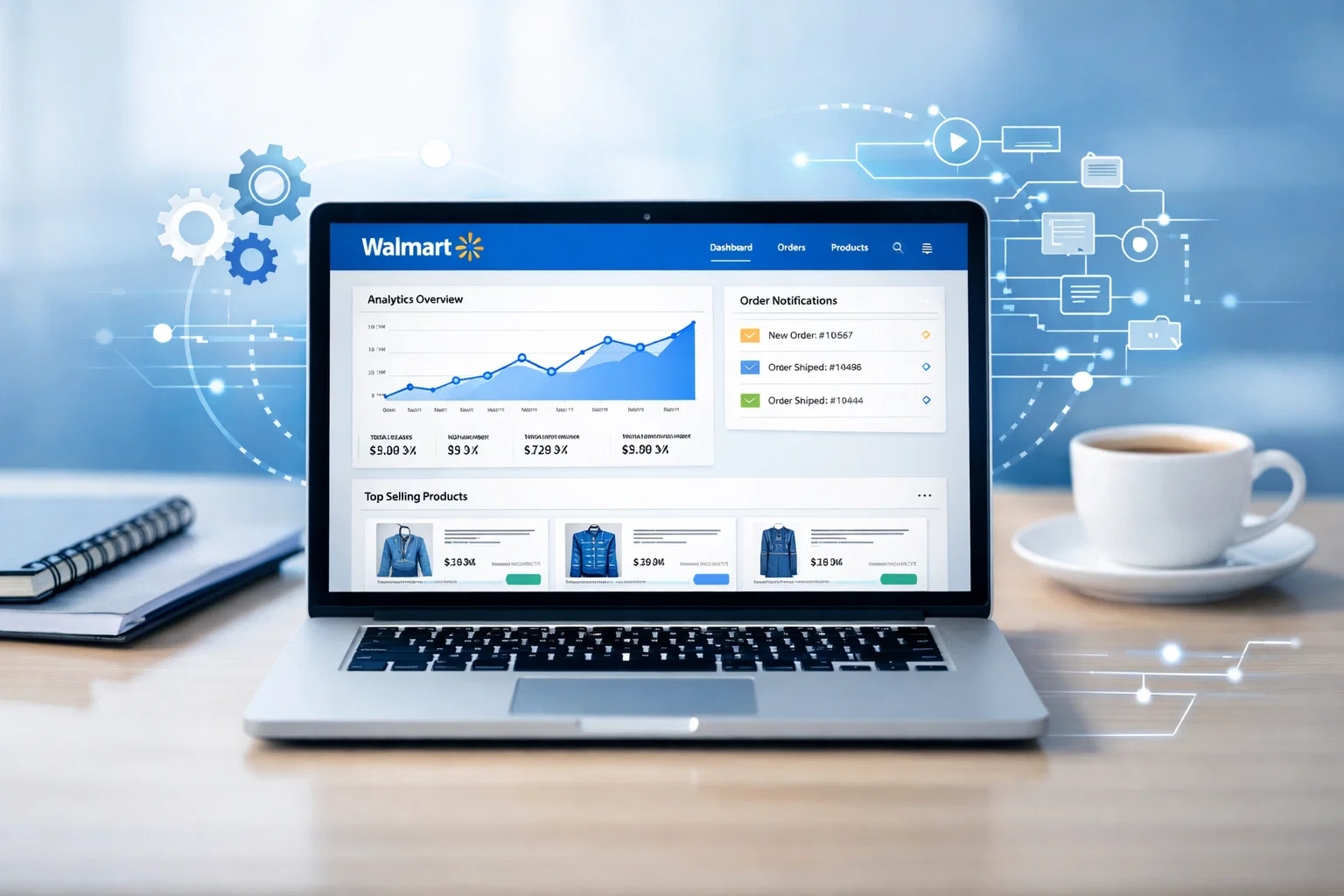
The world of eCommerce has changed more in the past five years than it did in the previous twenty. Marketplaces have matured. Customer expectations have grown. Competition has intensified. At the same time, automation has stepped out of the shadows and moved into the center of online retail strategy.
In this fast-moving environment, many entrepreneurs are asking a serious question: Is a Walmart done for you store the future of eCommerce?
The idea sounds simple. Instead of building, managing, and scaling a store alone, sellers rely on structured systems and operational support to handle day-to-day tasks. But is this model just another trend, or is it a long-term shift in how online businesses operate?
Let’s explore the opportunity, the mechanics, the risks, and the long-term potential of this approach in a practical and honest way.
The Evolution of Marketplace Selling
To understand where things are heading, we need to look at how we got here.
In the early days of online marketplaces, success required manual effort. Sellers handled product research, listing creation, order processing, customer service, inventory updates, and returns on their own. For a small store, this was manageable. For a growing one, it became overwhelming.
As marketplaces like Walmart expanded their third-party seller programs, competition increased. Margins tightened. Policies became stricter. Customers expected faster shipping and better service.
Sellers faced a new reality:
- More complexity
- More operational work
- More compliance requirements
At the same time, technology improved. Automation tools evolved. Structured service models appeared. This is where walmart automation services began gaining attention.
Instead of sellers doing everything manually, systems and teams started handling routine operations. The focus shifted from “doing everything” to “managing strategically.”
What Is a Walmart Done for You Store?
A walmart done for you store refers to a structured eCommerce setup where operational tasks are handled through organized processes rather than by the owner alone.
While models may vary, they typically include:
- Store setup and account configuration
- Product research and listing optimization
- Order processing systems
- Customer communication workflows
- Performance monitoring
- Compliance management
The owner still owns the store and remains responsible for high-level decisions. However, operational tasks are systemized.
This approach reflects a broader trend in eCommerce: delegation combined with automation.
Why Sellers Are Exploring Walmart Automation Services
Sellers are not looking for shortcuts. They are looking for sustainability.
Running a marketplace store manually often leads to burnout. Daily operational work can consume hours. Scaling becomes difficult when every new order increases workload.
Here are the main reasons many sellers are exploring walmart automation services:
1. Time Leverage
Time is the most limited resource in business. Automation systems handle repetitive tasks, freeing owners to focus on strategy, supplier relationships, and growth planning.
2. Operational Consistency
Manual processes often lead to mistakes. Automation reduces human error in pricing updates, order routing, and tracking uploads.
3. Faster Scaling
A structured system can handle more orders without requiring the owner to work more hours.
4. Compliance Awareness
Walmart’s marketplace has strict policies. Organized management reduces the risk of account health issues.
In short, automation shifts the focus from survival to scalability.
The Role of Walmart as a Marketplace
Walmart’s marketplace continues to expand. It offers:
- Strong brand trust
- A growing online customer base
- Competitive fee structures
- Expanding fulfillment infrastructure
Unlike some saturated platforms, Walmart still presents growth opportunities for sellers who approach it strategically.
However, Walmart also expects professionalism. Listings must meet quality standards. Performance metrics matter. Late shipments and customer complaints can affect account health quickly.
This professional environment encourages structured operations, which is one reason the walmart done for you store model has gained traction.
Is Automation a Trend or a Long-Term Shift?
Many business models rise quickly and disappear just as fast. So is this one different?
Automation itself is not new. Businesses across industries have automated repetitive tasks for decades. What is new is the accessibility of structured marketplace systems for individual entrepreneurs.
Three larger trends suggest this is not a temporary phase:
1. Marketplace Complexity Is Increasing
Policy changes, algorithm updates, and compliance requirements continue to grow. Sellers need systems to stay competitive.
2. Labor Costs Are Rising
Hiring full in-house teams is expensive. Structured automation reduces operational overhead.
3. Data-Driven Decision Making Is Standard
Modern eCommerce relies on analytics. Automation allows sellers to make informed decisions faster.
These factors indicate that structured management is becoming a requirement, not a luxury.
The Advantages of a Structured Store Model
Let’s break down the practical benefits.
Improved Focus on Strategy
When daily tasks are streamlined, owners can:
- Analyze profit margins
- Expand product categories
- Test new suppliers
- Monitor advertising performance
This strategic shift often separates long-term businesses from short-term sellers.
Reduced Emotional Stress
Manual order handling creates pressure. One missed tracking update can impact metrics. Automated workflows reduce anxiety and improve consistency.
Scalability Without Chaos
Growth often breaks poorly structured stores. A systemized approach can absorb higher order volume without collapsing.
The Risks and Realities
No model is perfect. It is important to examine potential risks honestly.
Marketplace Dependency
Relying solely on one marketplace always carries risk. Policy changes can impact operations.
Quality Control
Automation does not mean “hands off forever.” Owners must monitor performance and financials.
Profit Margin Awareness
Efficiency does not automatically guarantee high margins. Product selection and cost control remain critical.
The future belongs to informed sellers, not passive ones.
How the Model Aligns With Modern Entrepreneurship
Modern entrepreneurs value:
- Location independence
- Operational efficiency
- Scalable systems
- Data transparency
A walmart done for you store aligns with these priorities because it emphasizes structure over manual effort.
However, success still requires:
- Capital discipline
- Performance monitoring
- Strategic decision-making
Automation enhances execution, but it does not replace leadership.
Comparing DIY Selling vs Structured Automation
Let’s compare the two approaches.
| Factor | DIY Selling | Structured Automation |
|---|---|---|
| Time Requirement | High | Lower |
| Error Risk | Moderate to High | Reduced |
| Scalability | Limited by time | System-based growth |
| Stress Level | High during scale | More stable |
| Learning Curve | Steep | Guided |
The structured model does not eliminate effort. It shifts effort toward oversight and growth.
Will This Model Dominate the Future of eCommerce
The future of eCommerce will likely be defined by:
- Operational efficiency
- Strong compliance management
- Data-driven optimization
- Professional execution
In that environment, informal and unstructured stores will struggle.
Sellers who rely entirely on manual systems may find it difficult to compete with businesses using advanced workflows.
This suggests that walmart automation services represent a broader evolution rather than a short-term trend.
Who Benefits Most From This Approach?
Not every seller needs automation immediately.
This model benefits:
- Entrepreneurs with limited time
- Investors seeking structured operations
- Sellers focused on scaling
- Professionals who value efficiency
It may not suit hobby sellers who enjoy handling daily tasks personally.
Understanding your goals is essential before choosing any business structure.
The Importance of Oversight
Even in a structured system, oversight matters.
Store owners should:
- Review financial reports regularly
- Monitor profit margins
- Analyze customer feedback
- Track account health metrics
Automation supports operations, but accountability remains with the owner.
The most successful stores combine structured systems with active leadership.
The Broader Automation Movement
Walmart is not the only platform experiencing this shift.
Across Amazon, Shopify, and eBay, automation is becoming standard practice. Businesses that integrate technology into daily operations gain competitive advantages.
This movement reflects a simple reality: efficiency wins.
The walmart done for you store concept fits into this larger transformation.
Final Thoughts: Is This the Future?
So, is a walmart done for you store the future of eCommerce?
It may not be the only future, but it clearly represents a major direction the industry is heading.
As marketplaces become more complex, structured systems become essential. As competition increases, efficiency becomes critical. As sellers demand scalability, automation becomes attractive.
The future of eCommerce will likely favor businesses that combine:
- Clear strategy
- Strong operational systems
- Consistent compliance
- Data-driven growth
Walmart continues to expand its marketplace presence. Sellers who adopt structured management models position themselves for long-term sustainability.
Automation is not about avoiding work. It is about organizing work intelligently.
In that sense, structured marketplace systems are not just a trend. They are a reflection of how modern digital businesses evolve.
The real question is not whether automation will shape the future.
The real question is whether sellers are ready to adapt to it.
