

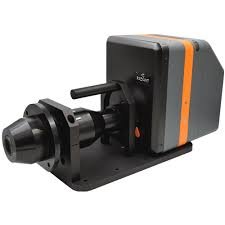
Display manufacturers and optical engineers often struggle with accurate viewing angle analysis. Standard lenses and cameras cannot precisely measure luminance, contrast shift, and color variation across wide angles.
This creates challenges in LCD, OLED, and microdisplay quality control. Inconsistent measurement methods can lead to unreliable data, product rejection, or customer complaints. For B2B manufacturers, precise optical testing is critical for maintaining industry standards.
The Solution: High-Accuracy Conoscope Lens Technology
A high-accuracy conoscope lens provides accurate angular light measurement for display evaluation.
Unlike regular imaging lenses, a conoscopic system captures angular distribution information from a single point. This allows engineers to measure brightness uniformity, contrast performance, and optical anisotropy efficiently.
For manufacturers, it improves quality control accuracy and testing speed.
What Is a Conoscope Lens?
A conoscope lens is a specialized optical component used to analyze angular light distribution.
Key Characteristics:
- Wide angular capture range
- High optical precision
- Minimal distortion
- Uniform light mapping
- Compatible with imaging sensors
It is widely used in display measurement systems to evaluate optical performance.
How It Works
The lens collects light emitted from a display panel and converts angular information into spatial distribution on an image sensor.
Working Principle:
- Light from a display enters the lens.
- The lens maps emission angles into a measurable image.
- A camera or detector records the angular distribution.
- Software analyzes brightness and color consistency.
This method enables precise viewing angle analysis without mechanical rotation.
Problems with Traditional Measurement Methods
Older testing methods require mechanical goniometers or rotating measurement systems.
Common Limitations:
- Time-consuming rotation process
- Alignment errors
- Limited angular resolution
- Larger equipment footprint
- Lower measurement efficiency
These systems slow down production testing and increase operational cost.
How Conoscope Lens Solves These Issues
The conoscope lens simplifies angular measurement by capturing wide-angle data in one setup.
It provides:
- Fast angular mapping
- Reduced mechanical movement
- High measurement repeatability
- Compact system integration
- Improved testing efficiency
This makes it ideal for automated production lines and R&D labs.
Key Features Engineers Evaluate
1. Angular Measurement Range
Wide field coverage ensures complete viewing angle analysis.
2. Optical Resolution
High clarity ensures accurate brightness and color data.
3. Distortion Control
Low distortion maintains data accuracy.
4. Compatibility
Works with imaging sensors and analysis software.
5. Calibration Stability
Ensures long-term measurement reliability.
These features directly influence display quality assessment accuracy.
Comparison: Conoscope Lens vs Goniometer System
| Feature | Conoscope Lens | Traditional Goniometer |
|---|---|---|
| Measurement Speed | Fast | Slow |
| Mechanical Movement | Minimal | Required |
| System Size | Compact | Large |
| Automation Support | High | Limited |
| Testing Efficiency | High | Moderate |
For high-volume production, conoscopic systems provide better efficiency and repeatability.
Real Applications in Industry
LCD and OLED Manufacturing
Used for viewing angle and luminance uniformity testing.
Microdisplay Development
Supports AR/VR display evaluation.
Automotive Display Testing
Ensures dashboard visibility under wide angles.
Research Laboratories
Used in optical material analysis and polarization studies.
Quality Control Systems
Integrated into automated display inspection platforms.
These applications demand accuracy, stability, and efficiency.
Why Manufacturers Prefer Conoscope Lens Systems
Manufacturers select conoscopic optical systems because they:
- Improve testing speed
- Reduce mechanical complexity
- Provide accurate angular data
- Support automated production lines
- Enhance final product quality
For B2B buyers and engineers, reliable measurement tools are essential for meeting global display standards.
How to Choose the Right Conoscope Lens
When selecting a lens for angular measurement, consider:
Angular Coverage
Ensure it meets the required viewing angle range.
Sensor Compatibility
Match with camera resolution and system interface.
Optical Quality
Check distortion, surface precision, and coating performance.
Integration Design
Compact modules are ideal for automated systems.
Calibration Support
Reliable calibration ensures consistent measurement results.
Working with experienced optical manufacturers ensures precise design and long-term performance stability.
Conclusion
High-accuracy conoscope lens technology plays a critical role in modern display testing and optical measurement. It addresses key industry challenges such as slow measurement speed, alignment errors, and inconsistent angular analysis.
By enabling fast, precise, and compact angular measurement, it improves production efficiency and product quality. For manufacturers and engineers, investing in advanced conoscopic systems ensures reliable testing results and stronger competitiveness in the global display industry.
