

Machines are funny. You look at them, and you see all the big shiny stuff: motors, panels, and pipes. But the stuff that actually makes them tick? Those are the tiny pieces. CNC precision turned parts. They’re small. Sometimes barely noticeable. But without them, the whole thing’s useless. No alignment, no smooth rotation, no torque where it matters. I don’t care if it’s a $50,000 medical device or some backyard robot—these little guys hold it together.
They’re made to fit. Perfectly. Threads, grooves, bores, all exact. You can’t eyeball this stuff. A millimeter off and the whole assembly laughs at you. And that’s why engineers love CNC turning. It doesn’t fudge. It repeats the same cut a thousand times if you want it. And every piece that comes out? Fits where it’s supposed to. It’s kind of satisfying, actually.
Design Comes First, Always
Before the machines even hum, there’s a lot of thinking. Engineers use CAD models to figure out how every tiny part will sit in the assembly. Shafts, bearings, collars, they all need to line up. And they simulate it, like, digitally first. That’s smart because once metal’s cut, changing it is expensive and messy.
I’ll tell you, this is where a lot of people underestimate the process. It’s not just a metal rod with threads. Every contour has a reason. Sometimes the angle of a groove or the depth of a bore is critical. And yeah, some of these tolerances are crazy small. Microns small. You hold that part in your hand, and it looks simple, but it’s basically a micro-engineering miracle.
Material Matters More Than You Think
Steel, aluminum, brass, plastics, doesn’t matter. Each behaves differently. Stainless steel is tough, but tough to machine. Aluminum’s easier, lighter, but softer. And when these parts go into assemblies with mixed materials? You’ve got to think about expansion, contraction, and wear. A CNC precision turned part isn’t just cut to size; it’s cut to survive. That’s often overlooked.
The Machining Dance
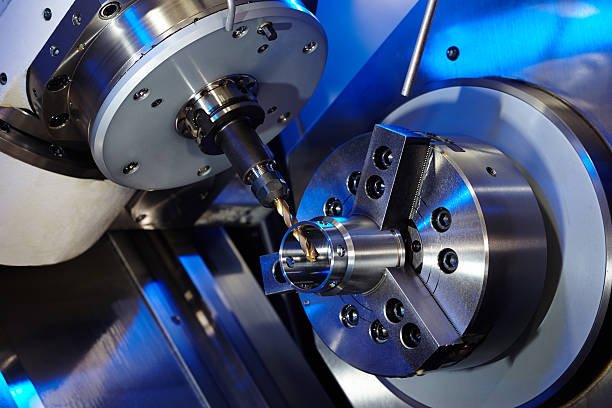
CNC turning is a bit like choreography. The part spins, the cutting tool moves. Groove here, taper there, threads in the right spot. Multiple passes, sometimes secondary work, deburring, heat treatment, polishing. Tiny details. Tiny mistakes, and the assembly hates you. Bearings won’t fit. Shafts wobble. Threads strip. It’s unforgiving. And that’s why quality control is intense. Inspectors mic, gauge, sometimes laser-scan. No shortcut here.
How They Actually Fit In
When these parts arrive on the assembly floor, they slot into place like puzzle pieces. Shafts meet bearings, collars hug grooves, threads click in. Some assemblies are simple; a gearbox, for instance, might have just a few turned parts. But others—industrial machines, aerospace devices, hundreds. Every piece relies on the next. Sometimes they even need little adjustments: a shim here, a slight ream there. But because the parts start so precisely, tweaks are minimal.
And let’s be honest: even with perfect CNC parts, assembly isn’t always smooth. Tolerances add up, thermal expansion kicks in, and sometimes things just don’t want to line up. But that’s why these turned parts are such a game-changer. Without them, you’d be sweating bullets on the floor, fiddling with scrap metal just to make things rotate.
Swiss CNC Machine Contract Manufacturers Make It Easier
Most companies don’t make these in-house anymore. They hand it off to Swiss CNC machine contract manufacturers. Why? Because those shops do nothing but tiny, perfect, repeatable parts. They’ve got machines that chew through complex geometries and leave zero room for error. Using them saves headaches, time, and money. And honestly, if you want your assembly to run smoothly, outsourcing is often smarter than trying to do it yourself.
Where You’ll Find Them
These parts are everywhere, hiding in plain sight. Car engines, pumps, medical devices, and industrial robots. Aerospace turbines, firearms, precision tools—pick an industry, you’ll see them. And people often don’t notice, because they’re small. But skip them, and the machine’s toast. Performance, longevity, and reliability—all depend on them.
Why It Matters
It’s easy to focus on flashy tech, big motors, LEDs, and software. But real engineers know it’s the turned parts that make the assembly work. They carry the load, reduce wear, and keep things aligned. Every time you hear a machine run smoothly, silently, efficiently—that’s the CNC precision turned parts doing their job. They’re unsung heroes, really.
Conclusion
So yeah. Tiny pieces. Big responsibility. CNC precision turned parts aren’t glamorous, but they’re essential. From careful design to material choice, precise machining, quality checks, and actual assembly, everything is unforgiving. One off-spec part can ruin the whole system. That’s why experts lean on Swiss CNC machine contract manufacturers—consistent, precise, and ready to slot right in. Next time you see a machine running like it should, remember: those little turned parts are quietly holding it all together. No fuss. No fanfare. Just doing their job.
