

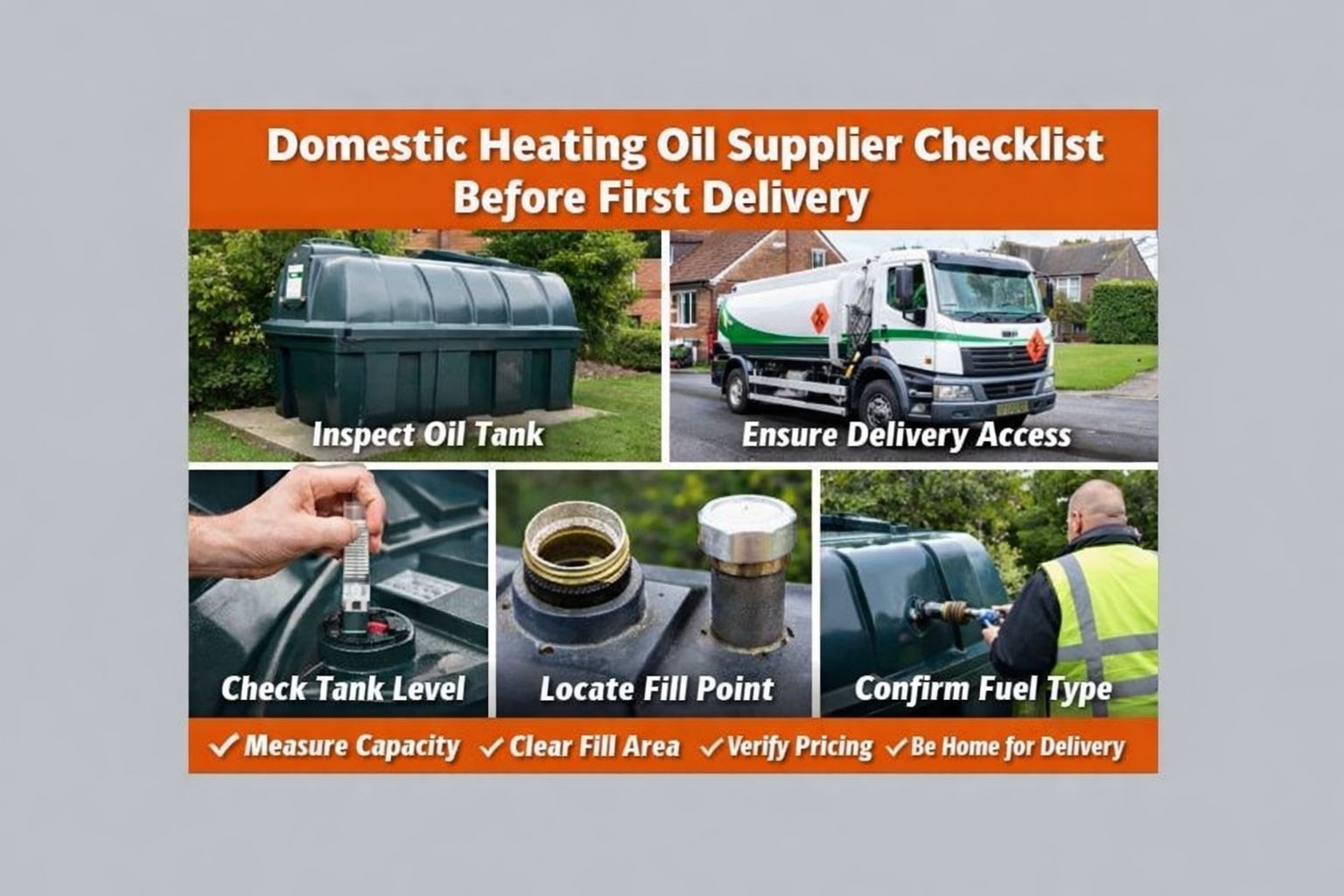
Ordering heating oil for the first time can feel a little daunting — especially if you’ve recently moved into a rural or semi-rural UK property or switched from mains gas. Unlike gas or electricity, heating oil deliveries aren’t automatic. You’re in control of the supplier, the timing, and the condition of your tank.
After two decades in content writing for home services and energy sectors, one thing is clear: most delivery issues happen not because of bad suppliers, but because key checks were skipped beforehand.
This practical checklist walks you through everything you should confirm before your first domestic heating oil delivery, helping you avoid delays, spills, surprise charges, or cold nights.
Why Your First Heating Oil Delivery Matters
Your first delivery sets the tone for every order after it. Get it right, and future top-ups are simple. Get it wrong, and you could face:
- Failed deliveries due to poor access
- Contaminated fuel from an unprepared tank
- Unexpected safety concerns
- Higher costs from emergency orders
A little preparation goes a long way.
Domestic Heating Oil Supplier Checklist (Before Delivery Day)
1. Confirm Exactly What Fuel You Need
Most UK homes use kerosene (28-second oil), but some older systems or commercial-style boilers use gas oil.
Before ordering:
- Check your boiler documentation
- Look at any labels on your tank
- Ask the previous homeowner if unsure
Ordering the wrong fuel can damage your system and invalidate warranties.
2. Measure Your Tank Capacity and Current Level
Never guess.
Know:
- Your tank’s total capacity (litres)
- Your current oil level
Most tanks have a simple float gauge. If yours doesn’t, use a dipstick. Always leave space for expansion — suppliers typically won’t fill beyond 90–95%.
3. Inspect Your Oil Tank (This Step Is Critical)
Before any supplier arrives, visually inspect your tank:
- No cracks, bulging, or leaks
- Stable base (not sinking or tilted)
- Secure lid and intact fill point
- Vent pipe clear and upright
- No obvious corrosion (for steel tanks)
If anything looks questionable, resolve it first. Many suppliers will refuse delivery if the tank appears unsafe.
Most reputable companies follow guidance aligned with bodies like OFTEC, meaning safety comes before convenience.
4. Ensure Clear Access for the Delivery Vehicle
Heating oil tankers are large and heavy.
Make sure:
- Gates are unlocked
- Driveways are free of parked cars
- No low branches or tight turns block access
- Your fill point is within hose reach (usually up to 30–40 metres)
If access is difficult, tell your supplier in advance. Some locations may require smaller vehicles or special arrangements.
5. Locate and Clearly Mark Your Fill Point
Your fill point should be:
- Easy to identify
- Free from obstructions
- Not hidden behind bins, shrubs, or furniture
If you’ve just moved in, walk the driver through it when they arrive. This avoids mistakes and saves time.
6. Check for Water or Sludge in the Tank
Older or unused tanks often collect condensation, which sinks to the bottom and can cause:
- Blocked filters
- Boiler lockouts
- Corrosion inside the tank
If the property has been empty or you suspect contamination, consider having the tank checked or cleaned before filling.
7. Understand Minimum Orders and Delivery Windows
Every supplier operates differently.
Ask upfront:
- Minimum order quantity
- Standard delivery timeframe
- Emergency delivery availability
- Weekend or timed delivery charges
Planning ahead avoids expensive last-minute orders during cold snaps.
8. Clarify Pricing Structure
Heating oil prices fluctuate daily.
Before confirming:
- Ask if the price is fixed at order or delivery
- Check VAT (domestic heating oil is reduced-rate)
- Ask about payment terms (card, bank transfer, or account)
Transparency here prevents awkward surprises.
9. Be Present for Your First Delivery (If Possible)
While not always required, being home helps you:
- Confirm the correct tank is filled
- Ask questions
- Learn how the process works
- Note how long your tank typically lasts
It’s a valuable learning experience, especially for first-time oil users.
10. Start a Simple Usage Record
After your first fill, jot down:
- Delivery date
- Litres delivered
- Tank level
- Weather conditions
Over time, this gives you a realistic picture of consumption, helping you reorder before running low.
Extra Tip: Don’t Wait Until You’re Nearly Empty
Unlike mains utilities, heating oil requires delivery scheduling. During winter, lead times can stretch.
Aim to reorder when your tank reaches ¼ full. This gives breathing room if demand spikes.
Frequently Asked Questions (UK Homeowners)
How often will I need heating oil?
It depends on home size, insulation, boiler efficiency, and weather. Most households order every 2–4 months during colder seasons and less frequently in summer.
Can I change suppliers each time I order?
Yes. You’re not tied to one company. Many UK homeowners shop around for the best price on every delivery.
What happens if my tank is unsafe?
If the driver believes your tank poses a risk, they can legally refuse delivery. This protects both your property and the environment.
Is heating oil safe to store at home?
Yes, when stored in a compliant tank on a stable base with proper ventilation. Regular visual checks are usually enough for domestic systems.
How long does a delivery take?
Most residential deliveries take 20–40 minutes once the tanker is positioned.
Can heating oil go off if left too long?
Over long periods, oil can degrade or attract condensation. If a tank hasn’t been used for years, it’s wise to have it inspected before refilling.
Final Thoughts
Your first heating oil delivery doesn’t have to be complicated — but it does require preparation.
By checking your tank, confirming access, understanding your fuel type, and choosing a reliable supplier, you set yourself up for smooth deliveries and reliable winter warmth.
Think of this checklist as your foundation. Once everything is in place, heating oil becomes just another routine household task — simple, predictable, and stress-free.
