

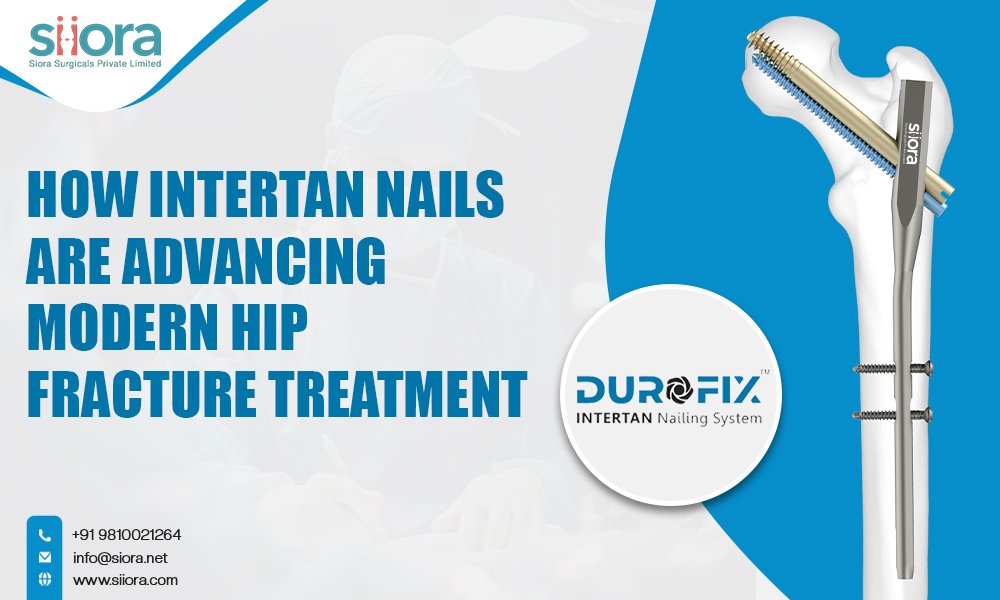
Hip fractures remain one of the most serious injuries treated by orthopedic surgeons, especially in elderly patients. These fractures often affect mobility, independence, and overall quality of life. Over the years, surgical techniques and implant designs have improved to support faster recovery and better stability. One implant that has made a noticeable difference in recent practice is the Intertan nail. Its design focuses on stability, controlled compression, and reliable fixation, which are critical factors in hip fracture management.
The Challenge of Treating Hip Fractures
Intertrochanteric and subtrochanteric fractures are mechanically demanding. Poor bone quality, unstable fracture patterns, and high functional demands after surgery all increase the risk of complications. Traditional fixation methods sometimes struggle with issues such as implant failure, excessive collapse, or rotational instability.
Surgeons are not just fixing a fracture; they are trying to get patients back on their feet as safely and quickly as possible. This is where implant design plays a major role.
What Makes Intertan Nails Different?
The Intertan nail was developed to address common problems seen with conventional intramedullary hip nails. One of its key features is the integrated dual screw system. Instead of a single lag screw, the Intertan nail uses two interlocking screws that work together.
This design provides better rotational control of the femoral head. Once the screws are locked together, they act as a single unit, reducing the chances of rotation or cut-out. This is particularly useful in unstable fracture patterns where maintaining alignment can be difficult.
Controlled Compression and Stability
Another important advantage of Intertan nails is controlled linear compression at the fracture site. Compression helps improve bone contact and stability, which supports healing. Unlike uncontrolled collapse seen in some implants, the Intertan system allows compression without excessive shortening.
This controlled behavior helps maintain limb length and reduces postoperative complications related to collapse or varus deformity.
Benefits in Osteoporotic Bone
Osteoporosis is a major concern in hip fracture patients. Weak bone makes fixation challenging and increases the risk of implant failure. Intertan nails are designed to distribute forces more evenly through the femoral head and neck.
The dual screw mechanism increases surface contact and improves purchase in poor-quality bone. This added stability gives surgeons more confidence, especially when treating elderly patients with fragile bones.
Surgical Handling and Technique
From a surgical perspective, Intertan nails are designed to simplify the procedure without compromising fixation. The nail follows the natural anatomy of the femur, allowing easier insertion and better alignment.
Accurate placement of the integrated screws is crucial, but once positioned correctly, the system provides strong fixation. Many surgeons find that the learning curve is reasonable, and the results are consistent when proper technique is followed.
Impact on Patient Recovery
Stable fixation allows early mobilization, which is a key goal in hip fracture treatment. Patients who can start weight-bearing early often experience fewer complications such as bed sores, pulmonary issues, or muscle loss.
By reducing rotational instability and mechanical failure, Intertan nails support smoother rehabilitation and more predictable recovery, particularly in high-risk patients.
Long-Term Outcomes
Clinical experience and studies have shown lower rates of complications such as screw cut-out and excessive collapse with Intertan nails compared to some traditional designs. While no trauma implant can eliminate all risks, the design of Intertan nails aligns well with modern principles of fracture fixation.
Conclusion
Intertan nails represent a thoughtful advancement in hip fracture treatment. By improving rotational stability, allowing controlled compression, and performing well in osteoporotic bone, they address many of the challenges surgeons face in daily practice. For modern orthopedic care focused on stability, healing, and early mobilization, Intertan nails continue to play an important role in improving outcomes for hip fracture patients.
