

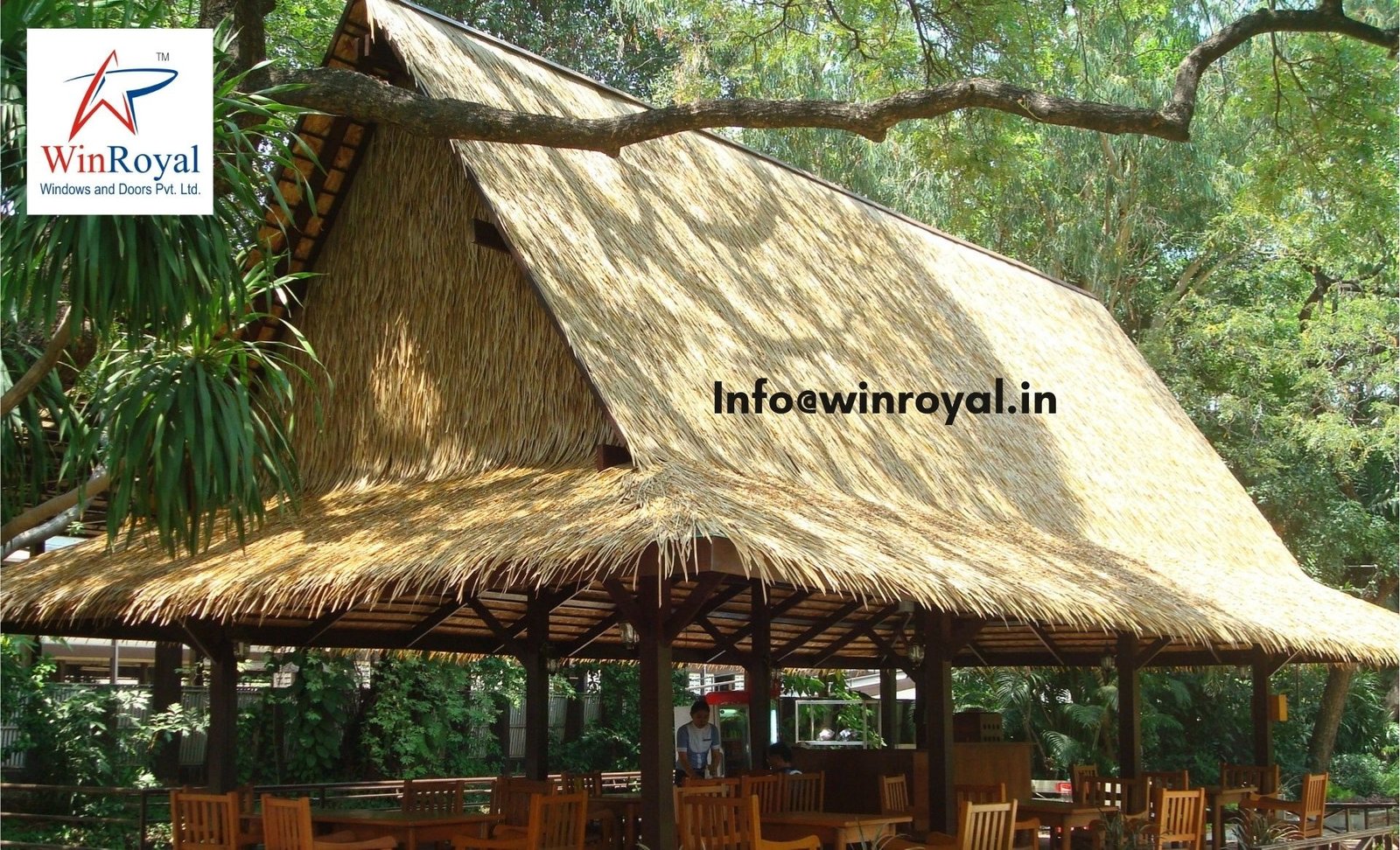
Synthetic thatch roofs are increasingly used in resorts, gazebos, pergolas, and homes due to their appeal and long-lasting qualities. Unlike real thatch roofs, which are prone to fire and weather damage, synthetic thatch roofs provide long-lasting and secure roofs. Some of the most important factors to consider when selecting a synthetic thatch roof are fire resistance and UV resistance.
Fire Safety in Synthetic Thatch Roofs
Fire risk is one of the safety concerns associated with traditional thatch roofing because it is very flammable. Therefore, in places like residential homes, restaurants or areas that offer recreational activities, there is great potential to cause fires. Modern fake/ simulated thatched roofs, however, to differ from natural thatch, utilise various fireproof materials.
These fireproof materials, when ignited, will still allow for combustibles to ignite; however, they will slow the ignition time down enough to provide you with sufficient time to evacuate in case of an accidental fire.
Fire-retardant artificial thatch roofs also offer many different construction code compliance options, making them well-suited for both residential and commercial properties. While they won’t be completely flame resistant, they are far less flammable than natural products – making them much safer for you. If maintained and adequately inspected regularly, synthetic thatch roofing can remain the safest option for you, especially in instances of electrical fires or kitchen-related fires.
UV Protection for Longevity
Sunlight exposure can also cause materials to deteriorate over time, which may result in colours fading, brittleness, or reduced product life expectancy. Synthetic materials used in the construction of a synthetic thatch roof are made from materials resistant to sunlight exposure or UV rays. This prevents the colours from fading and the material from deteriorating over time.
UV resistance also plays a critical role, especially in areas like pergolas, tiki huts, or even gazebos that are located near pools. Inferior materials may not be able to withstand the effects of direct sunlight. By investing in an artificial thatch roof, you are able to cut down on the overall maintenance costs.
Combining Safety and Durability
The fire-retardant properties and resistance to UV light make it a viable option for property owners who wish to have a sense of traditional thatch, either from a tropical or rustic perspective. There is no compromise in standards, and synthetic thatch provides a more lightweight and less stressful option that also lends itself well to creative architectural opportunities.
Tips to Maximise Protection
- Installation should be done according to the manufacturer’s instructions in order not to compromise fire and UV protection.
- Avoid placing synthetic thatch roofs too close to open flames or intense heat sources.
- Regular cleaning of the roof helps to eliminate the debris accumulated, which, if not checked, is prone to catching fire.
When picking synthetic thatch products, choose items that have certified fire-retardant ratings and UV stabilisation.
Conclusion
Fire safety and UV protection are important considerations in choosing such a roofing material that can marry style with durability. A synthetic thatch roof represents an appealing, safe, and tough solution for outdoor and indoor applications, offering the classic feel of thatch without any of the drawbacks of natural materials.
