
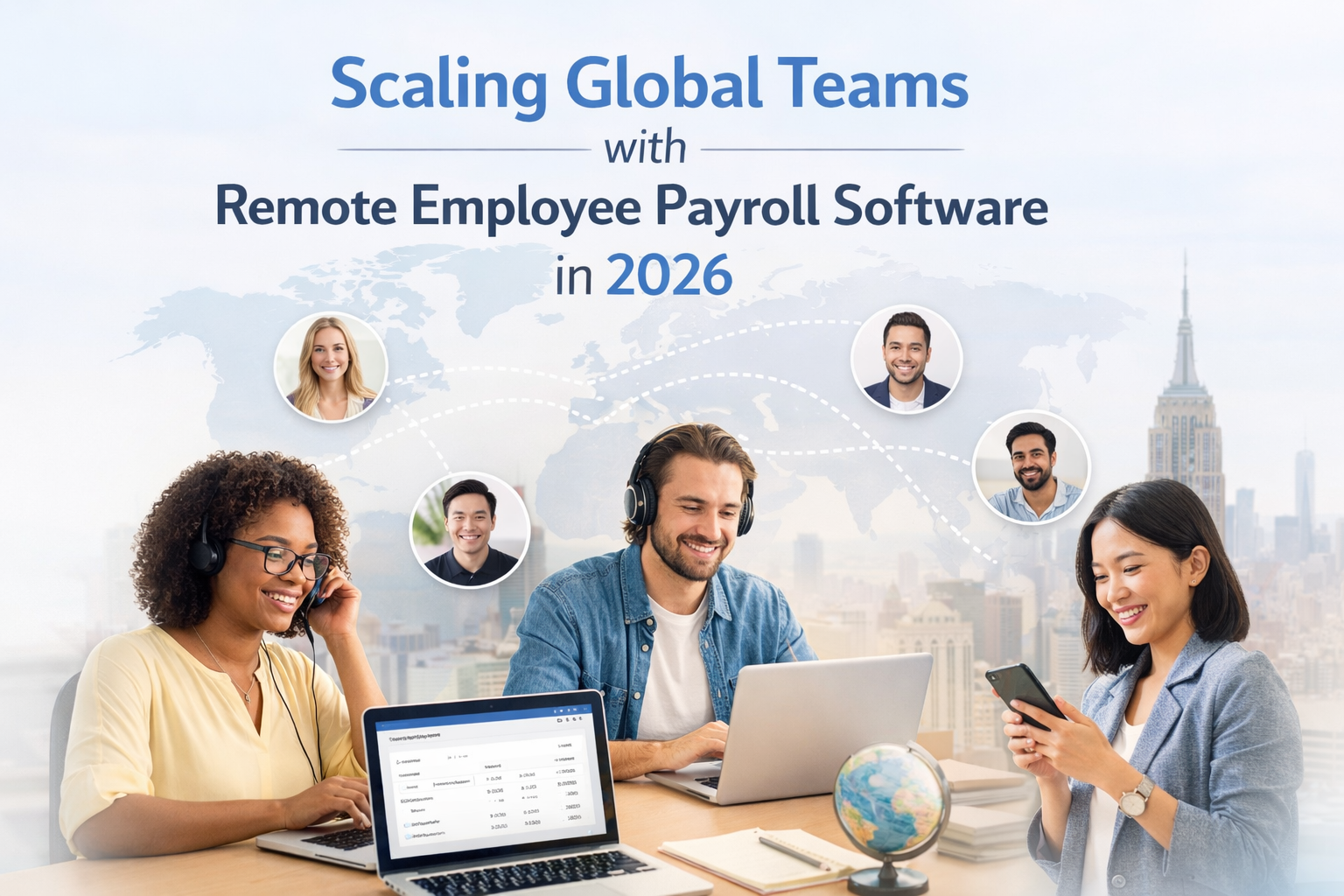
Global hiring has shifted from being a competitive advantage to a standard growth strategy. Startups expand into new regions within months, mid-sized companies build distributed engineering teams and enterprises restructure around remote-first operations. Amid this expansion, payroll has become one of the most complex operational layers to manage.
Remote employee payroll software development has emerged as a strategic solution for companies aiming to scale without compliance risks, delayed payments or fragmented systems. In 2026, payroll is no longer just about salary disbursement. It connects tax compliance, currency management, workforce analytics, employee experience and security within a unified framework.
The Evolution of Global Workforce Management in 2026
The workforce landscape in 2026 is shaped by flexibility and decentralization. Companies are hiring across multiple time zones and jurisdictions, often without establishing physical offices in each location. This approach reduces overhead but introduces regulatory and financial challenges.
International labor laws, tax structures, statutory benefits and reporting standards differ significantly between countries. Managing these variations manually or through disconnected systems increases operational risk. A single compliance oversight can result in financial penalties or legal complications.
Remote employee payroll software development addresses these issues by embedding country-specific compliance rules into automated payroll engines. Instead of adapting processes manually for each region, organizations operate through configurable payroll architectures designed for multi-country deployment.
Scalable payroll systems now integrate with HRMS platforms, accounting software and time-tracking tools. This integration ensures seamless data flow from onboarding to payment processing. Leadership teams gain visibility into payroll liabilities, workforce costs and tax exposure in real time.
Global scaling requires systems built for expansion. Businesses planning to hire across continents need payroll software capable of adapting to regulatory changes, currency fluctuations and workforce growth without structural overhauls.
Why Custom Remote Employee Payroll Software Development Matters
Off-the-shelf payroll tools may support domestic operations, but scaling internationally demands flexibility beyond standard configurations. Custom remote employee payroll software development allows organizations to build platforms tailored to their operational model.
A well-designed payroll system supports:
- Multi-currency salary processing
- Automated tax calculations based on local regulations
- Country-specific benefits management
- Secure digital payslip distribution
- Audit-ready compliance reporting
Custom development ensures the software aligns with business workflows rather than forcing teams to adapt to rigid frameworks. For companies offering payroll services to clients, white-label payroll software provides an additional advantage. It allows businesses to rebrand and resell payroll platforms under their own identity while maintaining backend efficiency.
This approach is particularly valuable for HR service providers, recruitment agencies and PEO firms that manage distributed client workforces. Instead of juggling multiple vendor systems, they operate from a unified payroll infrastructure designed around their service model.
Compliance and Risk Mitigation in Cross-Border Payroll
Payroll errors are not minor administrative mistakes. They affect employee trust, financial accuracy and legal standing. Cross-border payroll increases exposure to risks such as misclassified contractors, incorrect tax deductions or late statutory filings.
Modern remote employee payroll software development focuses heavily on compliance automation. Built-in regulatory databases track local tax updates and labor law amendments. Automated alerts notify administrators about reporting deadlines and filing requirements.
Core Compliance Capabilities
Automated Tax Calculations
Systems dynamically calculate income tax, social security and statutory deductions based on jurisdiction.
Real-Time Reporting
Comprehensive dashboards allow finance and HR teams to generate compliance reports instantly.
Audit Trails
Every payroll transaction is logged, creating transparent records for internal and external audits.
Blockchain payroll management system architecture is gaining traction for organizations prioritizing transparency and security. Blockchain technology creates immutable payroll records, reducing fraud risk and ensuring data integrity. While not mandatory for all businesses, it offers a high-trust framework for enterprises operating in highly regulated industries.
Enhancing Employee Experience Through Payroll Innovation
Payroll accuracy directly influences employee satisfaction. Late payments or unclear deductions damage morale, especially in remote environments where physical interaction is minimal.
Remote employee payroll software development increasingly includes employee-centric features such as self-service portals and real-time salary tracking. Workers can access payslips, tax summaries and reimbursement statuses without HR intervention.
Companies seeking deeper workforce engagement sometimes integrate payroll platforms with a white-label employee engagement app. This creates a unified ecosystem where payroll insights, performance metrics and internal communications coexist. Employees experience greater transparency and clarity around compensation structures.
Clear compensation reporting also supports diversity and inclusion initiatives. With structured payroll analytics, organizations can identify pay gaps, monitor bonus distributions and align compensation strategies with organizational values.
Scalability and Automation for High-Growth Companies
Rapid growth strains traditional payroll systems. Hiring 50 employees across five countries within a quarter demands infrastructure that adapts instantly.
Remote employee payroll software development incorporates a modular architecture. Companies can activate new country modules without rebuilding the entire system. Automation handles repetitive processes, allowing HR teams to focus on strategic initiatives rather than manual calculations.
Key Automation Features
Bulk Processing
Run payroll for thousands of employees simultaneously across regions.
Smart Validation
Detect discrepancies before salary disbursement.
Integrated Payment Gateways
Execute cross-border transfers securely with minimal transaction friction.
Automation reduces operational overhead and minimizes human error. For startups and scaling enterprises, this efficiency translates into cost savings and improved resource allocation.
Data Security and Privacy in Remote Payroll Systems
Handling payroll data involves sensitive information: bank details, identification numbers, tax records and compensation history. Data breaches can severely damage brand credibility and invite regulatory penalties.
Secure remote employee payroll software development emphasizes encryption, multi-factor authentication and compliance with global data protection regulations such as GDPR. Cloud-based infrastructure ensures secure storage while enabling accessibility for distributed HR teams.
Advanced security protocols include:
- Role-based access control
- Encrypted data transmission
- Continuous monitoring for unauthorized access
- Regular security audits
Security is not optional. As payroll systems become centralized digital hubs, they must withstand increasingly sophisticated cyber threats.
Integration with Financial and HR Ecosystems
Payroll does not operate in isolation. It connects directly to accounting, budgeting, recruitment and workforce planning.
Modern remote employee payroll software development integrates with:
- Enterprise Resource Planning (ERP) systems
- HR management platforms
- Time and attendance tracking tools
- Expense management software
Integration eliminates redundant data entry and ensures consistency across departments. Financial teams gain accurate forecasting data, while HR teams track compensation trends effectively.
Organizations that offer payroll services externally benefit from API-driven systems that connect seamlessly with client platforms. This flexibility enhances service delivery and operational transparency.
Cost Considerations and ROI of Payroll Software Development
Businesses often evaluate payroll solutions based solely on upfront cost. However, the real metric is long-term operational efficiency and risk mitigation.
Custom remote employee payroll software development may require a higher initial investment compared to generic platforms. Yet the return includes:
- Reduced compliance penalties
- Lower administrative workload
- Faster payroll cycles
- Enhanced scalability
- Improved employee retention
When scaling globally, payroll mistakes can cost significantly more than development expenses. A robust payroll framework becomes an investment in sustainable growth.
Conclusion
Scaling global teams in 2026 demands more than recruitment strategies and collaboration tools. Payroll infrastructure plays a decisive role in sustaining growth, ensuring compliance and maintaining employee trust.
Remote employee payroll software development empowers organizations to manage cross-border complexities with automation, accuracy and security. Whether through modular expansion, compliance-driven architecture or advanced technologies like blockchain, modern payroll systems form the backbone of global workforce operations.
Businesses aiming to expand internationally should treat payroll not as an administrative function but as a strategic pillar of global success. Investing in scalable, secure and customizable payroll solutions prepares organizations for sustainable growth in an increasingly distributed world.
FAQs
What is remote employee payroll software development?
Remote employee payroll software development refers to designing and building payroll systems specifically for managing distributed and international workforces. It includes automation, compliance management and secure salary processing across multiple jurisdictions.
Why is custom payroll software better for global scaling?
Custom solutions adapt to specific business models, integrate with internal systems and support multi-country compliance without forcing operational compromises.
How does payroll software ensure compliance?
Modern payroll systems embed local tax rules, automate statutory deductions, generate compliance reports and maintain audit trails to minimize legal risks.
Is blockchain necessary for payroll management?
A blockchain payroll management system enhances transparency and security, but it is most beneficial for enterprises requiring advanced audit capabilities and data immutability.
Can payroll software improve employee engagement?
Yes. When integrated with tools like a white-label employee engagement app, payroll platforms provide transparency, easy access to payslips and clear compensation insights, which strengthen trust and satisfaction.
