

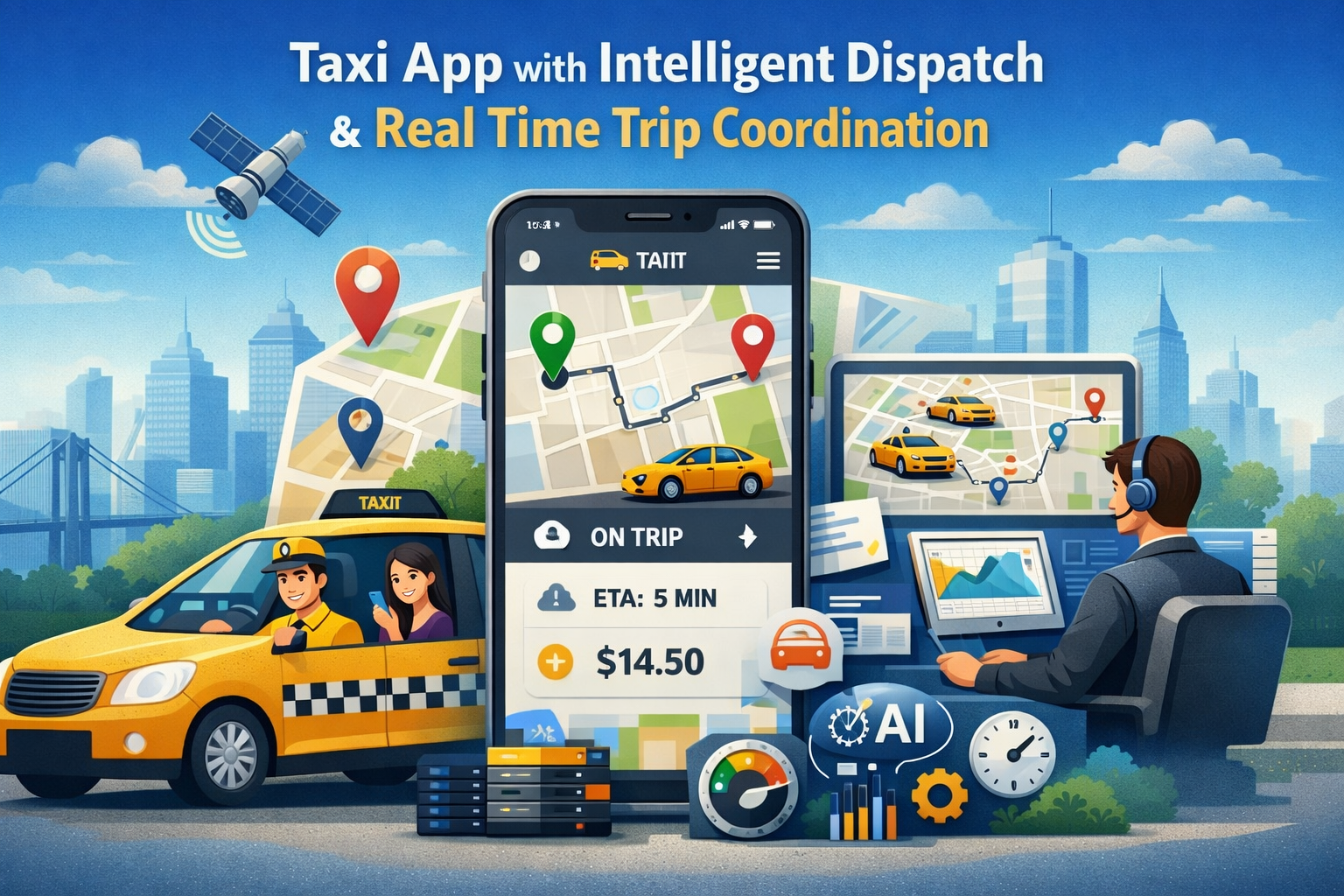
Taxi applications have evolved beyond simple ride booking interfaces into complex mobility management systems powered by automation and predictive analytics. A white label Taxi App can now integrate intelligent dispatch algorithms, real time trip coordination, and fleet monitoring capabilities to improve transportation efficiency. These platforms enable operators to manage drivers, routes, and customer demand simultaneously while maintaining service reliability. As urban mobility continues to digitize, intelligent taxi platforms are becoming essential infrastructure for modern transportation networks and logistics ecosystems.
Understanding Intelligent Dispatch in Taxi Applications Systems
Intelligent dispatch refers to the automated allocation of drivers to passengers using algorithmic decision making. Instead of manual assignment or basic proximity matching, advanced dispatch systems evaluate multiple variables such as driver availability, predicted demand zones, traffic conditions, and service priority levels.
In modern taxi app development, dispatch engines rely on rule based systems combined with machine learning models to improve ride allocation accuracy over time. These systems minimize idle driver time and reduce passenger wait periods.
Key parameters used in dispatch optimization include:
- Driver location and route direction
- Estimated pickup time
- Traffic congestion patterns
- Service category availability
- Passenger demand density
- Historical ride acceptance behavior
An intelligent dispatch engine must also balance fairness across drivers. Over allocation to certain drivers can create operational inefficiencies and dissatisfaction within the driver network.
When implemented correctly, dispatch automation reduces operational complexity while improving fleet utilization rates and ride completion efficiency.
A white label Taxi App typically includes configurable dispatch logic so transportation companies can adjust allocation rules according to regional requirements or regulatory conditions.
Real Time Trip Coordination and Fleet Optimization Methods Overview
Real time coordination ensures that every stage of a ride lifecycle is synchronized between passenger, driver, and platform infrastructure. This includes booking confirmation, driver navigation, trip tracking, fare calculation, and payment processing.
Fleet optimization involves continuous monitoring of active vehicles and adjusting supply distribution based on predicted demand patterns. Real time trip coordination relies heavily on event driven system architecture and low latency communication protocols.
Important coordination mechanisms include:
- GPS based vehicle tracking updates
- Route recalculation using traffic intelligence
- Dynamic driver reassignment when cancellations occur
- Real time fare estimation adjustments
- Emergency response monitoring
Trip orchestration systems must process large volumes of concurrent events while maintaining system stability. Message queues and streaming pipelines are commonly used to ensure reliable communication between services.
A white label Taxi App often integrates trip orchestration dashboards that allow fleet managers to monitor rides in progress and respond quickly to operational disruptions.
Core Architecture Components of Modern Taxi Platforms Design
Taxi platforms typically follow a distributed system architecture composed of multiple interconnected services. Each component handles a specific responsibility within the mobility ecosystem.
Common architectural layers include:
- Passenger mobile application
- Driver mobile application
- Dispatch and matching engine
- Payment processing module
- Notification service
- Location tracking service
- Administrative dashboard
- Data analytics pipeline
The backend infrastructure must be designed to support high concurrency levels. During peak hours, thousands of ride requests may be processed simultaneously.
Microservices architecture is widely adopted because it allows independent scaling of dispatch, payments, and tracking modules. Containerized deployment environments further improve system resilience.
A white label Taxi App architecture is typically modular, allowing transportation operators to integrate custom features without rebuilding the entire system.
This modularity also enables integration with external services such as digital wallets, navigation providers, and identity verification systems.
Role of Artificial Intelligence in Driver Allocation Logic Systems
Artificial intelligence enhances dispatch performance by predicting demand and driver behavior patterns. Predictive allocation models analyze historical ride data to determine optimal driver placement across service zones.
Machine learning models used in driver allocation include:
- Demand forecasting models
- Driver acceptance probability models
- Surge pricing prediction models
- Travel time estimation models
These models continuously learn from operational data, improving allocation accuracy over time. AI driven dispatch reduces empty mileage and increases ride completion rates.
Another important application of artificial intelligence is anomaly detection. Platforms can identify unusual ride patterns, fraudulent activity, or system misuse using behavioral analytics.
While AI improves efficiency, algorithm transparency remains important. Transportation operators must ensure fairness in driver assignment logic and maintain regulatory compliance.
Scalability Considerations for On Demand Mobility Apps Infrastructure
Scalability is a fundamental requirement for mobility platforms that operate across multiple cities or regions. Systems must handle fluctuating demand levels without performance degradation.
Infrastructure scalability involves both horizontal and vertical scaling strategies. Load balancing mechanisms distribute incoming ride requests across server clusters to maintain response speed.
Important scalability considerations include:
- Database sharding for ride history storage
- Caching mechanisms for location updates
- Asynchronous processing pipelines
- Fault-tolerant service communication
- Auto scaling cloud infrastructure
The cost to build taxi app infrastructure increases significantly when high availability and geographic redundancy are required. Engineering teams must design systems that maintain uptime even during network disruptions.
Performance testing under simulated peak demand conditions is essential before deploying large scale mobility platforms.
Security and Data Privacy Challenges in Taxi Ecosystems Management
Taxi platforms manage sensitive data such as passenger identities, payment information, and real-time location records. Protecting this information is a critical responsibility for platform operators.
Security practices in taxi systems typically include:
- End-to-end encryption for trip communication
- Secure authentication protocols
- Payment tokenization
- Role-based administrative access
- Continuous security monitoring
Location privacy is particularly important because real time tracking data can reveal behavioral patterns. Data minimization strategies help reduce risk exposure.
Regulatory frameworks in many regions require transportation platforms to follow strict privacy compliance standards. Secure storage policies and audit logging mechanisms support compliance efforts.
Security architecture must evolve continuously to address new threats targeting distributed mobility systems.
Evaluating Technology Stack Choices for Taxi Solutions Development
Technology stack selection directly affects performance, maintainability, and long term scalability. Mobility platforms often use a combination of mobile, backend, and cloud technologies.
Typical technology stack layers include:
- Native or cross platform mobile frameworks
- Backend services built using scalable programming languages
- Real time databases for location updates
- Cloud infrastructure orchestration tools
- Mapping and navigation SDK integration
Organizations that hire taxi app developers typically evaluate experience in distributed systems, geolocation services, and real time communication frameworks.
White label app solutions often provide pre built infrastructure components that reduce engineering complexity while maintaining customization flexibility.
Choosing the right stack also determines system reliability under high demand conditions and influences long term operational costs.
Operational Analytics and Performance Monitoring Tools Frameworks
Operational analytics allows taxi platforms to monitor system performance and business metrics simultaneously. Data driven insights help improve dispatch efficiency, driver engagement, and passenger satisfaction.
Important analytics metrics include:
- Average driver response time
- Ride completion rate
- Driver utilization percentage
- Passenger wait time
- Cancellation frequency
- Revenue per trip
Monitoring tools track server performance, API latency, and real time event processing reliability. Alerting systems notify engineers when anomalies occur.
Analytics dashboards support operational decision making by visualizing fleet activity across service zones. Predictive analytics can also identify demand surges before they occur.
These monitoring frameworks ensure that taxi platforms maintain service stability while scaling operations across different geographic regions.
Conclusion
Intelligent dispatch and coordinated trip management have become foundational elements of digital mobility platforms. Advances in artificial intelligence, distributed systems architecture, and real time analytics continue to improve operational efficiency and transportation reliability. As cities grow and mobility demands increase, well designed taxi platforms will play an essential role in supporting urban transportation infrastructure. Careful planning around scalability, security, and performance monitoring ensures that taxi ecosystems remain resilient, efficient, and capable of adapting to future technological changes.
