

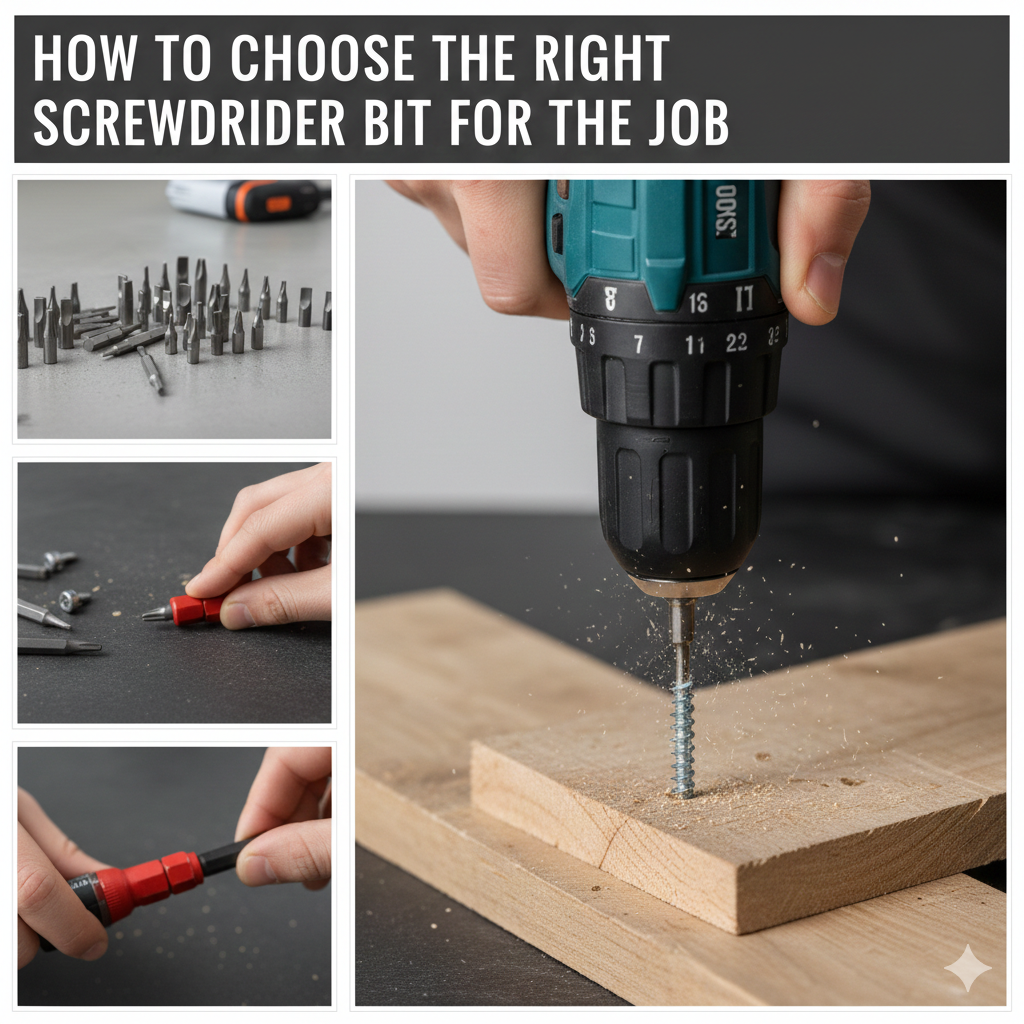
Using the wrong screwdriver bit is one of the fastest ways to damage screws, waste time, and compromise the quality of your work. Whether you’re assembling furniture, installing decking, working with metal fasteners, or handling heavy-duty construction tasks, selecting the correct bit is essential for precision, durability, and safety.
While screwdriver bits may appear simple, they vary significantly in shape, material, coating, and strength. Understanding these differences helps you avoid stripped screws, slipping tools, and unnecessary wear.
In this guide, we’ll explain how to choose the right screwdriver bit for every job and why investing in quality matters.
Why the Right Bit Makes a Difference
A screwdriver bit acts as the connection point between your tool and the fastener. If that connection is incorrect or unstable, problems occur:
- Cam-out (bit slipping from the screw head)
- Stripped screw heads
- Reduced torque transfer
- Premature bit wear
- Damaged materials
High-quality Bits are engineered to provide precise fit, improved torque transmission, and longer lifespan — especially when used with impact drivers or high-torque drills.
Choosing correctly improves both efficiency and finish quality.
Step 1: Match the Bit Type to the Screw Head
The first and most important step is identifying the screw drive type. Different screws require specific bit profiles.
Phillips (PH)
Phillips screws are among the most common fasteners.
Best for:
- General woodworking
- Interior installations
- Furniture assembly
They feature a cross-shaped recess but are prone to cam-out under high torque.
Pozidriv (PZ)
Often confused with Phillips, Pozidriv screws have additional ribs between the main cross slots.
Advantages:
- Better torque transfer
- Reduced cam-out
- Common in European construction
Using a Phillips bit in a Pozidriv screw (or vice versa) can quickly damage the screw head. Always match precisely.
Torx (TX)
Torx screws feature a star-shaped pattern.
Benefits:
- Excellent torque transfer
- Minimal slipping
- Ideal for structural and heavy-duty applications
Torx bits are widely used in decking, automotive, and metal fastening applications.
Professional-grade Bits often include hardened Torx options for demanding projects.
Hex (Allen)
Hex drive screws use six-sided internal recesses.
Common in:
- Furniture assembly
- Machinery
- Bicycle and mechanical repairs
These bits require precise sizing to prevent rounding.
Slotted (Flathead)
Traditional flat screws require a single flat blade bit.
While still used in some applications, they are less common in modern construction due to slipping risks.
Step 2: Choose the Correct Size
Even within the same drive type, sizes vary.
For example:
- PH1, PH2, PH3
- PZ1, PZ2, PZ3
- TX15, TX20, TX25, TX30
Using the wrong size results in poor contact and fast wear.
A properly sized bit:
- Fits snugly
- Does not wobble
- Transfers torque efficiently
A well-fitted bit protects both screw and material surface.
High-quality Bits are manufactured with tight tolerances to ensure consistent and secure fit.
Step 3: Consider the Application Type
Different tasks demand different bit strengths.
For Light DIY Work
Standard bits made from hardened steel are sufficient for:
- Assembling furniture
- Installing light fixtures
- Small repair tasks
For Professional Construction
Construction environments require stronger materials such as:
- S2 steel
- Industrial-grade hardened steel
These bits resist wear under repeated use.
For Impact Drivers
Impact drivers generate high rotational force and sudden bursts of torque.
For this application:
- Choose impact-rated bits
- Look for torsion zones
- Ensure shock absorption capability
Impact-rated Bits feature flexible torsion areas that absorb torque stress, reducing breakage.
Step 4: Evaluate Bit Length
Bit length affects access and control.
- Short bits: Better for tight control and compact areas
- Medium bits: Most versatile for general work
- Long bits: Ideal for deep-set screws or hard-to-reach spaces
Choose length based on workspace constraints and visibility requirements.
Step 5: Look at Coatings and Finishes
Modern screwdriver bits often include protective coatings.
Common coatings include:
- Titanium nitride (gold finish)
- Black oxide
- Diamond coating
These coatings improve:
- Corrosion resistance
- Grip inside screw head
- Overall lifespan
Premium Bits with advanced coatings provide better durability and performance in professional settings.
Step 6: Understand Torque Requirements
High-torque applications require stronger bits.
For example:
- Structural timber construction
- Metal-to-metal fastening
- Decking installations
These projects demand:
- Hardened steel
- Precision machining
- Impact resistance
Low-quality bits may twist or snap under heavy load.
Step 7: Choose Between Individual Bits and Sets
For professionals, having a variety of sizes and types is essential.
Bit sets provide:
- Multiple drive types
- Different sizes
- Quick replacement options
- Organized storage
Keeping a selection of Bits on hand reduces downtime and improves workflow efficiency.
Common Mistakes to Avoid
Even experienced users make preventable errors.
Avoid:
❌ Using the wrong drive type
❌ Applying excessive force with a loose-fitting bit
❌ Using standard bits in impact drivers
❌ Continuing to use worn or rounded bits
❌ Ignoring torque limitations
These mistakes reduce efficiency and can damage fasteners permanently.
When to Replace a Screwdriver Bit
Bits wear out over time.
Signs it’s time to replace:
- Rounded edges
- Slipping under normal torque
- Visible twisting
- Reduced grip in screw head
Worn bits increase cam-out and damage screws.
Investing in durable Bits reduces replacement frequency and ensures consistent results.
Why Quality Matters
Cheap bits may seem cost-effective initially, but they often:
- Wear out quickly
- Strip screws
- Break under pressure
- Cause inconsistent performance
High-quality bits provide:
- Precision fit
- Greater torque transfer
- Longer lifespan
- Reduced downtime
In professional environments, durability and reliability directly impact productivity.
Quick Selection Guide
Here’s a simplified decision overview:
| Task | Recommended Bit Type |
| Furniture assembly | PH or PZ (correct size) |
| Decking | Torx impact-rated |
| Metal fastening | Torx or Hex hardened |
| Structural wood | PZ or Torx heavy-duty |
| Automotive | Torx or Hex precision |
Matching bit type to application ensures safer and smoother installation.
Final Thoughts
Choosing the right screwdriver bit is not just about fitting the screw — it’s about maximizing efficiency, protecting materials, and ensuring long-term durability.
To summarize:
- Identify the correct drive type.
- Select the precise size.
- Choose impact-rated bits when needed.
- Consider material strength and coating.
- Replace worn bits promptly.
Whether you’re handling small DIY repairs or large-scale construction projects, the right Bits make a measurable difference in performance and finish quality.
Precision fastening starts with the right bit — and selecting wisely ensures every screw goes in smoothly, securely, and without damage.
