

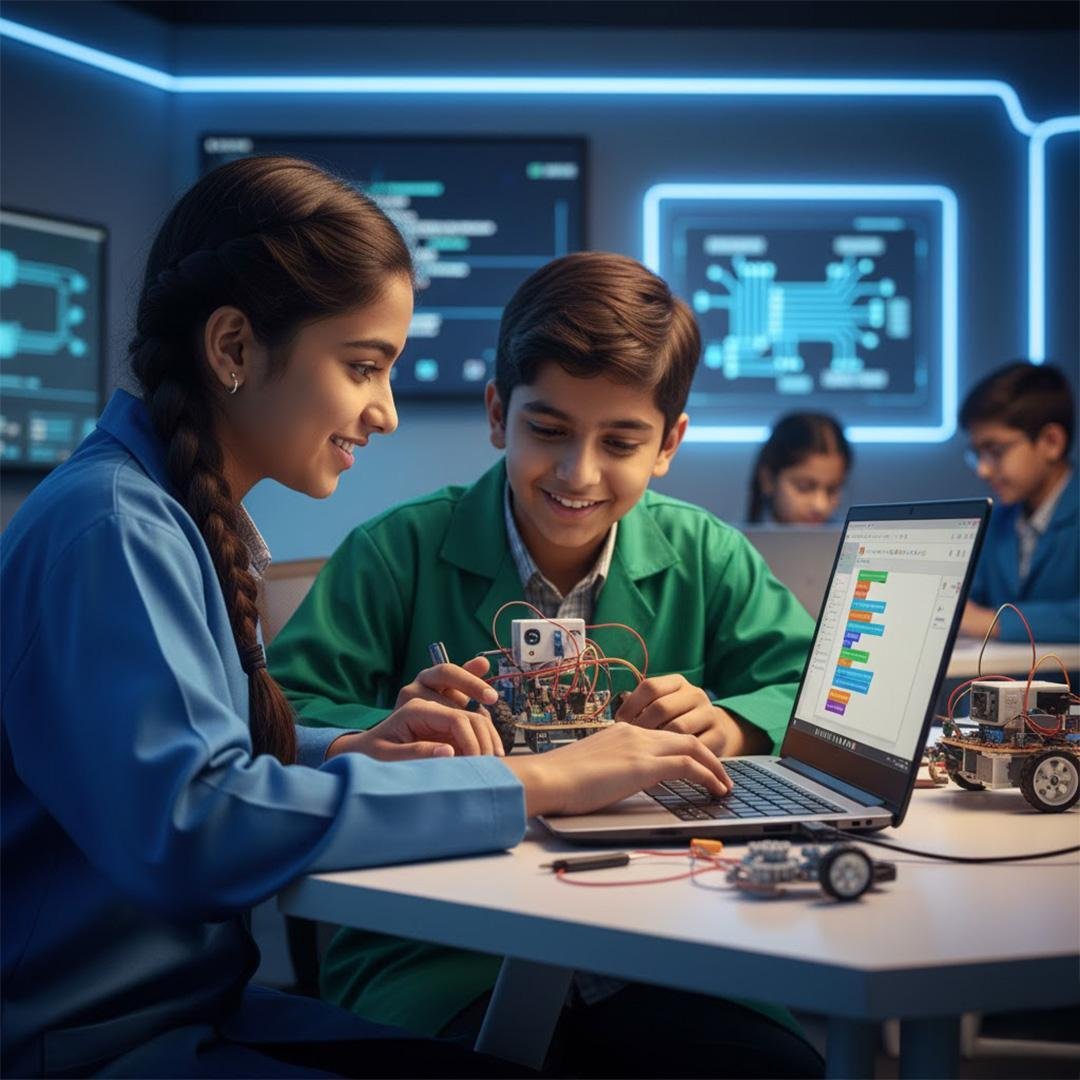
Modern education increasingly integrates theory with practical skills to prepare learners for future technologies. For that reason, classrooms need to similarly balance their systems and facilities with areas that will enable innovation and inquiry. A well-designed robotics lab for schools turns abstract concepts into concrete, appealing experiences for students.
Purpose and Learning Objectives of a Robotics Lab
The main objective of a robotics lab is the enhancement of STEM learning through real-world problem solving and project-based activities. Most importantly, the students get to learn how to develop critical thinking and work well in a collaborative environment.
Further, it builds the fundamental structure in coding, mechanics, and electronics. More importantly, the robotics lab setup requirements cater to safety and scalability for growing curricula. Ultimately, the lab prepares the student to face future academic and technological challenges.
Essential Hardware Components
The robotics lab needs thoughtfully selected hardware that supports learning progression and safety. This tool enables students to build, test, and iterate on their projects effectively.
- Robotics Kits and Electronic Parts
Standard robotics kits provide modular components that include microcontrollers, sensors, actuators, and mechanical parts. These enable learners to build functional robots while learning concepts such as motion, feedback, and automation. Such kits need to accommodate progressive learning for different age groups.
- Computing and Display Equipment
Reliable computers, such as laptops or desktops, with the appropriate software, are vital. Additionally, projectors or monitors are also necessary for group interactions. Most importantly, integrating virtual reality in schools can help improve visualisation and conceptual learning of any complex system.
- Safety Gear and Storage Solutions
Safety gear, such as goggles and tool organisers, ensures that the students can work safely. Moreover, good storage solutions ensure that sensitive electronics are well taken care of. These infrastructure aspects are those that promote a productive and well-disciplined learning environment for the students.
Software, Programming Tools, and Connectivity
A modern robotics lab ought to have easy-to-use programming environments that support both block-based and text-based coding. Furthermore, software should be aligned with curriculum goals and allow for real-time testing.
Equally important, a stable Internet with networked workstations enables research and collaboration. Moreover, cloud storage and version control support project continuity. This way, a robotics lab for schools turns into both a creative and connected learning point.
Teacher Training and Curriculum Integration
Educators need frequent support and professional development on robotics concepts and lab management for maximum impact to take place. Apart from robotic kits, RoboSpecies offers robotics training for teachers to develop their confidence in providing consistent instruction.
Moreover, integrating projects from robotics with subject-specific existing assignments reinforces learning across disciplines. Training helps teachers to ascertain the progress made by students and adapt activities toward the varied learning goals. Above all, integrating robotics with the wider curriculum renders every day in the classroom exciting.
Conclusion
A well-equipped robotics lab changes the classrooms themselves into innovation spaces. Moreover, the hardware, the software, and the relevant training provide effective learning. Hence, schools that invest in advanced robotics capabilities prepare their students to take on challenges in the future.
