

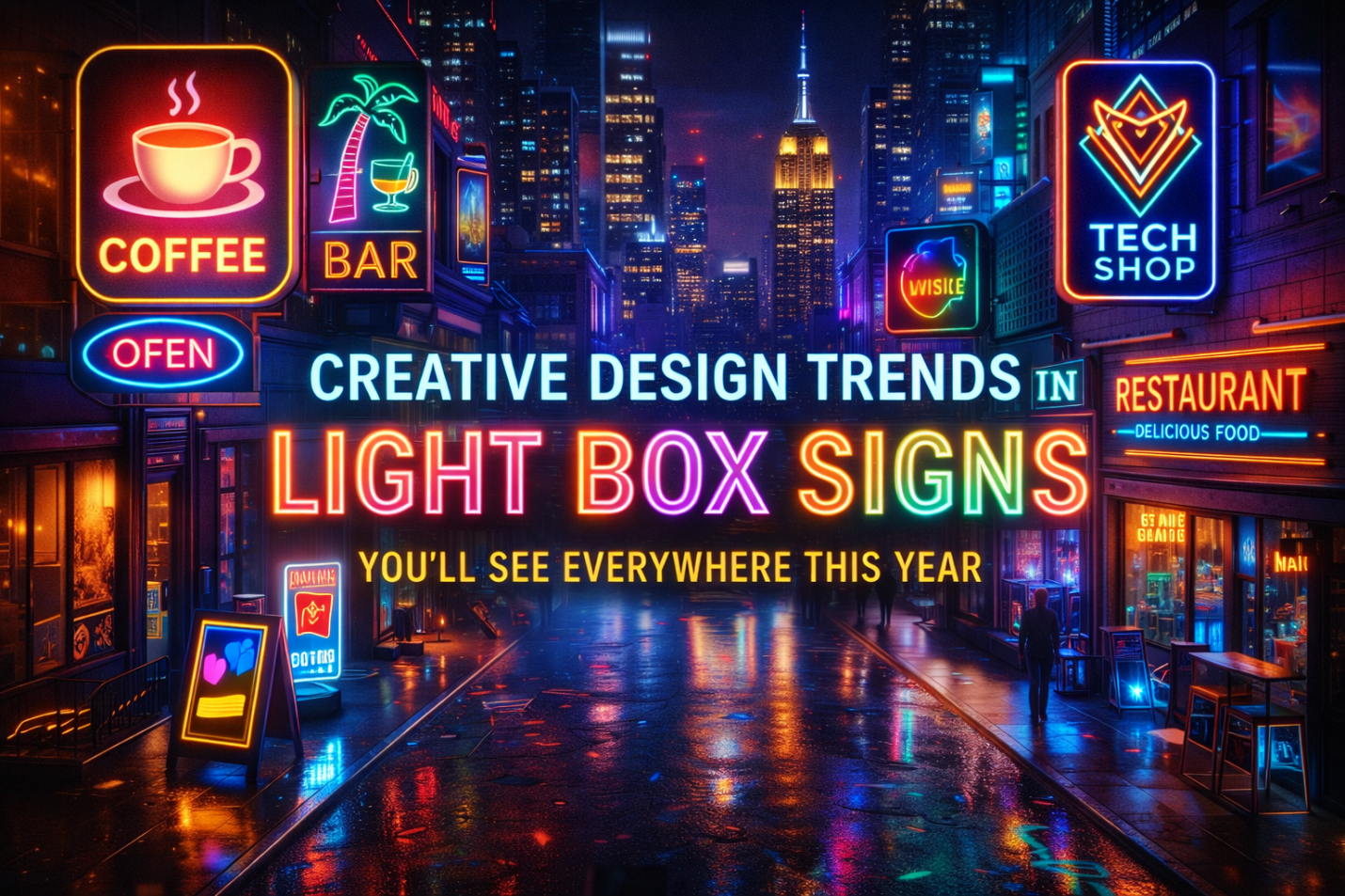
Walk down any modern street or shopping district today, and you’ll notice one thing shining brighter than ever — the evolution of illuminated signage. Businesses are no longer satisfied with flat, static displays. They want signs that tell a story, create ambiance, and demand attention. Among the most popular forms of visual branding this year, the Light Box Sign has emerged as a design powerhouse, bridging the gap between functionality and artistry. From boutique cafes and tech startups to luxury retailers and art galleries, these glowing canvases are being reinvented in bold new ways.
So, what makes today’s light box designs so different — and so irresistible? Let’s explore the top creative trends transforming these radiant icons of modern branding.
1. Ultra-Slim and Frameless Designs
Gone are the bulky metal frames and heavy-duty enclosures of the past. The latest trend is sleek minimalism. Designers are embracing ultra-slim profiles that make signage feel like it’s floating on the wall.
Frameless light boxes, in particular, create a seamless, modern aesthetic that fits beautifully into contemporary spaces — from hotel lobbies to fashion boutiques. The use of edge-lit LED panels ensures even brightness without adding thickness. This minimalist approach is perfect for brands that want sophistication without clutter.
Pro Tip: Pair a frameless light box with a neutral background and subtle backlighting for an elegant, gallery-like effect.
2. Dynamic Color-Changing LEDs
Static white light is out; color-changing LED systems are in. Businesses are turning their signs into living, breathing visual experiences by integrating programmable RGB lighting.
These modern systems allow complete control over color transitions, brightness, and even animation. Imagine a café whose sign softly shifts from warm amber in the morning to cool lavender at night — or a retail store that syncs its sign colors with seasonal promotions.
Not only does this trend boost brand engagement, but it also offers unmatched flexibility. With energy-efficient LEDs, businesses can maintain dynamic displays without high power costs.
3. Sustainable Materials and Green Innovation
Sustainability isn’t just a buzzword anymore — it’s a core part of design thinking. As brands aim for eco-friendly operations, signage manufacturers are responding with greener materials and processes.
Expect to see more recycled acrylics, aluminum, and biodegradable composites in light box construction. LED technology also reduces energy consumption dramatically compared to traditional fluorescent systems. Some designers are even experimenting with solar-powered light boxes for outdoor installations.
This eco-conscious shift not only aligns with modern values but also enhances a brand’s reputation. After all, a well-lit, sustainable sign makes both an environmental and visual statement.
4. Custom Typography and Hand-Drawn Lettering
In 2026, cookie-cutter fonts are out — and personality is in. Custom typography is dominating signage design, giving each light box a unique identity. Hand-drawn or script fonts, laser-cut into acrylic or aluminum panels, bring a human touch that stands out amid mass-produced displays.
The trend leans toward authenticity and emotion — especially for restaurants, boutique stores, and creative studios. A hand-lettered sign illuminated from within communicates craftsmanship and care. Designers are also combining typography with layered materials to create dimensional effects that look stunning both day and night.
5. Mixed-Media and Layered Depth
This year, flat design is fading — literally — into the background. Layered light boxes that combine different materials and textures are taking center stage.
Designers are experimenting with combinations like frosted glass, perforated metal, and laser-etched acrylic to create depth and movement when illuminated. The play of shadows and light turns a simple sign into an interactive piece of art.
For example, a retail boutique might feature a double-layer light box where the outer layer has a geometric cut-out design, and the inner layer emits a soft, diffused glow. The result? A dynamic look that shifts depending on where you stand.
6. 3D and Floating Letter Effects
Dimensional lettering is making a big comeback — but with a modern twist. Instead of bulky block letters, designers are creating light box signs with raised or back-lit letters that appear to float in mid-air.
Using clear acrylic mounts and precision LED placement, these signs create the illusion of letters hovering above the background. The glowing halo effect adds visual drama while maintaining a clean aesthetic.
This style is especially popular among luxury brands, corporate offices, and tech firms looking for a high-end, futuristic vibe. It’s signage that feels alive — not just printed.
7. Smart Signage and Motion Integration
Welcome to the age of interactive signage. Advances in technology have given rise to smart light boxes equipped with sensors and motion detection. These systems can trigger animations, lighting changes, or even personalized messages when someone walks by.
Imagine a storefront where the sign gently brightens as you approach, or an exhibition display that reacts to movement. This level of engagement transforms signage from a static advertisement to an immersive experience.
Smart light box signs are also being integrated with mobile apps, allowing businesses to control color, brightness, and display patterns remotely — a big plus for multi-location brands.
8. Retro-Futurism and Nostalgic Glow
Just like the neon revival in New York City, retro-futurism is sweeping through the signage world. Designers are blending old-school charm with modern materials to create light boxes that evoke vintage nostalgia with futuristic precision.
Think 1950s diner vibes reimagined with LED illumination, metallic finishes, and clean lines. This hybrid aesthetic feels both familiar and fresh — and it’s perfect for brands that want to balance heritage with innovation.
The use of warm-tone LEDs that mimic the classic glow of neon brings warmth and authenticity to the trend.
9. Minimalist Logos and Monochrome Designs
Sometimes, less truly is more. Minimalist design remains one of the strongest global trends in branding, and it’s now shaping the way light boxes are created.
Expect to see signs with simple geometric shapes, negative space, and monochrome color schemes — often in matte black, soft white, or brushed metallic finishes. The focus here is on clarity and elegance rather than complexity.
This style works beautifully for luxury retail, fashion brands, and tech startups — where subtle sophistication speaks louder than loud graphics.
10. Artistic Storytelling Through Light
Perhaps the most exciting trend of all is the use of light boxes as storytelling tools. Instead of simply displaying a logo, brands are turning signs into visual narratives — using light, shadow, and motion to communicate identity.
Some feature illustrative backdrops or gradient color transitions that represent brand values. Others use patterned perforations or etched glass to create a play of light that evolves throughout the day.
In the art and hospitality worlds, designers are even using animated sequences within layered boxes — turning signage into a form of kinetic art. This movement toward expressive design is transforming how audiences interact with visual branding.
The Future Is Bright — and Creative
What makes these trends so compelling is that they don’t just focus on technology; they focus on emotion. A great light box design doesn’t simply say, “Here’s our name.” It says, “Here’s who we are.”
As businesses continue to compete for attention in visually crowded environments, Light Box Signs are proving to be one of the most versatile and expressive branding tools available. They combine light, texture, color, and movement in ways that flat graphics never could.
Whether minimalist or maximalist, eco-friendly or high-tech, today’s light box designs blur the boundaries between signage and art. They’re not just lighting up storefronts — they’re illuminating identities.
Final Thoughts
From sustainability to interactivity, the creative evolution of light box signage reflects a broader design philosophy — one that values experience over exposure.
If you’re planning to update your business signage this year, think beyond the basics. Choose a design that glows with intention — something that aligns with your brand’s voice and today’s cutting-edge trends.
Because in the modern world of visual branding, it’s not just about being seen.
It’s about being remembered — in lights.
