

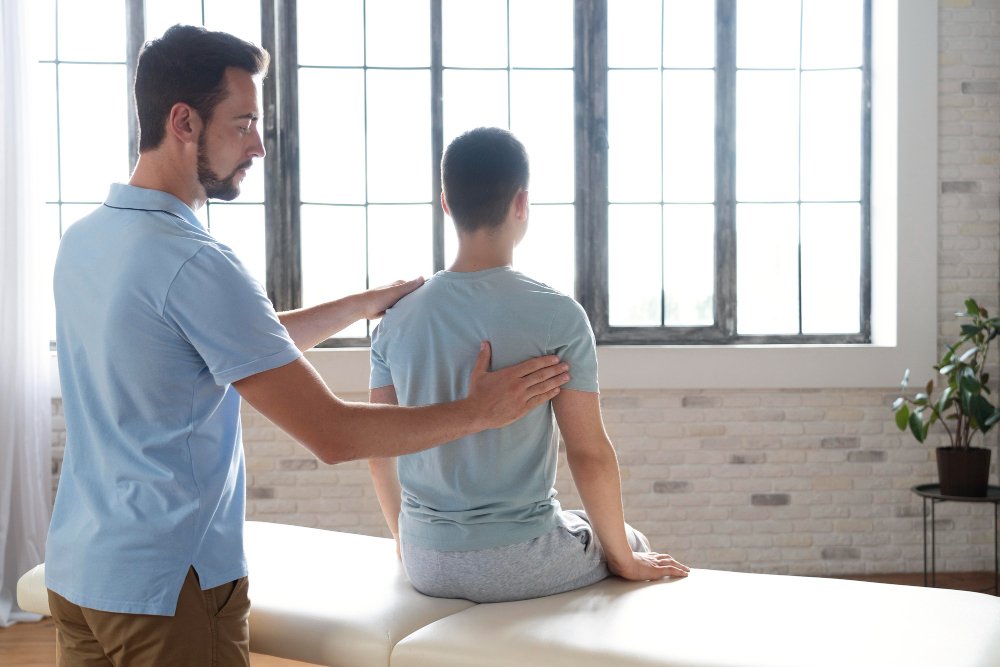
We hear it all the time from clients searching for Fascia massage near me in Knoxville TN. “Why does my posture feel stuck?” “Why do I keep rounding my shoulders even when I try to sit straight?”
Here is the thing… posture is not just about muscles. It is also about fascia.
If that word feels unfamiliar, you are not alone. Most of us grew up learning about muscles and bones. Fascia barely got mentioned. But now, research is shining a light on it. And honestly, it changes how we look at posture completely.
What Is Fascia, Really?
Fascia is a thin layer of connective tissue that wraps around muscles, organs, and even nerves. Think of it like a web under the skin. Everything connects through it.
For years, scientists thought fascia was just packing material. But studies in the last two decades show it is active, responsive tissue. A 2012 review published in the Journal of Bodywork and Movement Therapies explained that fascia can stiffen, thicken, and lose glide when it is not moving well.
When that happens… things feel tight. Restricted. Pulled forward.
And that is where posture enters the story.
How Tight Fascia Affects Posture
Have you ever noticed how sitting all day makes your chest feel closed in? Shoulders creep forward. Neck leans out. It does not happen overnight. It builds slowly.
Research from 2015 in Current Pain and Headache Reports discussed how changes in fascial stiffness can alter body alignment and even contribute to chronic pain patterns. When fascia loses mobility, it does not glide smoothly over muscles. It pulls. It restricts.
So even if your muscles are strong, the fascia around them may be limiting your range. It is like wearing a tight sweater that you cannot take off.
We see this a lot with forward head posture and rounded shoulders. The fascia in the front body becomes shortened. The back body feels overstretched. The body adapts… and then that becomes your “normal.”
The Science Behind Fascial Mobility
Here is something interesting. A 2014 study in the journal Clinical Anatomy found that fascia contains nerve endings that respond to pressure and movement. That means it is not just structural. It is sensory. It communicates with the nervous system.
When fascia is hydrated and mobile, it slides better. Movement feels easier. Posture feels lighter.
But when we sit for long hours, stress builds up, or old injuries linger, fascia can become dense. Reduced hydration between layers makes gliding harder. Over time, that restriction influences how we stand and move.
So when people think posture is only about strengthening the back, we gently remind them… mobility matters too.
Why Massage and Manual Therapy Help
This is where hands-on work makes a difference. Techniques that focus on fascial release aim to restore glide between tissue layers. Slow, sustained pressure can encourage hydration and improve tissue elasticity.
Some small clinical trials have shown that myofascial release can improve range of motion and reduce pain in people with chronic neck and back issues. It is not magic. But it supports the body’s natural ability to reorganize.
We often hear clients say, “I feel taller after that session.” That is not just in their head. When fascial tension decreases, the body can return closer to neutral alignment.
And yes, when people search again for therapy in Knoxville TN, it is often because they felt that difference firsthand.
Posture Is More Than Sitting Up Straight
Let us be honest. Telling someone to “just fix your posture” rarely works. If fascia is restricted, the body will drift back to its old pattern.
Real change takes awareness, movement, and sometimes manual therapy. Gentle stretching. Breath work. Consistent mobility exercises. And yes, targeted fascia work when needed.
The good news? Fascia responds to change at any age. It remodels with movement. It adapts with care.
So if your posture feels stuck, maybe it is not weakness. Maybe it is restriction.
And once we start thinking that way… solutions feel a lot more hopeful.
