

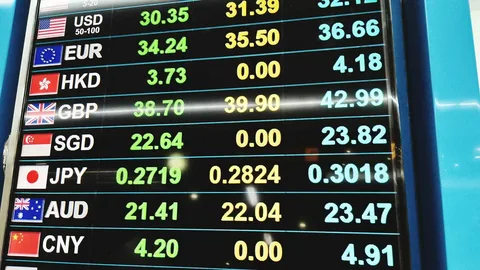
So you’ve probably seen those currency pairs like EUR/GBP or AUD/JPY floating around on trading platforms and wondered — wait, how do they actually figure out these numbers? Like, who decides what the euro is worth against the Japanese yen? That’s exactly what we’re diving into today. Currency cross rates are honestly one of those things that sounds complicated but once you get it, it just clicks.
Whether you’re a trader, a fintech developer, or just someone curious about how global money flows work — this one’s for you.
What Are Currency Cross Rates and Why Do They Even Matter?
Okay so let me break this down simple. A currency cross rates is basically the exchange rate between two currencies that doesn’t involve the US dollar. Most currencies are priced against the USD first, and then the cross rate is calculated from those two prices.
For example — if you know how many dollars a euro is worth, and how many dollars a British pound is worth, you can figure out what one euro buys in pounds. That’s your cross rate right there.
Why does this matter? A few reasons:
- It helps traders find pricing inefficiencies between markets
- It’s super useful for international businesses doing multi-currency transactions
- Analysts use it to understand regional economic relationships
- It tells a deeper story about currency strength beyond just “vs the dollar”
Back in the day, if you wanted to convert EUR to JPY, you literally had to go through two separate USD trades. Now platforms do the math automatically — but the underlying logic is still the same.
The Math Isn’t as Scary as It Looks
Let’s say EUR/USD = 1.10 and USD/JPY = 150. To get EUR/JPY, you just multiply:
1.10 × 150 = 165
So EUR/JPY should be around 165. That’s the theoretical cross rate. But in real markets? It’s not always exactly that number, and that’s where things get interesting.
Triangular Arbitrage — The Market’s Self-Correcting Mechanism
Traders are always watching for moments when the cross rate is slightly off from what the math says it should be. When EUR/JPY is priced at 164 instead of 165, smart traders jump in, buy the underpriced pair, and sell the overpriced one. They’re making tiny profits, but in huge volumes.
This process is called triangular arbitrage, and it’s basically the reason cross rates stay aligned. The market prices itself through thousands of these micro-corrections happening every second.
Bid-Ask Spreads Play a Role Too
When you look at a currency quote, you’ll see two prices — the bid and the ask. The difference between them is the spread, and it gets wider for cross pairs compared to major USD pairs. That’s because:
- Liquidity is lower for crosses
- Market makers carry more risk
- There’s less trading volume on average
So if you’re trading something like CHF/SEK, expect a bigger spread than you’d see on EUR/USD.
How Liquidity Shapes the Pricing
Here’s something most beginners don’t realize — not all crosses are created equal. EUR/GBP trades like a dream. There’s tons of volume, tight spreads, and the price moves smoothly. But something like NOK/TRY? That’s a whole different animal.
Liquidity depends on:
- Trade relationships between the two countries
- Time zones — pairs involving Asian and European currencies move differently during different sessions
- Market interest — is anyone actually trading this pair right now?
The more liquid a cross pair is, the closer it stays to its theoretical value. Low liquidity pairs can drift more, which creates both opportunity and risk.
Central Banks Have More Influence Than You’d Think
It’s not just traders making these prices. Central bank policy decisions ripple through cross rates in big ways. When the Bank of Japan intervenes to weaken the yen, every JPY cross moves. When the ECB changes interest rates, EUR crosses shift across the board.
Interest rate differentials are especially powerful. Money tends to flow toward higher-yielding currencies — this is the basic idea behind carry trades, where you borrow a low-interest currency and invest in a high-interest one. The cross rate reflects these expectations constantly.
Tools That Actually Help You Track This Stuff
Manually calculating and tracking forex crosses is honestly impractical without the right platform. That’s where tools like Vunelix come in handy. It’s a free real-time financial market data platform that shows live forex rates, including currency cross rates, with charts and a built-in currency converter.
What makes it useful for this kind of analysis:
- Real-time data for 2000+ forex currency pairs
- Historical data going back over 30 years
- Market heatmaps so you can visually spot movements
- No sign-up walls or subscription fees for the core tools
For traders and analysts who want to keep an eye on how crosses are moving without juggling five different tabs, it’s a clean option. And since it sources data from central banks and major financial institutions worldwide, the rates are actually reliable.
Reading Cross Rate Behavior Like a Pro
Once you understand the mechanics, you start reading price movements differently. Here’s a simple framework:
Step 1 — Identify the two USD pairs that make up your cross Step 2 — Calculate the theoretical cross rate Step 3 — Compare it to the market price Step 4 — Look at volume and spread Step 5 — Check recent central bank news for both currencies
If there’s a gap between theoretical and market price, ask yourself — is this arbitrage opportunity or is there a fundamental reason for the divergence? News events, data releases, or liquidity droughts can all cause temporary deviations.
Reading the Cross Rate Charts
When you pull up a cross rate chart, look for:
- Trending behavior during specific trading sessions (London, New York, Tokyo)
- Range-bound behavior during low-volume hours
- Spike patterns around economic data releases
EUR/JPY, for example, tends to be really active during the overlap between the London and New York sessions. AUD/JPY moves a lot during the Asian session. Knowing when a cross is “alive” vs. sluggish makes a real difference in execution.
Common Mistakes People Make With Cross Rates
Honestly, a lot of beginners (and even some experienced traders) get tripped up here. Here’s what to avoid:
- Ignoring spreads — a wide spread can eat your profit before you even start
- Forgetting liquidity — low-volume crosses can gap unpredictably
- Assuming correlations are stable — the relationship between two currencies changes with market conditions
- Not accounting for time zones — a cross might look calm in your local morning but was extremely volatile overnight
One thing I’d genuinely recommend is spending time just watching how different pairs move before trading them. Get comfortable with the rhythm of a cross before putting money on it.
The Bigger Picture — What Crosses Tell Us About the Global Economy
Here’s the thing about forex cross rates that doesn’t get said enough — they’re not just trading instruments. They’re signals. When EUR/GBP starts trending in one direction, it reflects economic sentiment about Europe vs. the UK. When AUD/JPY drops sharply, it often signals broader risk-off sentiment in global markets.
Financial analysts and researchers use cross rate movements as leading indicators for:
- Regional economic health comparisons
- Capital flow trends
- Risk appetite across markets
So even if you’re not a forex trader, understanding crosses gives you a more complete picture of what’s happening in global finance.
Conclusion
So yeah — the science behind currency cross rates is a mix of math, market psychology, liquidity dynamics, and central bank policy. It’s not random. Every number you see on a cross rate chart is the result of millions of pricing decisions happening in real time. Once you understand the mechanics — the triangular arbitrage, the interest rate differentials, the liquidity factors — it starts to make a lot more sense.
If you want to explore real forex cross data yourself, platforms like Vunelix make it genuinely accessible without needing a Bloomberg terminal. Start watching the pairs, build your intuition, and the patterns will start to click.
FAQs
What exactly is a currency cross rate?
A currency cross rate is an exchange rate between two currencies that doesn’t include the US dollar. Instead of pricing each currency against USD separately, the cross rate gives you a direct comparison — like EUR vs. GBP or AUD vs. JPY.
How are cross rates calculated?
They’re calculated using two USD pairs. You take the rate of Currency A vs. USD and Currency B vs. USD, then either multiply or divide them depending on how the pairs are quoted. This gives you the theoretical cross rate between A and B.
Why are cross rate spreads wider than major pairs?
Because cross pairs generally have lower trading volume and liquidity than USD majors. Market makers face more risk holding these positions, so they charge a wider bid-ask spread to compensate.
What is triangular arbitrage in forex?
It’s a trading strategy where you exploit pricing discrepancies between three currency pairs. If the market price of a cross doesn’t match its theoretical calculated value, traders quickly buy and sell to profit from the gap — and in doing so, they push the price back to where it should be.
Do central banks affect cross rates?
Yes, significantly. Interest rate decisions, interventions, and forward guidance from central banks all influence how their currencies are priced — and that flows directly into cross rate pairs that involve those currencies.
Can I track currency cross rates for free?
Yes. Platforms like Vunelix (vunelix.com) offer free real-time currency cross rate tracking, with charts, a currency converter, and market heatmaps — no subscription needed.
Are cross rates useful for long-term investors?
Absolutely. Cross rates help investors understand currency strength beyond the dollar, which is useful for international portfolio allocation, hedging strategies, and analyzing macroeconomic trends between regions.
