

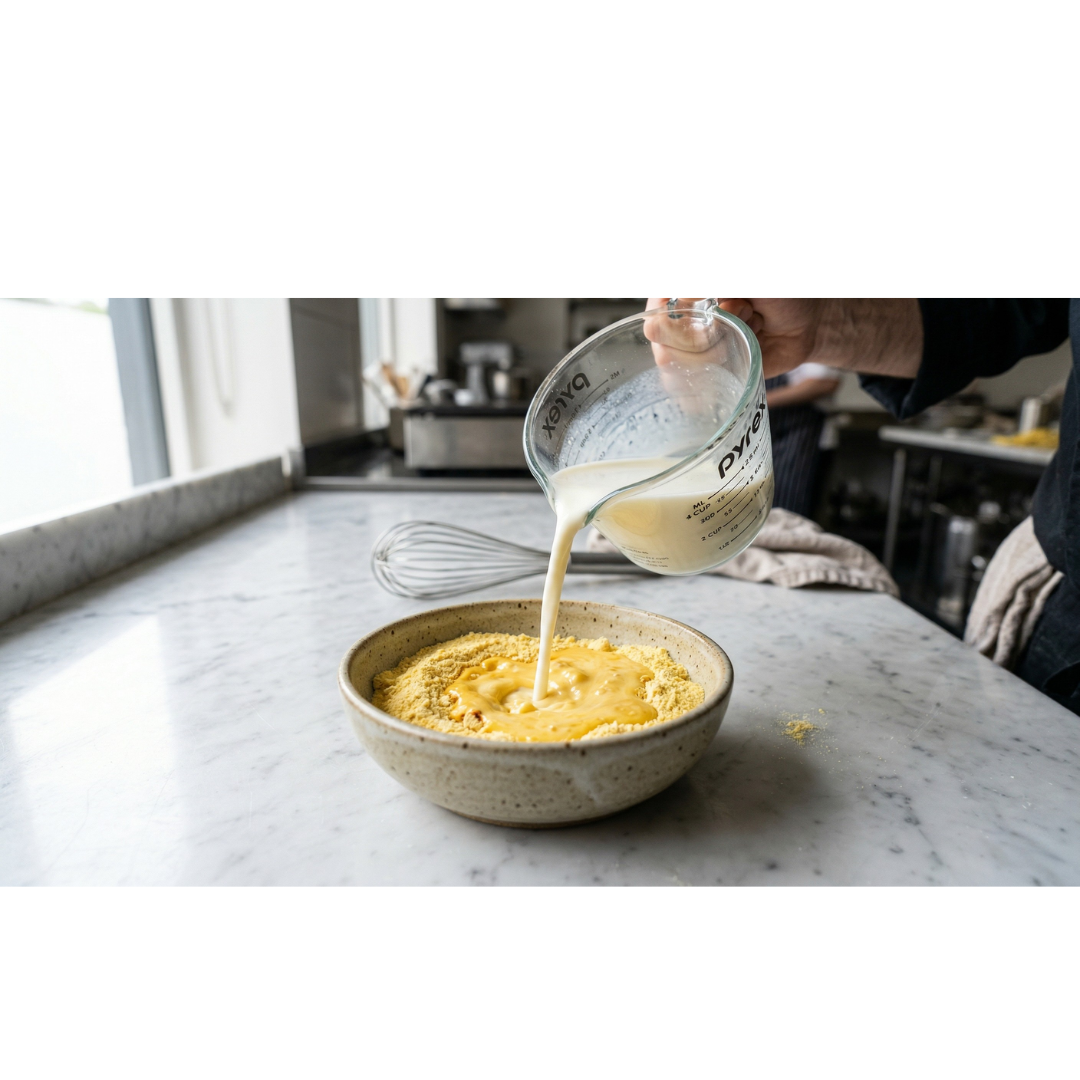
Custard is a staple dessert component across bakeries, patisseries, and foodservice operations. While traditional egg-based custard requires careful temperature control and carries higher risk of curdling, many commercial settings now turn to powder-based alternatives for consistency and efficiency.
A professional guide to preparing smooth custard using a powder base, covering texture control, common issues, and format-specific adjustments for consistent results.
Understanding the Role of Custard Powder in Commercial Operations
Bakeries and foodservice units rely on custard for fillings, toppings, and layered desserts. The powder form offers several advantages over scratch preparation.
- It reduces labor time. There is no need to temper eggs or monitor a double boiler.
- The risk of splitting or curdling drops significantly when the formula is followed correctly.
Shelf stability is another benefit. Unopened product lasts longer than fresh eggs, and portion control becomes more accurate when working with a measured dry ingredient.
However, achieving a smooth, lump-free consistency still requires attention to technique. Poor mixing or incorrect liquid ratios lead to grainy texture or separation during holding.
Step-by-Step Method for Preparing Smooth Custard
The preparation process is straightforward, but each step affects the final result.
1. Start with Cold Liquid
Measure your milk or a combination of milk and cream based on the formula you are working with. Always use cold liquid when mixing the powder.
Hot liquid causes instant gelatinization, which creates lumps that are difficult to break down.
2. Create a Slurry
Take a portion of the cold liquid and whisk it with the custard powder and sugar until you have a completely smooth paste.
- This step prevents clumping when heat is applied.
- Use a balloon whisk.
- Make sure no dry pockets remain at the bottom of the bowl.
3. Heat the Remaining Liquid
Bring the rest of the milk to a gentle simmer in a heavy-bottomed pot. Avoid boiling, as it can scorch the base and affect flavor.
4. Combine and Cook
Slowly pour the hot milk into the slurry while whisking continuously. Once combined, return the mixture to the pot. Cook over medium heat, stirring constantly with a flat-edged spatula or whisk. The custard will begin to thicken within two to three minutes.
5. Check for Doneness
The mixture should:
- Coat the back of a spoon
- Hold a line when you draw your finger through it
Do not overcook, as this can cause the texture to become stiff or grainy once cooled.
6. Cool Properly
Transfer to a clean container and cover the surface with plastic wrap or parchment to prevent a skin from forming. Cool at room temperature briefly, then refrigerate. For faster cooling in high-volume settings, pour into shallow pans.
Common Texture Problems and How to Avoid Them
Even with a reliable base, texture issues can occur during preparation or holding.
Lumps During Mixing
Usually result from adding powder directly to hot liquid. Always start with a cold slurry.
If lumps do form, strain the custard through a fine-mesh sieve before cooling.
Thin or Runny Custard
Indicates undercooking or incorrect ratios. Make sure the mixture reaches full gelatinization.
If the formula allows, you can slightly increase the amount of custard powder in future batches, but test small quantities first to avoid overly thick results.
Grainy Texture After Cooling
Often points to overcooking or high heat.
- Cook at a moderate temperature
- Remove from heat as soon as the custard thickens
- Stir gently during cooling to maintain smoothness
Separation or Weeping During Holding
Can occur if the custard sits too long or is exposed to temperature fluctuations.
- Store in airtight containers
- Keep refrigerated
- For service, hold in a bain-marie at controlled temperatures
Adjusting Consistency for Different Applications
Commercial use cases vary, and custard thickness should match the intended application.
For Pastry Fillings
Like cream puffs or éclairs, a thicker consistency works better. It holds shape when piped and does not leak during assembly or display.
For Trifle Layers or Parfait Bases
A medium consistency allows easier portioning and better integration with other components like cake or fruit.
For Pourable Custard
Used in plated desserts or as a sauce:
- Reduce the amount of custard powder slightly
- Increase liquid
This creates a pourable texture that coats without feeling heavy.
Always test a small batch before scaling up, especially when adapting formulas for new menu items or service styles.
Storing and Holding Custard in Foodservice Settings
Proper storage maintains quality and food safety standards.
- Custard should be cooled to below 5°C within two hours of preparation
- Label containers with preparation dates
- Use within three to four days for best results
If holding for service:
- Keep custard in a chilled insert or over ice
- Avoid leaving it at room temperature for extended periods
For frozen applications, custard can be portioned and frozen, though texture may change slightly upon thawing.
Test this approach with your specific formula before committing to large batches.
Scaling Production for High-Volume Operations
Batch size affects both preparation and cooling time. Larger volumes require more attention to temperature control and mixing uniformity.
- Use commercial-grade mixers with whisk attachments to blend large quantities of slurry
- This reduces manual labor and improves consistency across batches
When heating milk in large volumes:
- Consider using steam-jacketed kettles or tilting skillets for better heat distribution
- Stir continuously to prevent scorching at the base
Conclusion
Smooth custard preparation using a powder base is a reliable method for commercial bakeries and foodservice operations. Following correct mixing techniques, temperature control, and storage protocols will produce consistent results across batches.
Adjust thickness based on application, and scale your process to match production demands. With attention to detail, powder-based custard offers both efficiency and quality for a range of dessert applications.
FAQs
Q.1 Can you prepare custard in advance for multi-day service?
Ans: Yes. Store it in airtight containers at or below 5°C and use within three to four days. Label each batch with the preparation date and rotate stock accordingly.
Q.2 What causes custard to develop a skin during cooling?
Ans: Exposure to air causes a film to form on the surface. Prevent this by covering the custard directly with plastic wrap or parchment paper while it cools.
Q.3 Is it possible to reheat custard without affecting texture?
Ans: Gentle reheating over low heat or in a bain-marie works, but avoid boiling. Stir frequently to maintain smoothness. Repeated heating may reduce quality over time.
Q.4 How do you fix custard that turned out too thick?
Ans: Whisk in a small amount of cold milk gradually until you reach the desired consistency. Heat gently if needed, but do not bring to a full boil.
