

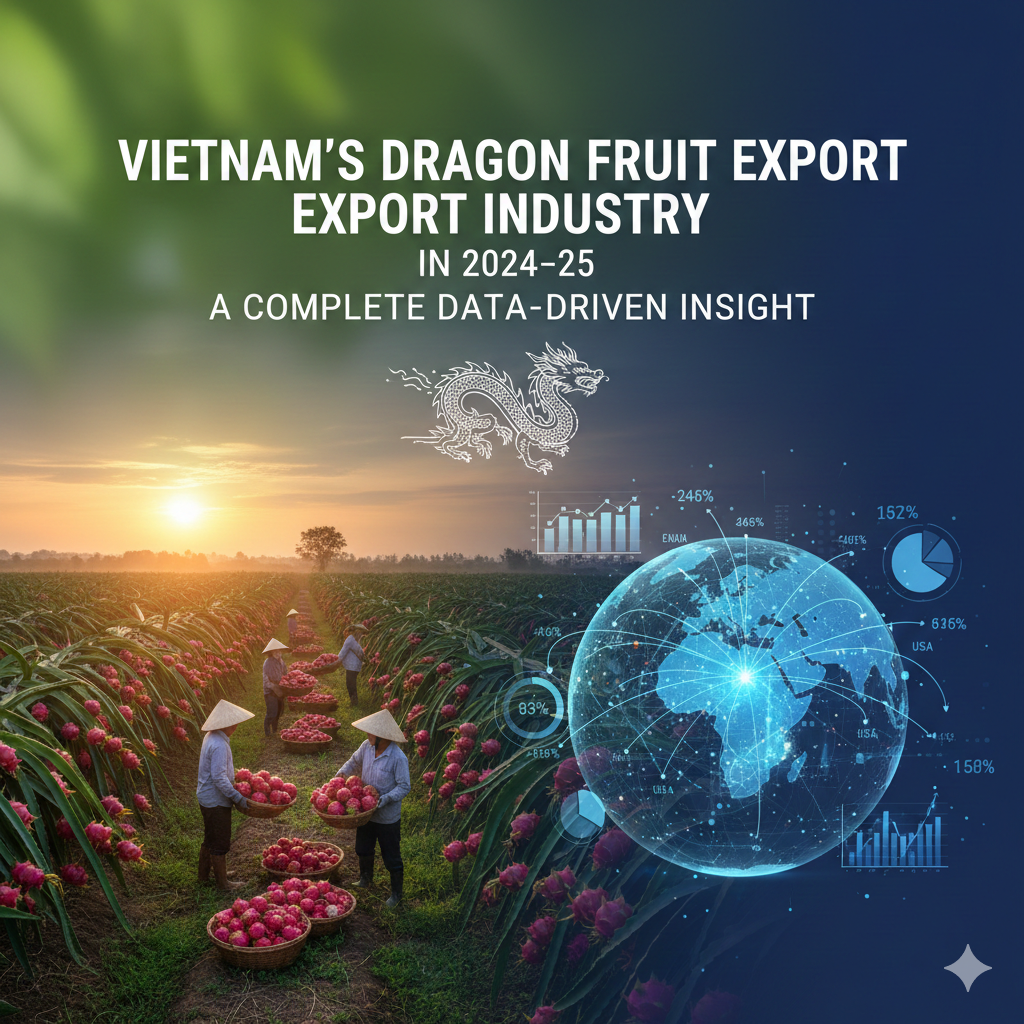
Vietnam’s dragon fruit sector stands as one of the most influential success stories in the global fresh fruit trade. Over the last two decades, Vietnam has risen into a dominant world leader, with dragon fruit Vietnam export volumes consistently outperforming competitors across Asia and Latin America. The fruit has become a symbol of the country’s agricultural strength, known for its quality, long shelf life, and adaptability to global consumer demands.
As of 2024–25, however, the industry is navigating a challenging yet opportunity-filled landscape. Despite strong global demand, reliance on specific markets—especially China—new quality regulations, and volatility in farm-gate prices are prompting Vietnamese exporters and policymakers to rethink strategies.
According to Vietnam export customs data, the total value of dragon fruit Vietnam export shipments reached USD 600 million in 2024, reflecting a slight 1% decline from the previous year. While this decline may appear marginal, it underscores deeper shifts within the global fruit market.
This comprehensive guest post explores the production base, export destinations, market dynamics, pricing trends, challenges, and strategic opportunities defining the future of Vietnam dragon fruit in 2024–25.
Dragon Fruit in Vietnam: A Strong Production Foundation
Dragon fruit has overtaken durian to become Vietnam’s top fruit export by value, highlighting how essential the fruit has become to the national agricultural economy. Today, Vietnam maintains over 55,000 hectares of dragon fruit cultivation, with three provinces dominating:
1. Binh Thuan Province – The Dragon Fruit Capital of Vietnam
Holding nearly 60% of Vietnam’s dragon fruit cultivation area, Binh Thuan is home to thousands of VietGAP- and GlobalGAP-certified farms. Its favorable climate and long-term investment in infrastructure have positioned it as the country’s core production hub.
2. Long An Province – A Leading Supplier of Red & White Varieties
Known for both red-fleshed and white-fleshed dragon fruit, Long An contributes significantly to the country’s supply. Many exporters here specialize in high-quality fruit that meets U.S. and European standards.
3. Tien Giang Province – Growth Through Technology & Certification
Tien Giang is rapidly expanding its planting area with advanced farming technologies and certified cultivation zones, ensuring stable and high-quality production.
Collectively, these provinces generate over 1 million tons of dragon fruit annually, with 80–85% of production destined for international markets—proving the essential role of Vietnam exports in sustaining farmer livelihoods.
Where Does Vietnam Export Dragon Fruit? Top Countries for 2024–25
Vietnam is the world’s leading supplier of dragon fruit, delivering fresh produce to Asia, the Middle East, North America, and Europe. Based on the latest Vietnam shipment data, the top export destinations include:
1. China – $480 Million (80%)
China remains the largest and most influential buyer in the dragon fruit Vietnam export market. Chinese consumers value Vietnam’s fresh white-fleshed dragon fruit, though red-fleshed varieties are rising in popularity.
However, 2024 saw nearly 20% YOY decline in shipments due to stricter border inspections and residue-testing requirements.
2. India – $30 Million (5%)
India has rapidly emerged as a critical growth market, driven by rising middle-class consumption and limited domestic supply. Imports grew by over 35% in 2024 alone.
3. United States – $24 Million (4%)
The U.S. market has doubled import volumes in recent years. Vietnam’s ability to meet phytosanitary standards has been key to this growth.
4. United Kingdom – $18 Million (3%)
Demand surged as UK consumers embraced exotic and healthy fruits. Shipments increased significantly due to supply shortages from other producers.
5. Germany – $12 Million (2%)
Germany imports large volumes of premium fruits, making it an important market for high-standard, certified Vietnamese dragon fruit.
6. UAE – $9 Million (1.5%)
The Middle East is increasingly drawn to Vietnam’s red-fleshed dragon fruit varieties due to their visual appeal and sweetness.
7. South Korea – $7 Million (1.2%)
Dragon fruit has become a trendy health food in Korea, contributing to rising imports annually.
8. Australia – $6 Million (1%)
Australia has stringent safety standards, but offers high export prices once market access is secured.
9. Netherlands – $5 Million (0.8%)
As a major fruit distribution hub in Europe, the Netherlands plays a key role in Vietnam dragon fruit entry into the EU market.
10. New Zealand – $4 Million (0.5%)
New Zealand is a smaller market but one that pays premium rates for safe and sustainably grown produce.
These destinations highlight the increasingly diversified export map for Vietnam—but also expose the country’s dependence on China.
Vietnam Dragon Fruit Export Performance: A Decade in Review
Looking at the last ten years, dragon fruit Vietnam export values show both stability and vulnerability:
| Year | Export Value |
|---|---|
| 2014 | $850 million |
| 2015 | $900 million |
| 2016 | $1.0 billion |
| 2017 | $1.15 billion |
| 2018 | $1.30 billion (Peak) |
| 2019 | $1.05 billion |
| 2020 | $900 million |
| 2021 | $800 million |
| 2022 | $650 million |
| 2023 | $620 million |
| 2024 | $600 million |
| 2025 (first 2 months) | $93.8 million |
The peak year of 2018, with export revenues reaching $1.3 billion, remains unmatched. However, stabilization around $600–700 million suggests durability in the global market despite price fluctuations and regulatory changes.
Export Prices, Quality Standards & Market Shifts
Farm-Gate Price Volatility
In early 2025:
- Premium white-fleshed varieties: VND 23,000 – 35,000/kg
- Lower-grade fruit: VND 10,000 – 15,000/kg
These fluctuations create uncertainty for farmers and hinder long-term investment.
Quality Certifications Essential for Growth
To secure access to Western markets:
- 9,500+ ha are VietGAP-certified
- 450+ ha are GlobalGAP-certified
- 548 planting area codes and 260 packing facility codes exist in Binh Thuan alone
Certification not only supports compliance but also enhances the global perception of dragon fruit Vietnam as a premium-quality product.
Major Challenges in Vietnam’s Dragon Fruit Export Sector
1. Regulatory Barriers in Key Markets
- China tightened tests for chemical residues
- EU increased frequency of pesticide inspections
These measures elevate costs and delay shipments.
2. Overdependence on China
With China accounting for 80% of demand, any disruption deeply impacts exporters.
3. Climate Change & Weather Extremes
Dragon fruit is water-intensive, making drought-prone provinces like Binh Thuan vulnerable.
4. Logistics & Border Congestion
Delays at border gates such as Lang Son and Lao Cai add unpredictability to export timelines.
5. Market Price Instability
Oversupply during peak seasons depresses farm-gate prices and discourages investment.
Opportunities & Strategic Directions for 2025
Despite challenges, the future of dragon fruit Vietnam export remains bright. Key opportunities include:
1. Expanding Market Diversification
- Strong demand growth in India, the U.S., the EU, and the Middle East
- Reduced reliance on China will help stabilize long-term revenues
2. Moving Toward Value-Added Products
These include:
- Dragon fruit chips
- Freeze-dried powder
- Puree and juice
These products also appeal to health-focused consumers in developed markets.
3. Strengthening Supply Chain Infrastructure
Cold chain expansion and improved packaging can reduce spoilage and improve competitiveness.
4. Branding Vietnam’s Dragon Fruit
Vietnam can follow Thailand’s durian model by creating a distinctive brand identity centered on:
- High quality
- Sustainable agriculture
- Clear origin labeling
5. Enhancing Sustainability
Eco-friendly water management, reduced pesticide use, and solar-powered lighting systems can enhance global appeal.
Forecast for 2025: What Lies Ahead?
- China’s imports may continue to decline as domestic production increases.
- Western markets (especially the EU & U.S.) will likely grow at double-digit rates.
- India and the Middle East will serve as stable, high-growth destinations.
- With effective diversification and improved infrastructure, dragon fruit Vietnam export revenue could surpass USD 800 million in 2025.
Conclusion: A Turning Point for Vietnam’s Dragon Fruit Industry
Vietnam’s dragon fruit industry is undeniably at a pivotal moment. While the country remains the world’s largest exporter, the global landscape is changing rapidly. To ensure continued growth, Vietnam must transition from a volume-driven model to a value-driven, diversified, and sustainability-focused strategy.
If Vietnam successfully leverages new markets, strengthens quality standards, and develops advanced logistics and branding solutions, the Vietnam dragon fruit sector will not only remain a top export category but also fuel broader rural economic development.
For more detailed insights, customized market reports, and verified exporter databases, businesses can explore updated Vietnam shipment data and Vietnam export customs data through trusted trade intelligence platforms. The future of Vietnam’s dragon fruit market remains promising for stakeholders who are ready to adapt and innovate.
