

A few years ago, a customer walked into our store and said, “I grew up eating homemade ghee from my grandmother’s kitchen. I just want that same purity again.”
That single sentence reflects what many families are searching for today. Not luxury. Not trends. Just authenticity.
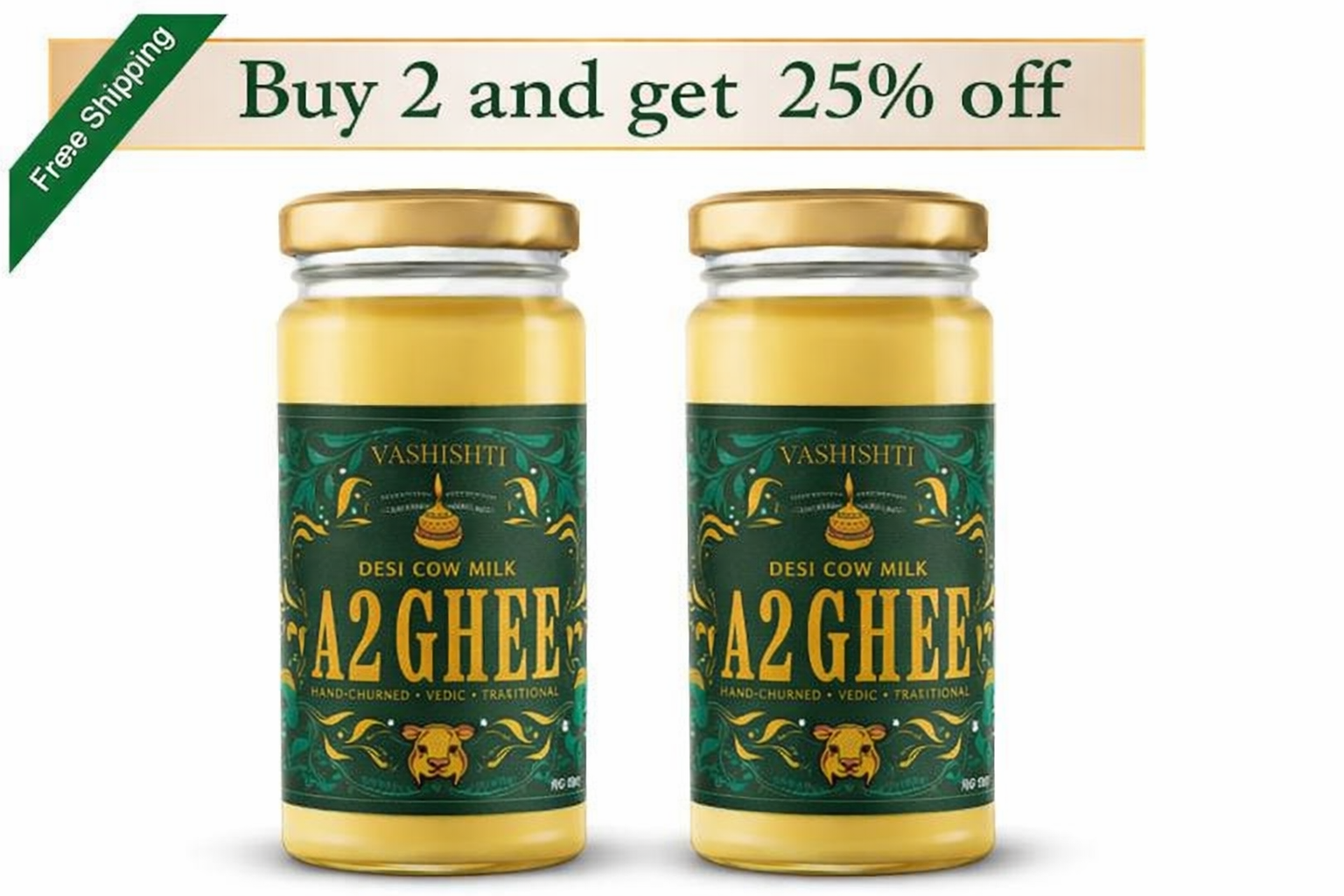
Ghee from A2 milk has become popular not because it is fashionable, but because people are reconnecting with traditional Indian food wisdom. For brands like Vashishti, this is not about selling a product. It is about preserving a process.
What Is Ghee from A2 Milk?
Ghee from A2 milk is prepared using milk obtained from indigenous Indian cow breeds that naturally produce A2 beta casein protein.
In simple terms, the difference lies in the type of protein present in the milk. Traditional desi cows produce milk containing A2 protein, which many people find easier to digest compared to regular milk.
When this milk is converted into ghee using the traditional bilona method, the result is rich, aromatic, and deeply nourishing.
Why Families Are Choosing A2 Milk Ghee
Over the past few years, we have seen a shift in consumer mindset. People are reading labels. They are asking questions. They want to know where their food comes from.
Here are the key reasons why ghee from A2 milk stands out:
1. Digestive Comfort
Many households report that A2 ghee feels lighter and easier on the stomach. Unlike heavily processed fats, traditionally prepared ghee supports digestion rather than burdening it.
2. Traditional Preparation
When prepared using the bilona process:
- Milk is first converted into curd
- Curd is churned to extract butter
- Butter is slowly heated to make ghee
This slow method preserves nutrients and enhances flavor.
3. Rich Aroma and Taste
If you have ever opened a jar of authentic A2 ghee, you know the difference instantly. The nutty aroma fills the room. A small spoon is enough to elevate dal, roti, or khichdi.
4. Nutritional Value
A2 ghee naturally contains:
- Healthy fats
- Fat-soluble vitamins
- Butyric acid, which supports gut health
It is not about consuming more fat. It is about consuming the right kind of fat.
A Practical Look at Everyday Use
Let us move away from theory and talk about real kitchens.
In many Indian homes:
- A spoon of ghee is added to a child’s dal rice
- Warm ghee is mixed in morning coffee or herbal drinks
- Rotis are lightly brushed with ghee for softness
- It is used in festive sweets and temple offerings
One of our long-time customers shared how replacing refined oil with A2 ghee in moderation improved not just taste but overall satisfaction in meals. They felt fuller, and cravings reduced.
The key is moderation and quality.
How to Identify Genuine A2 Milk Ghee
With rising demand, the market is also crowded with misleading labels. Here are practical tips:
- Check if the brand mentions indigenous cow breed sourcing
- Look for traditional bilona method mention
- Observe texture and aroma. Authentic ghee has a granular texture
- Avoid products with artificial fragrance or additives
Trust comes from transparency.
Common Myths About Ghee from A2 Milk
Myth 1: All ghee is the same
Reality: Source of milk and preparation method make a significant difference.
Myth 2: Ghee causes weight gain
Reality: Excess of anything causes weight gain. When consumed in controlled portions, ghee can be part of a balanced diet.
Myth 3: It is only for older generations
Reality: Modern nutrition science is rediscovering what Ayurveda has long supported. Healthy fats are essential at every age.
FAQs About Ghee from A2 Milk
Is A2 milk ghee suitable for daily use?
Yes, when consumed in moderation, it can be included in daily meals as a natural fat source.
Does it help in digestion?
Many people find it easier to digest compared to heavily processed fats. It also contains butyric acid that supports gut health.
Why is A2 ghee more expensive?
Because it involves:
- Indigenous cow rearing
- Smaller milk yield
- Traditional slow preparation methods
Quality takes time and care.
The Vashishti Approach
At Vashishti, the philosophy is simple. If it cannot be served to our own families, it should not be sold.
From sourcing milk from desi cows to following traditional preparation methods, every step is guided by purity and patience. There are no shortcuts in authentic ghee making.
Food is deeply emotional in India. It connects generations. When someone chooses ghee from A2 milk, they are not just choosing a product. They are choosing trust, heritage, and nourishment.
Conclusion
Ghee from A2 milk is not a modern invention. It is a return to roots.
In a world filled with processed choices, traditional foods stand out because they are simple and honest. When prepared correctly and consumed mindfully, A2 milk ghee can become a valuable part of a balanced lifestyle.
The real difference lies not just in the label, but in the process, sourcing, and intention behind it.
For families seeking purity, authenticity, and taste that reminds them of home, ghee from A2 milk offers exactly that.
