

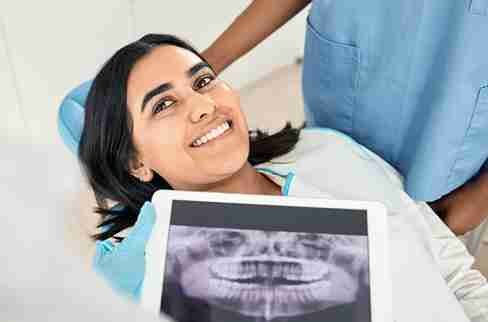
In recent years, Artificial Intelligence (AI) has evolved from a futuristic concept into a practical, indispensable tool across various fields of healthcare and dentistry is no exception. Among the most impressive applications of AI is in the management and surgical removal of impacted teeth, one of the more technically demanding procedures in oral surgery. By combining human expertise with intelligent digital systems, dental professionals are achieving unprecedented levels of accuracy, efficiency and patient comfort.This blog explores how AI-assisted technologies are transforming impacted tooth extractions from diagnostics and planning to surgical execution and post-operative care marking a new era in precision dentistry.
Understanding Impacted Teeth and Traditional Surgical Challenges
An impacted tooth occurs when it cannot erupt correctly due to lack of space or obstruction by nearby teeth, often causing pain and infection. Traditionally, surgical extractions depended on the dentist’s expertise and 2D X-rays, which though effective, offered limited visual accuracy and increased procedural challenges.
- Restricted visibility of nerves, bone density and root positioning.
- Higher risk of surgical complications such as nerve damage or dry socket.
- Longer procedure times due to the need for manual adjustments.
With the introduction of AI-driven systems into procedures such as surgical tooth extraction Leeds ,dentists can now access real-time insights, digital simulations and predictive analytics that make treatment planning far more accurate and minimally invasive.
The Advent of AI in Dentistry
AI in dentistry refers to the use of computer algorithms and machine learning to analyse patient data, radiographs, and 3D scans for improved diagnostics and surgical precision. In oral surgery, AI plays a central role in:
- 3D Imaging interpretation processing high-resolution scans to identify anatomical landmarks.
- Predictive Modelling forecasting potential complications before surgery begins.
- Real-Time Guidance providing navigation and movement feedback during procedures.
These technologies are not only revolutionising surgical accuracy but also enhancing patient trust and satisfaction by offering clear, data-backed visualisations of the entire treatment process.
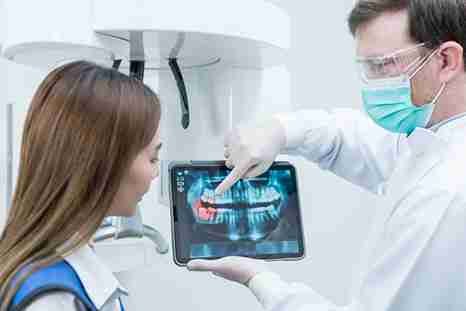
AI Applications in Impacted Tooth Extractions
AI has reshaped how dental professionals approach impacted tooth removal combining advanced imaging,predictive analytics and robotic precision to ensure safer and faster results.
1. AI-Enhanced Diagnostic Imaging
Traditional X-rays offer only a two-dimensional perspective, making it difficult to visualise underlying bone structures and nerve paths. With AI-integrated 3D Cone Beam Computed Tomography (CBCT) scans, clinicians gain a comprehensive, multi-layered view of the patient’s anatomy.
Key Advantages:
- Accurate detection of tooth position and depth.
- Identification of nerve proximity to avoid accidental damage.
- Better planning for incision points and bone removal areas.
AI systems automatically highlight areas of concern allowing dentists to make data-driven decisions rather than relying solely on manual interpretation.
2. Predictive Surgical Planning
Once diagnostic imaging is complete, AI-powered software generates a virtual surgical simulation. This digital map outlines precise incision sites, bone removal volumes, and extraction angles. The predictive model can also simulate patient-specific challenges such as bone density variations or root curvature allowing for proactive planning.
Benefits of AI-Guided Planning:
- Reduced surgical time due to pre-defined pathways.
- Minimized soft tissue trauma.
- Enhanced predictability and safety throughout the procedure.
In advanced clinics that perform Surgical Tooth Extraction Leeds such planning ensures the entire process is controlled, consistent and tailored to each patient’s anatomy.
3. Real-Time AI-Guided Surgical Execution
During surgery, AI doesn’t just assist in planning, it continues to play a crucial role in guiding the procedure. Robotic and AI-assisted systems track every movement of the surgical instrument, ensuring millimetre-level accuracy.
| Aspect | Traditional Extraction | AI-Assisted Extraction |
| Visualisation | 2D X-rays | 3D digital mapping |
| Accuracy | Surgeon experience-based | Data and sensor-driven |
| Duration | Longer | Shorter and streamlined |
| Risk of Complications | Higher | Significantly reduced |
Real-time feedback from AI sensors alerts the dentist if too much pressure is applied or if the tool moves too close to a nerve. This prevents errors and enhances patient safety, an especially valuable advantage for complex impacted tooth cases.
4. AI-Powered Post-Surgery Monitoring
AI extends beyond surgery by analysing recovery data, predicting healing timelines, and detecting complications early. In dental implant Leeds clinics, AI tracks healing progress through image comparisons for precise post-operative monitoring.
Post-Surgery AI Benefits:
- Predictable healing with reduced risk of infection.
- Customised aftercare recommendations.
- Early intervention in case of abnormalities.
This approach ensures smoother recovery and improved long-term results for patients undergoing both tooth extractions and implant treatments.
Benefits of AI-Assisted Tooth Extractions
AI-assisted dentistry brings measurable improvements for both patients and dental practitioners.
Key Benefits Include:
- Precision improved accuracy in locating roots, nerves, and bone structures.
- Comfort reduced surgical invasiveness leads to minimal pain and swelling.
- Speed optimised workflows shorten procedure and recovery time.
- Safety real-time monitoring prevents potential complications.
- Predictability consistent, data-backed outcomes boost patient trust.
By blending technology with human expertise, modern clinics are able to deliver treatments that are not only effective but also reassuringly precise.
The Human AI Collaboration in Dentistry
While AI can process vast amounts of data and deliver exceptional precision, it does not replace human skill or judgement. Instead, it acts as an intelligent assistant empowering dental surgeons to make smarter, more confident decisions.Dentists still play a vital role in interpreting AI-generated insights, adapting to unexpected conditions and ensuring patient comfort throughout the process. This synergy between human empathy and machine accuracy creates a new gold standard for dental care.
The Future of AI in Oral Surgery
As technology continues to advance, the future of AI in oral and maxillofacial surgery looks increasingly promising. Upcoming innovations may include:
- Fully automated robotic systems that perform routine surgical tasks.
- Augmented Reality (AR) overlays guiding surgeons in real-time.
- AI-driven remote monitoring apps for post-operative recovery.
Such developments will further reduce treatment times, enhance safety, and provide more personalised care experiences.
Conclusion
Artificial Intelligence is revolutionising impacted tooth extractions by enhancing every stage from diagnosis and planning to execution and recovery. Through advanced imaging, data analytics, and robotic precision, AI enables safer, faster, and more predictable results for patients and clinicians alike.For those seeking exceptional dental care powered by innovation, Smilo Dental Implant Leeds combines advanced AI-assisted techniques with professional expertise to ensure every procedure is performed with the highest level of precision, comfort and safety.
