

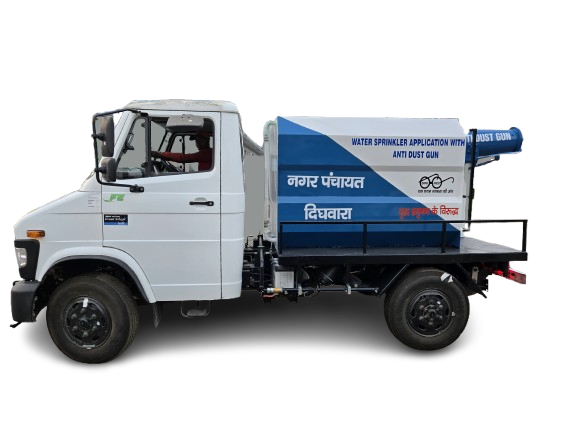
Air pollution has emerged as one of the most serious environmental and public health challenges worldwide, particularly in rapidly urbanizing countries like India. Construction dust, industrial emissions, vehicular pollution, and seasonal factors such as crop residue burning significantly degrade air quality. In this context, the anti smog gun has become a highly effective and widely adopted solution for controlling airborne dust and particulate matter. This article provides a comprehensive, SEO-friendly overview of the anti smog gun, including its working principle, applications, benefits, and its growing role in pollution control across India.
What Is an Anti Smog Gun?
An anti smog gun is a mechanical device designed to suppress airborne dust and fine particulate matter by spraying ultra-fine mist droplets into the air. These droplets bind with dust particles, increasing their weight and causing them to settle on the ground instead of remaining suspended in the atmosphere. As a result, the device helps reduce PM10 and PM2.5 levels in polluted environments.
The anti smog gun is commonly deployed at construction sites, demolition zones, mining areas, industrial plants, highways, and waste handling facilities. Its ability to cover large areas efficiently makes it far more effective than traditional water spraying methods.
Why the Anti Smog Gun Is Critical for Pollution Control
Airborne dust is a major contributor to urban smog, especially in metropolitan cities. Prolonged exposure to polluted air can lead to respiratory diseases, cardiovascular problems, and reduced quality of life. The anti smog gun for pollution control plays a vital role in mitigating these risks by targeting pollution at its source.
Government bodies, municipal corporations, and private industries increasingly mandate the use of anti smog guns as part of environmental compliance and sustainability initiatives.
Anti Smog Gun Working: How the Technology Functions
Understanding anti smog gun working is essential to appreciating its effectiveness. The device operates on a simple yet powerful principle:
- Water Intake and Filtration:- Water is drawn from a tank or pipeline and passed through filtration systems to remove impurities that could clog nozzles.
- High-Pressure Pump System:- A powerful pump pressurizes the water, forcing it through specially designed nozzles.
- Mist Generation:- The nozzles atomize the water into micro-droplets, typically in the range of 20–50 microns.
- High-Velocity Air Throw:- A fan or blower projects the mist over long distances, often ranging from 20 meters to more than 100 meters.
- Dust Suppression:- The mist captures airborne dust particles, making them heavier and causing them to settle.
This efficient working mechanism makes the anti smog gun a preferred solution for large-scale dust suppression.
Anti Smog Gun Uses Across Industries
The anti smog gun uses extend across multiple sectors where dust and air pollution are major concerns:
Construction and Demolition Sites
Construction activities generate massive dust clouds. Anti smog guns effectively control this dust, ensuring compliance with environmental norms.
Mining and Quarrying
Mining operations release fine particulate matter into the air. Deploying anti smog guns reduces health risks for workers and nearby communities.
Industrial Plants
Factories handling raw materials such as cement, coal, or minerals rely on anti smog guns for pollution control and workplace safety.
Road Construction and Infrastructure Projects
During highway construction, anti smog guns help control dust over extended stretches of road.
Waste Management Facilities
Landfills and waste processing plants use anti smog guns to suppress foul odors and dust emissions.
Anti Smog Gun for Fog Control: An Emerging Application
Beyond dust suppression, the anti smog gun for fog control is gaining attention in regions prone to heavy smog and fog conditions. While it does not eliminate fog entirely, the mist can help reduce the density of particulate-laden fog in localized areas such as industrial zones and transport corridors.
This application is particularly useful during winter months in northern India, when smog levels peak due to temperature inversion and reduced wind movement.
Anti Smog Gun for Pollution Control: Environmental Benefits
The anti smog gun for pollution control offers several environmental and operational advantages:
- Significant reduction in PM2.5 and PM10 levels
- Improved air quality in high-risk zones
- Reduced dependency on chemical dust suppressants
- Lower water consumption compared to conventional sprinklers
- Enhanced visibility and safer working conditions
These benefits make the anti smog gun an environmentally responsible choice for pollution mitigation.
Anti Smog Gun for Pollution Control in India: Current Scenario
The adoption of anti smog gun for pollution control in India has increased rapidly over the past decade. Major metropolitan cities such as Delhi, Mumbai, Bengaluru, and Chennai have made dust control mandatory at construction and infrastructure sites.
Government agencies like the Central Pollution Control Board (CPCB) and National Green Tribunal (NGT) have issued strict guidelines encouraging or mandating the use of anti smog guns. As a result, both mobile and fixed anti smog gun systems are now commonly seen at large-scale projects across the country.
India’s growing focus on sustainable development and smart cities has further accelerated demand for advanced pollution control equipment.
Types of Anti Smog Guns Available
Anti smog guns are available in various configurations to suit different operational requirements:
- Fixed Anti Smog Guns – Installed at permanent sites such as factories or mining areas
- Mobile Anti Smog Guns – Mounted on trailers or vehicles for flexible deployment
- Truck-Mounted Anti Smog Guns – Used for large-scale urban pollution control
- Oscillating Anti Smog Guns – Cover wider areas with automatic rotation
Selecting the right type depends on area size, dust intensity, and operational mobility needs.
Key Factors to Consider When Choosing an Anti Smog Gun
When investing in an anti smog gun, organizations should evaluate the following factors:
- Throw range and coverage area
- Water consumption rate
- Power source (electric, diesel, or hybrid)
- Nozzle quality and droplet size
- Ease of maintenance and durability
- Compliance with environmental standards
Choosing the right system ensures long-term efficiency and cost-effectiveness.
Voice Search Optimization: Common User Questions
To optimize for voice search, here are answers to frequently asked questions:
What is an anti smog gun used for?
An anti smog gun is used to control dust and air pollution by spraying fine mist particles that suppress airborne pollutants.
How does an anti smog gun work?
Anti smog gun working involves high-pressure mist generation that captures dust particles and brings them down to the ground.
Is anti smog gun mandatory in India?
In many cities, regulatory bodies mandate the use of anti smog guns at construction and demolition sites.
Future of Anti Smog Gun Technology
With increasing environmental awareness and stricter regulations, the future of anti smog gun technology looks promising. Innovations such as automated controls, IoT-enabled monitoring, and energy-efficient designs are making these systems smarter and more sustainable.
As urbanization continues, the anti smog gun will remain a critical tool in India’s fight against air pollution.
Conclusion
The anti smog gun has proven to be a reliable, efficient, and eco-friendly solution for managing air pollution across diverse industries. From construction sites to industrial plants, its applications are vast and impactful. With rising concerns over air quality and public health, adopting advanced dust suppression systems is no longer optional but essential. Alongside complementary solutions like the water sprinkler, anti smog guns play a crucial role in creating cleaner, healthier, and more sustainable environments.
