

Introduction: Connectivity Challenges in Robotic Systems
Robotic systems operate in environments where constant motion, vibration, and acceleration put extreme stress on every component. Even a small disruption in connectivity can lead to serious consequences. Micro-disconnections in power or signal paths may cause control faults, encoder errors, or unexpected emergency stops, bringing production lines to a halt and affecting overall efficiency.
To address these challenges, high-retention connectors play a critical role. By securing both power delivery and low-level signal transmission, these connectors ensure stable, reliable operation even under mechanical stress.
For robotics and automation, using robust PCB connectors and electric wire connectors is not just a convenience-it’s a necessity for safety and consistent performance.
What Are High-Retention PCB Connectors?
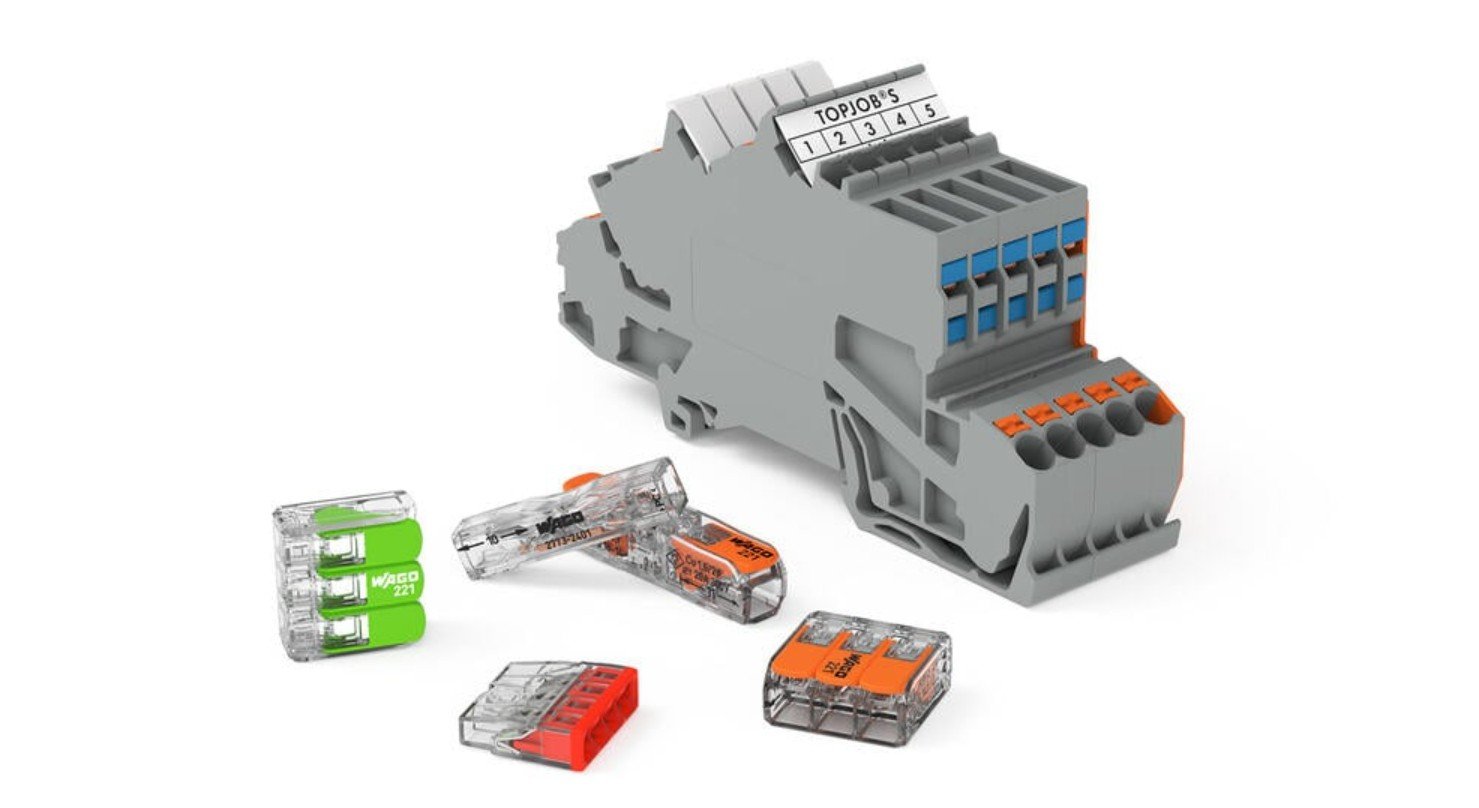
High-retention PCB connectors are special connectors designed to stay securely in place, even when a robot moves, vibrates, or shakes. They use locking features like latches, screw locks, or other positive engagement mechanisms, all of which are rated for specific retention forces measured in newtons, to prevent accidental disconnection
Unlike friction-fit designs, which may suffice for low-risk signal lines, these connectors are essential for mission-critical connections in robotics. Their design ensures that even under repeated vibration or sudden acceleration, the connection remains secure.
Furthermore, Contact plating materials further enhance performance. Gold plating is commonly used on signal paths to maintain integrity, while tin or silver plating is preferred for power lines due to their excellent conductivity. This ensures that both signal fidelity and current carrying capacity meet the demanding requirements of modern automation.
Technical Requirements in Robotics and Automation
Robotic systems must handle constant movement, vibration, and mechanical stress without failing. High-retention PCB connectors and electric wire connectors are built to meet tough industrial standards like IEC 60068 and MIL-STD, which test for shock and vibration. This ensures connections stay secure even in demanding conditions.
Signal integrity is equally critical. Feedback lines, encoders, and communication buses rely on connectors that prevent noise and signal loss. Thermal cycling and repeated high-current transmission can cause mechanical fatigue or increased contact resistance, but properly designed high-retention connectors mitigate these issues, ensuring reliable operation over time.
Benefits Over Conventional Connectors
Compared to standard connectors, high-retention designs reduce failure rates in both power and signal lines. Motors, servo drives, and control modules benefit from fewer interruptions, while signal connectors maintain precise communication between controllers and sensors.
These connectors also boast longer lifecycles, handling high insertion cycles without compromising performance. The result is reduced maintenance costs, less troubleshooting, and minimized unplanned downtime- which is a critical factor in high-speed production and industrial robotics.
Applications in Robotic Architectures
High-retention PCB connectors and electric wire connectors are used in many parts of robotic systems to keep them running smoothly. Key applications include:
- Servo drives and motor controllers
- Use high-retention power connectors to deliver stable current to motors.
- Prevent power interruptions that could stop motion or cause errors.
- Sensor boards and feedback modules
- High-retention signal connectors keep encoder and vision system signals accurate.
- Reduce the risk of control faults caused by loose or intermittent connections.
- Control backplanes
- Combine power and data connectors in one system.
- Maintain mechanical stability even under vibration and repeated motion.
- Ensure reliable communication between different robotic modules.
These connectors help robots operate safely and efficiently, supporting both power delivery and precise signal transmission in demanding industrial environments.
Role in Smart Factory Ecosystems
In modular robotics, frequent reconfiguration demands connectors that maintain performance despite repeated mating cycles. High-retention connectors allow easy cabinet-to-board transitions, ensuring that automation systems remain adaptable.
Automated assembly lines also benefit from these connectors, as repeated robotic handling requires components that can withstand wear while maintaining reliability. By integrating high-retention connectors throughout smart factory setups, manufacturers achieve both operational efficiency and reduced maintenance burdens.
Future Trends in PCB Connectivity
The world of robotics and automation is evolving fast, and so are PCB connectors and electric wire connectors. One major trend is miniaturized high-speed signal connectors, which allow real-time communication between sensors, controllers, and motors. These smaller connectors save space while supporting faster, more reliable data transfer.
Another important development is embedded diagnostics. Some connectors now have features that monitor contact health or detect if a connection is properly inserted. This helps prevent failures before they happen, making systems safer and reducing downtime.
Standardization is also becoming key. Robotic platforms are moving towards separate connector families for power, signal, and safety circuits. This makes system design easier, improves compatibility across devices, and ensures reliable operation.
By combining compact design, smart diagnostics, and standardized connector families, high-retention PCB connectors are set to play a central role in the next generation of robotics and smart factories.
