

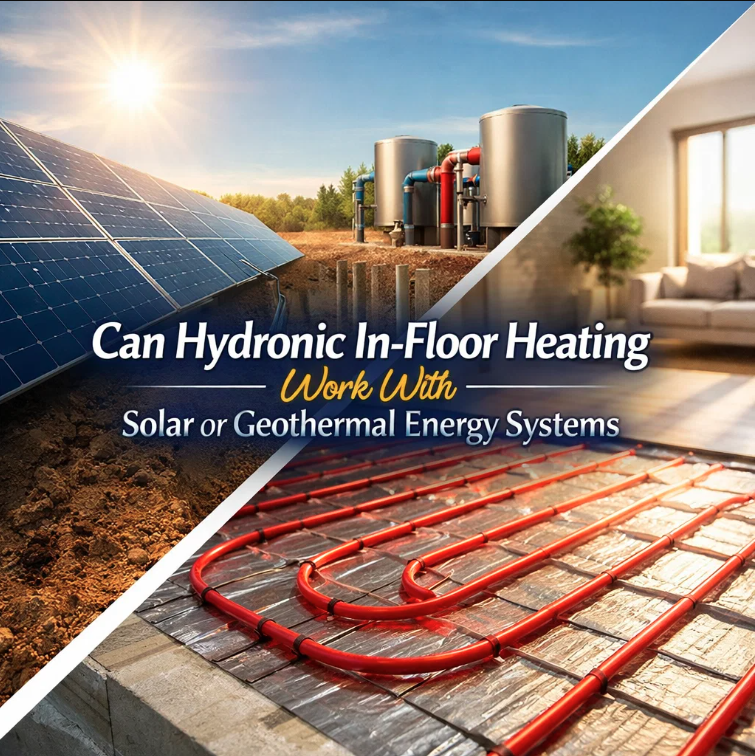
If you’re exploring ways to make your home energy-efficient, you’ve probably heard of hydronic in-floor heating. This system, which uses warm water running through pipes beneath the floor, is a popular choice for homeowners looking for comfortable and consistent heating. But how does it work when combined with other energy-saving systems, like solar or geothermal energy? In this blog, we’ll explore how these systems can work together and if they are a good fit for your home.
What is Hydronic In-Floor Heating?
Hydronic in-floor radiant heating is a system that uses hot water to warm your home. It involves a network of pipes installed under your floors, which are heated by a boiler or water heater. As the warm water flows through the pipes, it radiates heat upward, warming the floor and creating a cozy atmosphere in your home. This type of heating is known for being energy-efficient and providing even heat throughout the space. Plus, it’s a comfortable solution because the warmth comes from the floor up, unlike forced air systems which can leave cold spots.
Can Hydronic In-Floor Heating Work with Solar Energy?
Yes, it can! Many homeowners today are looking for renewable energy solutions like solar panels to reduce their carbon footprint and lower their energy bills. Solar energy can be used to power the boiler that heats the water for your hydronic in-floor heating system. Here’s how it works:
- Solar Panels Generate Power: Solar panels installed on your roof capture sunlight and convert it into electricity. This electricity can be used to run various parts of your home, including the boiler that heats the water for the in-floor system.
- Reduced Energy Bills: By using solar energy to power the heating system, you’re using free energy from the sun, which can significantly reduce your reliance on electricity from the grid and lower heating costs.
- Sustainability: Using solar energy for heating makes your home more eco-friendly. Since solar power is renewable, you’ll be contributing to a cleaner, greener environment while staying warm.
While integrating solar with hydronic heating is possible, it’s important to size your solar system correctly. You’ll want enough panels to cover the energy needs of your heating system and other appliances.
Read also: Is Zoning Important in Hydronic Radiant Floor Heating Systems for Large Homes?
How About Geothermal Energy?
Geothermal energy, which uses the Earth’s constant temperature to heat and cool your home, is another excellent option for combining with hydronic in-floor heating systems. Here’s why:
- Ground Source Heat Pumps: Geothermal systems use heat pumps to pull heat from the ground and transfer it into your home. These pumps can easily connect to your hydronic in-floor heating system. The heat pump will heat the water, which then flows through the pipes under your floor to provide warmth.
- Energy-Efficient Heating: Geothermal systems are known for being highly efficient. They use less energy than traditional heating systems because the ground temperature remains fairly constant throughout the year. This makes geothermal energy a perfect match for hydronic systems, helping you save money on heating while reducing your environmental impact.
- Long-Term Investment: While the initial cost of installing a geothermal system can be high, it pays off in the long run with low operating costs and long-lasting benefits. When paired with a hydronic in-floor heating system, the result is an extremely efficient and sustainable home heating solution.
Are There Any Challenges?
While combining solar or geothermal with hydronic in-floor heating is a great idea, there are a few things to consider:
- Upfront Costs: Both solar and geothermal systems require an upfront investment. Installation can be expensive, but over time, the savings on energy bills will make up for it.
- Space Requirements: Solar panels need a sunny roof, and geothermal systems require space for underground loops. Be sure to consider the space and your home’s location before committing to these systems.
- Maintenance: Like any heating system, hydronic, solar, and geothermal systems require regular maintenance. However, they are generally low-maintenance compared to traditional heating systems.
Summing Up
Hydronic in-floor heating is an excellent option for homeowners who want a comfortable, energy-efficient way to heat their homes. When paired with renewable energy sources like solar or geothermal systems, it becomes even more powerful, helping you reduce your carbon footprint while cutting down on heating costs. If you are considering in-floor radiant heating systems Ontario, keep in mind that combining these systems with solar or geothermal energy can give you a sustainable, cost-effective heating solution for years to come.
With the right guidance and professional installation, you can enjoy the warmth of hydronic heating while reducing your impact on the environment.
