

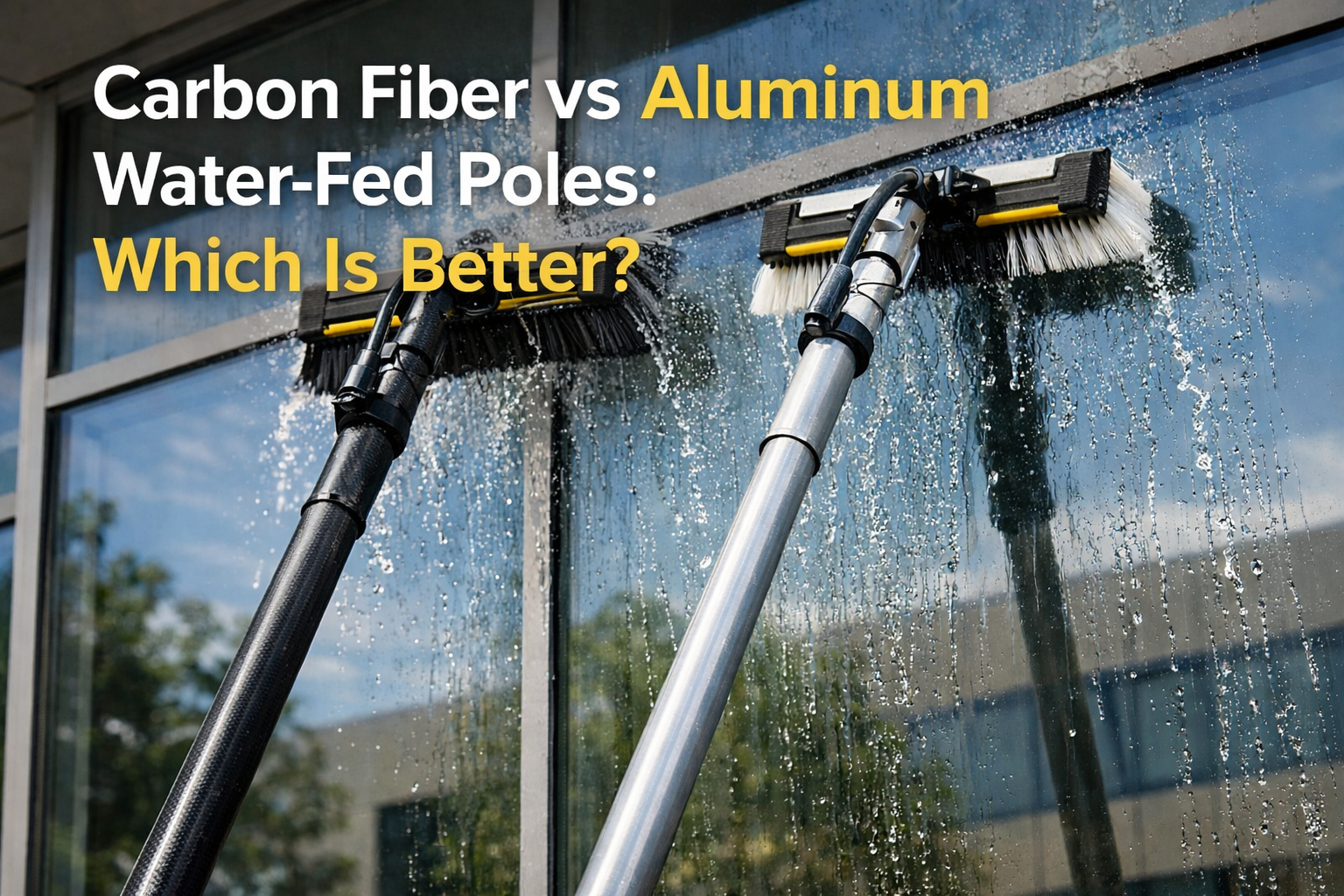
Choosing the right equipment can change how efficient and comfortable your workday feels. For window cleaners, few tools matter more than water-fed poles. The material of the pole affects weight, control, safety, and long-term value. Carbon fiber and aluminum are the two most common options, but they are built for different types of users. Understanding the real differences between these materials helps you choose a pole that supports your work rather than slowing you down.
What Are Water-Fed Poles and Why Material Matters
Water-fed poles are designed to deliver purified water to a brush at the top of an extendable pole. This system allows cleaners to wash windows safely from the ground while achieving streak-free results. Because water-fed poles are often used at full extension, the material of the pole has a direct impact on performance and comfort.
A heavier pole requires more effort to lift, control, and stabilize. A flexible pole can make accurate brushing difficult at height. These factors become even more important during long workdays or when cleaning multi-story buildings.
Carbon Fiber Water-Fed Poles Explained
Carbon fiber water-fed poles are widely used by professional cleaners who work at higher levels or rely on their equipment daily. The material is known for being both strong and lightweight, which makes a noticeable difference during extended use.
Key Features of Carbon Fiber Water-Fed Poles
Carbon fiber poles are significantly lighter than aluminum options. They remain rigid even when fully extended, which improves brush control and reduces unwanted flex. The surface finish is typically smooth, making the pole comfortable to handle and easy to maneuver.
Benefits of Using Carbon Fiber Water-Fed Poles
The biggest advantage of carbon fiber water-fed poles is reduced fatigue. Lighter weight means less strain on the shoulders, arms, and back. Better rigidity also allows for faster, more precise cleaning, especially on upper floors. Over time, these benefits add up to increased productivity and a more comfortable workday.
Potential Drawbacks of Carbon Fiber Poles
Carbon fiber poles usually cost more upfront. They also require proper care to avoid damage from drops or misuse. For some users, the higher price can be a barrier when first investing in water-fed poles.
Aluminum Water-Fed Poles Explained
Aluminum water-fed poles have been used in the industry for many years and remain a popular choice, particularly for beginners or those working at lower heights.
Key Features of Aluminum Water-Fed Poles
Aluminum poles are known for their solid construction and durability. They are heavier than carbon fiber poles and tend to flex more at full extension. However, they are capable of handling regular use and are often seen as a practical entry-level option.
Benefits of Aluminum Water-Fed Poles
The main advantage of aluminum water-fed poles is affordability. They offer a lower purchase price, making them accessible for those new to water-fed cleaning systems. Aluminum poles are also sturdy and can handle rougher handling in certain work environments.
Limitations of Aluminum Poles
The added weight of aluminum poles can lead to fatigue during longer jobs. Flex at height can reduce control and slow down cleaning speed. These issues become more noticeable when working on taller buildings or using the pole for several hours at a time.
Carbon Fiber vs Aluminum Water-Fed Poles: A Direct Comparison
When comparing carbon fiber and aluminum water-fed poles, the differences become clear in daily use rather than on paper.
Weight and Handling
Carbon fiber water-fed poles are easier to lift and control, especially at full extension. Aluminum poles require more effort and can feel unbalanced during extended use.
Rigidity and Performance at Height
Carbon fiber poles maintain their stiffness at height, allowing for accurate brush movement. Aluminum poles tend to flex more, which can make precise cleaning harder on upper floors.
Durability and Longevity
Both materials can last for years when properly maintained. Carbon fiber holds its shape better over time, while aluminum may bend or loosen with heavy use.
Safety Considerations
Material choice also affects safety. Carbon fiber water-fed poles designed for professional use are often tested for electrical safety. Aluminum conducts electricity, which requires additional awareness when working near power lines.
Cost and Long-Term Value
Aluminum water-fed poles cost less initially, which can be appealing for new businesses or occasional users. Carbon fiber poles require a higher upfront investment but often deliver better value over time through improved efficiency, reduced fatigue, and longer service life.
For professionals who rely on water-fed poles every day, the long-term benefits of carbon fiber often outweigh the initial cost.
Choosing the Right Water-Fed Poles for Your Work
The right choice depends on how and where you work. If you primarily clean low-rise buildings or are just starting out, aluminum water-fed poles may meet your needs. If you regularly clean higher windows, work long hours, or want maximum control and comfort, carbon fiber water-fed poles are usually the better option.
Matching your equipment to your workload helps improve results and reduces physical strain over time.
Final Thoughts
Both carbon fiber and aluminum water-fed poles have a place in the window cleaning industry. Aluminum offers affordability and durability, while carbon fiber provides superior handling, comfort, and performance. The best choice is the one that supports your daily work, keeps you efficient, and helps you deliver consistent results.
Investing in the right water-fed poles is not just about price. It is about choosing tools that work as hard as you do.
