

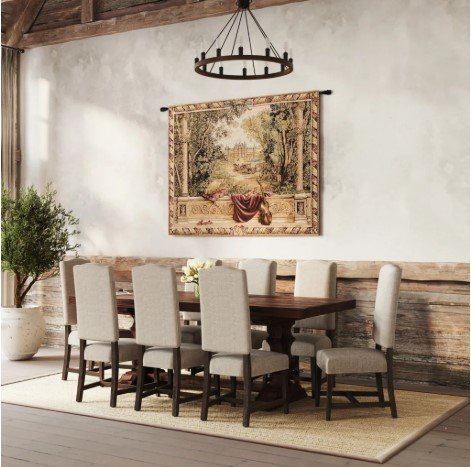
Tapestries have long served as both decoration and storytelling devices, combining artistry with function. Among collectors and historians, tapestry wall hangings antique pieces are valued not only for their craftsmanship but also for the symbolic motifs woven into their designs. Before paintings became common in domestic interiors, wall hangings insulated stone walls and visually communicated wealth, faith, and cultural identity. The imagery chosen for these textiles was deliberate, often reflecting the beliefs, politics, and daily life of the era in which they were produced. Understanding these recurring motifs helps modern buyers interpret age, origin, and meaning.
Historical Background of Tapestry Imagery
Many surviving antique tapestries were woven between the 14th and 18th centuries in prominent European weaving centers such as Flanders, France, and the town of Aubusson. Royal workshops like the Gobelins Manufactory standardized large narrative cycles and decorative themes that influenced workshops across the continent. While techniques and dye sources varied, the symbolic vocabulary of motifs remained remarkably consistent. These wall hangings were woven with wool, silk, and occasionally metallic threads, allowing for vivid scenes that could rival paintings in detail.
Religious and Biblical Narratives
Religion dominated early tapestry design. Churches, castles, and noble households commissioned scenes from the Bible to demonstrate devotion and authority. Common subjects included the Annunciation, Nativity, Crucifixion, and the lives of saints. These narrative tapestries served educational purposes for largely illiterate audiences, communicating stories through imagery.
Symbolic elements frequently appeared within these works. Lambs represented sacrifice, lilies signified purity, and halos identified holy figures. Because these pieces were large and labor-intensive, they were often displayed on feast days or during important ceremonies, reinforcing their spiritual and communal significance.
Nature and the Tree of Life
Botanical and landscape themes are among the most enduring motifs in tapestry wall hangings antique collections. Verdure tapestries, filled with dense foliage, birds, and small animals, became especially popular in the 16th and 17th centuries. These designs provided a calming, garden-like atmosphere inside grand interiors.
One of the most recognizable nature symbols is the tree of life tapestry. This motif appears across cultures and represents growth, renewal, and the interconnectedness of life. In antique examples, the tree is often surrounded by birds, deer, or mythical creatures, suggesting harmony between humanity and nature. Such imagery appealed to both religious and secular patrons because it conveyed prosperity and continuity.
Heraldic and Noble Symbols
Tapestries also functioned as statements of lineage and power. Heraldic motifs, including coats of arms, crests, and family emblems, were woven directly into borders or central panels. Lions, eagles, fleur-de-lis, and shields identified specific dynasties and territories.
These wall hangings were portable, making them useful during travel or military campaigns. Nobles could hang them in temporary residences to instantly establish status. Today, these heraldic details help historians date pieces and trace ownership, increasing their value among collectors.
Mythology and Allegory
Classical mythology provided another rich source of inspiration. Scenes featuring gods, heroes, and allegorical figures reflected the Renaissance fascination with Greco-Roman culture. Stories of Diana, Venus, or Hercules symbolized virtues such as strength, beauty, or wisdom.
Allegorical tapestries often depicted the seasons, the senses, or the elements. Rather than literal storytelling, these works conveyed philosophical ideas. For instance, Spring might be represented by blooming flowers and young figures, while Winter showed bare trees and muted colors. Such compositions allowed patrons to display both taste and intellectual sophistication.
Hunting and Courtly Life Scenes
Hunting scenes were especially common in aristocratic settings. Depictions of riders, hounds, forests, and game animals celebrated leisure activities reserved for the elite. These energetic designs also showcased the weavers’ technical skill, with layered landscapes and intricate details.
Courtly life scenes, including banquets, music, and romance, offered glimpses into daily life. These tapestries were decorative yet documentary, preserving clothing styles, architecture, and social customs of their time.
Borders, Patterns, and Decorative Flourishes
Beyond central imagery, borders played an important decorative role. Floral garlands, fruit clusters, and geometric patterns framed the main scene and protected the edges from wear. Repeating motifs such as acanthus leaves or scrolling vines added rhythm and visual balance. These ornamental details often distinguish regional styles and help experts identify where a piece was woven.
Conclusion
The enduring appeal of tapestry wall hangings antique lies in their layered symbolism and historical richness. From sacred narratives and heraldic emblems to lush verdure scenes and the meaningful tree of life tapestry, each motif tells a story about the people and cultures that produced it. Whether displayed in traditional or modern interiors, these artworks connect us to centuries of craftsmanship and meaning, much like treasured vintage tapestries. Recognizing these patterns enables collectors and homeowners to appreciate their wall hangings not just as decoration but as woven history.
