

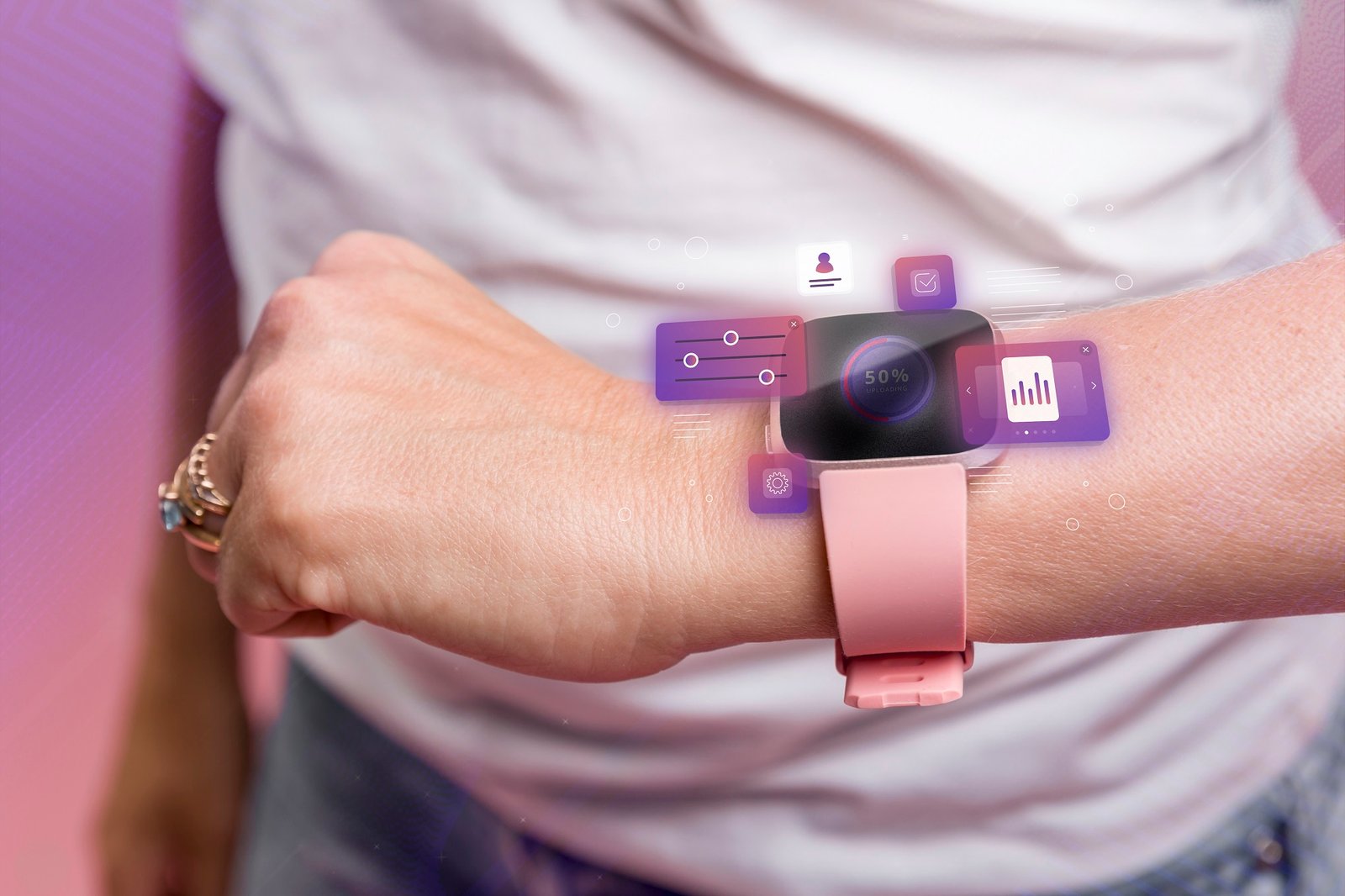
Enterprises across industries are rapidly adopting wearable technologies to improve productivity, enhance employee well-being, streamline operations, and deliver hyper-personalized customer experiences. From smartwatches and fitness trackers to industrial wearables and medical devices, the value of wearable apps lies in their ability to collect real-time data and turn it into actionable insights. This is where artificial intelligence becomes a decisive force. AI is not just an add-on feature; it is fundamentally reshaping how enterprises approach wearable solutions and how a wearable app development company designs, builds, and scales these applications.
As businesses increasingly look for service partners rather than generic apps, understanding how AI-driven wearable app development works has become critical. This article explores how AI transforms wearable app development for enterprises, why it matters for decision-makers, and what to look for when selecting the right development partner.
The Enterprise Shift Toward Intelligent Wearables
Wearable technology has moved beyond consumer fitness use cases. Enterprises now deploy wearables in healthcare, manufacturing, logistics, insurance, retail, and corporate wellness programs. These devices generate massive volumes of data, including biometric signals, movement patterns, environmental conditions, and behavioral metrics. Without intelligence, this data remains underutilized.
AI enables enterprises to extract value from wearable data by identifying patterns, predicting outcomes, and automating decisions. A modern wearable app development company no longer focuses only on device connectivity and UI design. Instead, it integrates AI models that continuously learn from data streams and adapt to user behavior and business objectives.
For enterprises, this shift means wearable apps are no longer static tools. They evolve in real time, offering insights that directly impact performance, safety, compliance, and user engagement.
How AI Enhances Core Wearable App Capabilities
AI touches every layer of wearable app development, from data collection to analytics and user experience. Its role becomes especially important when wearables are deployed at scale across an organization.
One of the most impactful contributions of AI is intelligent data processing. Wearable devices collect raw data at high frequency, but AI algorithms filter noise, identify meaningful signals, and contextualize information. For example, instead of simply tracking heart rate, AI can detect anomalies, predict fatigue, or correlate stress levels with workload patterns.
Another major area is predictive analytics. AI-powered wearable apps can forecast events before they happen. In enterprise healthcare settings, this may involve predicting patient deterioration. In industrial environments, wearables can anticipate worker fatigue or unsafe conditions. This predictive layer transforms wearables from monitoring tools into proactive decision-support systems.
AI also enables adaptive user experiences. Wearable apps can personalize notifications, insights, and recommendations based on individual usage patterns. For enterprises, this personalization drives higher adoption rates and better outcomes, especially when wearables are used by diverse employee groups with different roles and needs.
AI-Driven Use Cases Across Enterprise Industries
The real value of AI-powered wearables becomes evident when examining industry-specific applications. A capable wearable app development company designs solutions that align AI models with enterprise workflows rather than generic use cases.
In healthcare and life sciences, AI-driven wearable apps support remote patient monitoring, chronic disease management, and preventive care. Machine learning models analyze biometric data to detect early warning signs and reduce hospital readmissions. Enterprises benefit from improved care quality while optimizing operational costs.
In manufacturing and industrial sectors, wearables equipped with AI help monitor worker safety and productivity. Smart helmets, bands, and glasses can detect hazardous movements, environmental risks, or fatigue levels. AI ensures that alerts are context-aware, reducing false alarms and improving compliance with safety protocols.
Corporate wellness programs also benefit significantly from AI. Instead of offering one-size-fits-all health metrics, AI-powered wearable apps provide personalized wellness insights, behavioral nudges, and progress tracking. Enterprises gain better engagement and measurable ROI from wellness initiatives.
Retail and logistics enterprises use AI-enabled wearables to optimize workforce efficiency. Wearable apps can guide employees through tasks, track movement efficiency, and adapt workflows based on real-time conditions. AI ensures that these recommendations remain relevant as operational variables change.
The Role of AI in Wearable App Architecture
From a technical standpoint, AI changes how wearable apps are architected. Traditional wearable apps rely heavily on predefined rules and static logic. AI introduces dynamic intelligence that requires a different development approach.
Data pipelines become central to the architecture. Wearable apps must securely collect, transmit, store, and process large volumes of data. AI models are trained using historical and real-time data, requiring close coordination between device firmware, mobile apps, cloud infrastructure, and analytics layers.
Edge AI is another emerging trend. Instead of processing all data in the cloud, some AI models run directly on wearable devices or companion smartphones. This reduces latency, enhances privacy, and improves reliability in low-connectivity environments. A skilled wearable app development company understands when to deploy AI at the edge versus in the cloud based on enterprise requirements.
Security and compliance also take on greater importance. AI models must operate within strict data protection frameworks, especially in healthcare and enterprise environments. Secure data handling, encryption, and compliance with regulations become integral to AI-powered wearable app development.
Balancing Innovation With the Cost of Wearable App Development
Enterprises often ask how AI impacts the cost of wearable app development. While AI introduces additional complexity, it also delivers long-term value that justifies the investment when implemented strategically.
Initial development costs may increase due to data engineering, model training, and infrastructure requirements. However, AI reduces operational costs over time by automating insights, minimizing manual analysis, and preventing costly incidents through predictive capabilities.
Enterprises should view AI-powered wearable apps as strategic platforms rather than one-time projects. A forward-thinking wearable app development company helps organizations prioritize features, phase AI capabilities, and align investment with measurable business outcomes. This approach ensures that innovation does not come at the expense of scalability or sustainability.
AI and Platform-Specific Wearable Development
Enterprise wearable solutions often need to support multiple platforms, devices, and operating systems. AI must be integrated in a way that remains consistent across ecosystems.
For Android-based wearables, many enterprises rely on Wear OS development services to build robust and scalable applications. AI models can be integrated with Wear OS to support real-time analytics, voice interactions, and contextual notifications. The challenge lies in optimizing performance while preserving battery life and device responsiveness.
Cross-platform considerations also matter. AI logic often resides in shared services or cloud layers, while device-specific components handle data capture and user interaction. An experienced wearable app development company ensures seamless integration across platforms without fragmenting the user experience.
What Enterprises Should Look for in a Wearable App Development Partner
As AI becomes central to wearable app success, choosing the right development partner is critical. Enterprises should look beyond basic development capabilities and assess strategic expertise.
Key qualities to consider include:
- Proven experience in enterprise-grade wearable app development and AI integration
- Strong understanding of data science, machine learning, and real-time analytics
- Ability to design scalable architectures that support future AI enhancements
- Expertise in security, compliance, and industry-specific regulations
- Experience working with multiple wearable platforms and device ecosystems
A reliable wearable app development company acts as a long-term technology partner, helping enterprises evolve their wearable solutions as AI capabilities advance and business needs change.
The Future of AI in Enterprise Wearable Apps
The future of wearable app development is deeply intertwined with AI advancements. As models become more accurate and efficient, wearable apps will deliver deeper insights with less manual intervention. Enterprises will increasingly rely on wearables not just for monitoring, but for autonomous decision-making support.
Emerging trends include multimodal AI that combines biometric, behavioral, and environmental data, as well as generative AI for personalized coaching and insights. Over time, wearable apps will become intelligent companions that adapt continuously to enterprise contexts and individual users.
For enterprises seeking a competitive advantage, investing in AI-driven wearable solutions is no longer optional. It is a strategic move that influences productivity, safety, engagement, and innovation.
Conclusion
AI is redefining what wearable apps can achieve for enterprises. By transforming raw data into predictive insights, personalizing user experiences, and enabling proactive decision-making, AI elevates wearable technology from simple tracking tools to intelligent enterprise platforms.
Working with the right wearable app development company ensures that AI is implemented thoughtfully, securely, and in alignment with business goals. As wearable ecosystems expand and AI capabilities mature, enterprises that embrace this transformation today will be better positioned to lead in efficiency, innovation, and digital resilience.
