

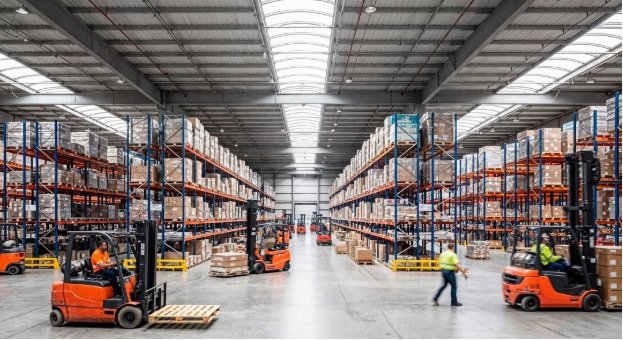
Seasonal demand spikes have been the most daunting challenge to modern supply chains. These can be due to festive periods, promotional events, or even unexpected market fluctuation that puts immense pressure on warehouse operations for speed, accuracy, and scalability.
In such high-volume times, traditional manual workflows struggle because they simply cannot scale at the pace of demand. Businesses that are not capable of coping then face delays, incorrect fulfillment, rising labor costs, and bottlenecks in storage and picking functions.
This is where automation of ASRS comes into play. An Automated Storage and Retrieval System integrates high-density storage, automated movement of goods, and intelligent software coordination in one package. They support the level of responsiveness required during seasonal peaks. ASRS, in the broader context of warehouse automation, improves efficiency, accuracy, and throughput by reducing human involvement and enhancing effective space utilisation.
Companies that specialise in end-to-end automation across storage, sorting, picking, and movement, such as Addverb, show how ASRS can make operations stable even under heavy seasonal loads.
The Impact of Seasonal Spikes on Warehouse Operations
For the most part, seasonal peaks imply sharp upticks in order volumes. The pressure will be on warehouses to match much faster speeds without losing any accuracy. Confined storage space, workforce shortages driven by peak hiring seasons, and slower picking and replenishment cycles make it impossible to accommodate seasonal surges with manual processes. All these factors increase operational stress while decreasing service levels.
ASRS automation relieves these pressures with a system that scales instantly and performs consistently, even when there is a sudden spike in demand.
Smoothing Peak Demand by Maximizing Storage Capacity
One of the major challenges is an increase in inventory volume due to seasonal spikes. Evidently, facilities have to provide extra space for them, and expansion in infrastructure has many drawbacks. ASRS optimizes vertical storage and reduces aisle space. High-density shuttle systems store goods compactly; similarly, crane-based retrieval mechanisms are also compact while maintaining accessibility. By this approach, a warehouse can hold more inventory within the same footprint to support both short-term seasonal surges and long-term capacity planning.
Increasing Throughput and Picking Efficiency
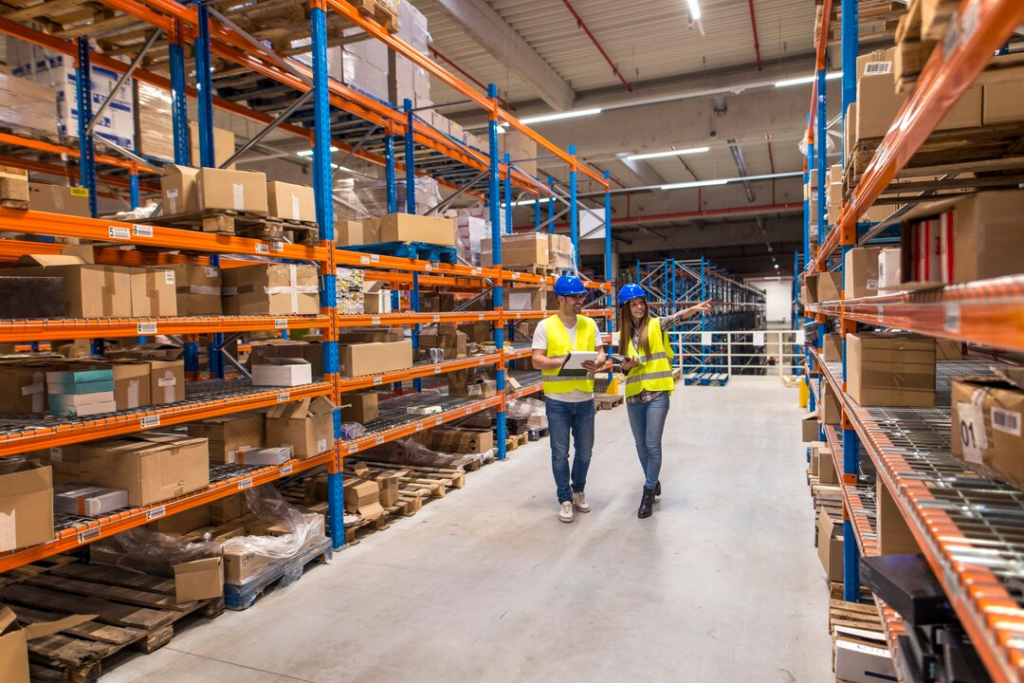
Seasonal peaks require faster picking and replenishment in order for them to meet the fulfillment timelines. Manual picking is slow since most of the time, workers squander it walking down the aisles searching for SKUs. The automation of ASRS takes this inefficiency out completely by delivering goods right to the picking station. Operators handle items with speed and without excessive movement, hence upping productivity and reducing fatigue. Smart order batching and sequencing further maximize throughput, making ASRS a necessary tool for warehouses that have to deal with sharp seasonal increases in order volume.
Improving Accuracy Under Pressure
It follows that the larger the volumes of order, the more critical the aspect of accuracy becomes. Errors translate into returns, dissatisfied customers, and higher costs of handling during peak periods. ASRS reduces such issues by keeping manual intervention at a minimum and automatically scanning or verifying at each stage. Intelligent software ensures the correct picking and placement of items. Consistency is hence guaranteed during seasonal spikes, where accuracy can fall prey to pressure in a manual system.
Reduce Dependence on Seasonal Labor
Labour shortages during peak seasons are common, and warehouses compete for temporary labour. Hiring and training more manpower is not only prohibitively expensive but also time-consuming. ASRS automation reduces dependence on seasonal labour since the system automates repeatable and cumbersome tasks. Robots take up all storage and retrieval activities and enable the existing staff to perform supervisory functions related to exception handling and value-added tasks. This ensures a more stable and predictable workforce model at peak operations.
Real Time Inventory Visibility
Precise inventory visibility is increasingly important in the face of seasonal demand spikes. Miscounts or delays in updating stock data result in stockouts or oversupply. Automation of ASRS integrates with warehouse management solutions for real-time updates on item location and availability. Sensors, barcodes, and software coordination ensure that inventory data will remain accurate to help managers make informed decisions about replenishment and order prioritization while reducing errors from outdated information.
Lowering Operational Costs During High-Volume Periods
These seasonal peaks drive up operational costs since they may involve overtime payments, temporary labor, and some inefficiencies promoted by high-pressure environments. Automation with ASRS ensures that performance stays consistent, irrespective of volume. By reducing manual handling, minimizing errors, and improving workflow efficiency, ASRS minimizes overall operational costs. In the longer run, the system confers strong cost advantages through stabilization of throughput and reduction of variability.
Scalability for Seasonal & Long-Term Growth
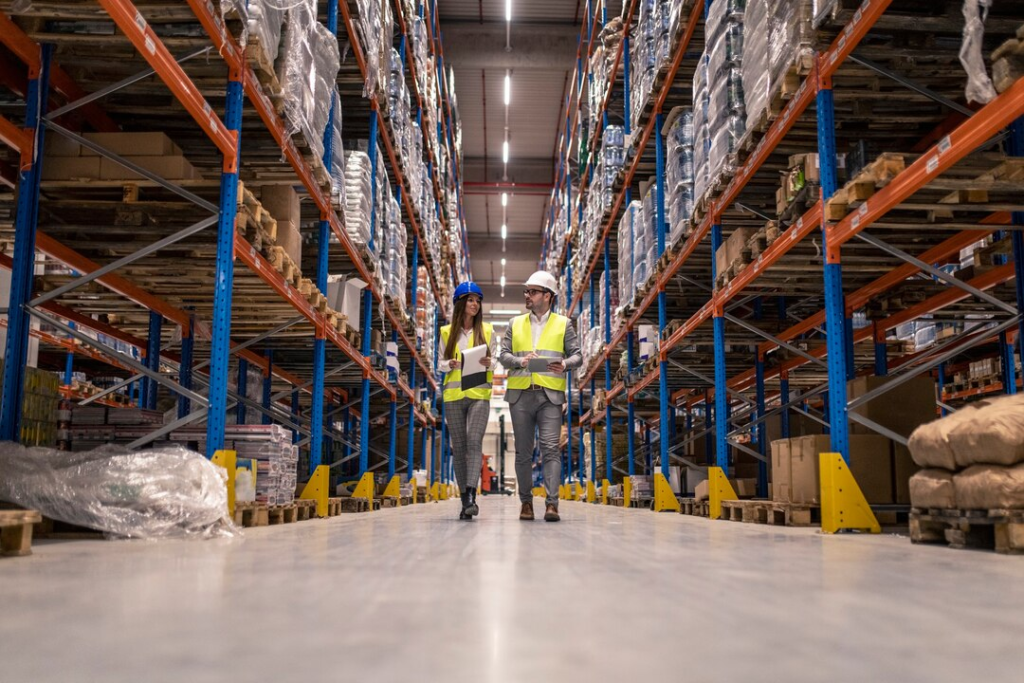
One of the important strong points of ASRS automation is its modular scalability: with an increase in order volume, more shuttles, racks, or workstations can be added without shutting operations down. This makes ASRS ideal for warehouses that face extreme seasonal variation. Whether it is accommodating a short-term spike or long-term expansion, ASRS helps warehouses stay nimble and adjust to the changing times with ease. Addverb’s focus on scalable systems, built through in-house hardware and software development, has shown how well-thought-out automation can support dynamic warehouse environments.
Conclusion
Seasonal surges in demand will continue to challenge warehouse operations, but ASRS automation offers a reliable method to handle them with the levels of speed, accuracy, and robustness required. By enhancing storage density, improving picking efficiency, enabling real-time insight, and reducing dependence on seasonal labour, ASRS has now become the backbone of the modern warehouse automation strategy.
As warehouses turn to more intelligent and scalable systems, organizations increasingly look for integrated automation partners able to deliver both advanced robotics and powerful software. Companies like Addverb have expertise in engineering comprehensive ASRS ecosystems, among other automation technologies, showing that a well-thought-out solution can support agility in peak seasons and long-term growth of operational capabilities.
As the logistics world rapidly takes shape, ASRS automation is one of those tools that gives companies greater possibilities to build future-ready warehouses capable of responding to seasonal surges and increasing customer expectations with the highest confidence.
