Supply chains have become far more complex than they were even a decade ago. A single product may involve raw-material providers, manufacturers, packaging units, distributors, warehouses, freight carriers, customs authorities, retailers, and after-sales service partners. Each step generates records — purchase orders, shipment documents, invoices, quality certificates, compliance files, and delivery confirmations.
The problem is not the lack of data. The problem is trust in the data.
Today, most supply chains still rely on isolated databases, emails, spreadsheets, and manual verification. Information often travels slower than the physical goods themselves. When discrepancies appear — delayed shipments, missing inventory, counterfeit goods, or payment conflicts — companies spend days or weeks verifying records across multiple parties.
This is exactly where blockchain development company in UAE tracking is being adopted, not as a buzzword technology, but as a practical operational tool.
Why Traditional Supply Chain Tracking Fails
Before understanding blockchain tracking, it is important to look at why current systems struggle.
A typical supply chain tracking process depends on centralized record-keeping. Each organization maintains its own software system: ERP, warehouse management, shipping software, or inventory platform. These systems do not automatically trust each other.
As a result:
- A manufacturer cannot instantly verify warehouse data.
- A distributor cannot confirm real production timestamps.
- A retailer cannot validate source authenticity.
- Auditors cannot easily trace compliance documentation.
When a problem arises — damaged goods, wrong quantities, or shipment delays — every stakeholder checks their own records. The investigation becomes manual and time-consuming. Often, no one knows which record is the “correct” one.
This lack of synchronized data leads to real business consequences:
• Payment disputes
• Compliance risks
• Counterfeit products
• Inventory miscalculations
• Customer dissatisfaction
Companies are not just losing operational efficiency — they are losing accountability visibility.
What Blockchain Tracking Actually Does
Blockchain tracking does not replace supply chain software. Instead, it connects them through a shared verification layer.
A blockchain is essentially a distributed ledger shared across authorized participants. Every transaction recorded on it becomes:
- Timestamped
- Tamper-resistant
- Verifiable by all stakeholders
Unlike a centralized database owned by one company, no single participant controls the record history.
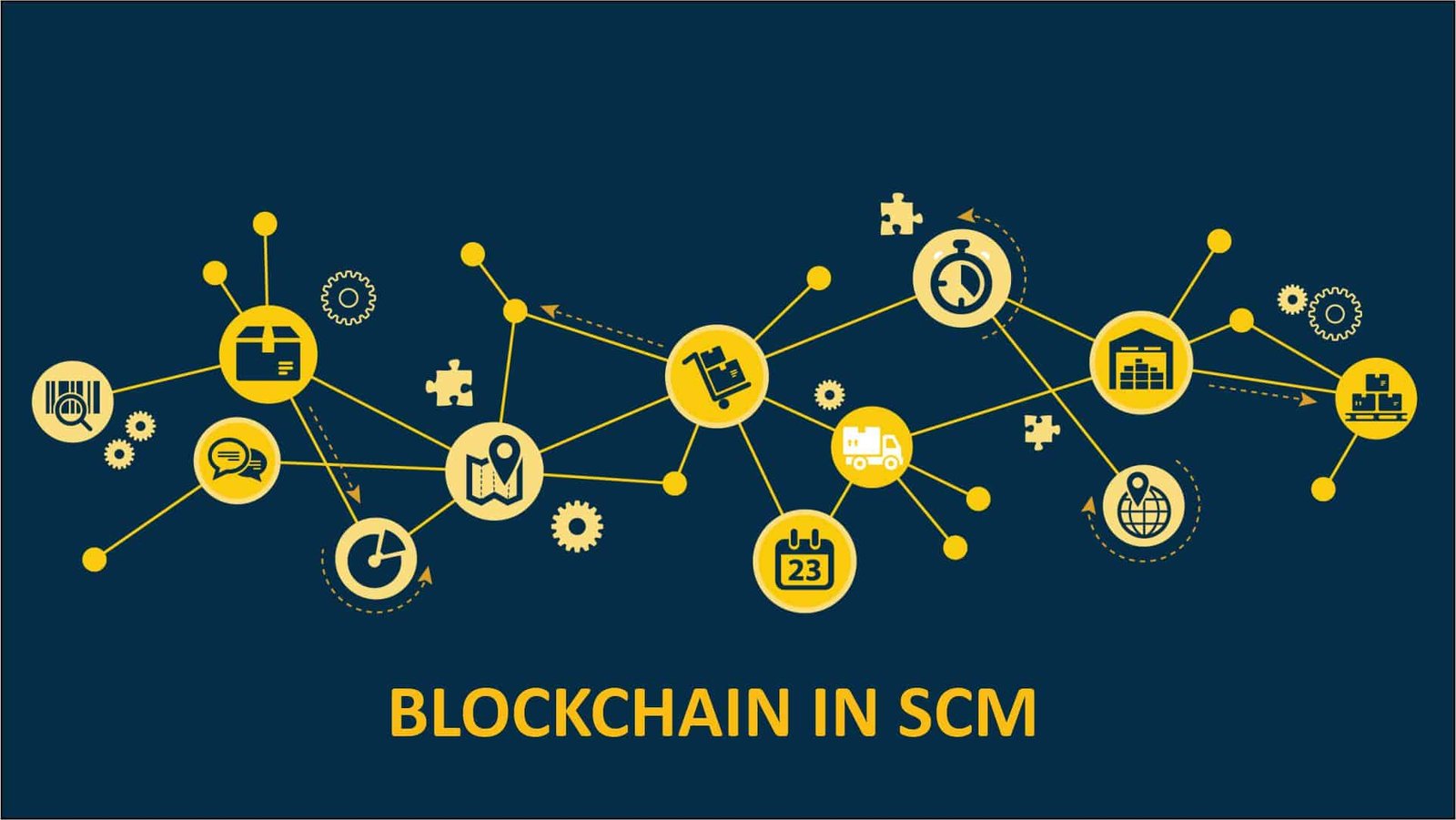
For supply chains, this means every movement of goods — from origin to delivery — can be recorded as a verified event.
For example:
- A raw material supplier logs a batch creation.
- Manufacturer confirms receipt and production usage.
- Quality inspection uploads certification.
- Logistics partner records shipping handover.
- Warehouse confirms arrival.
- Retailer verifies delivery.
Each step is permanently recorded and visible to permitted stakeholders.
Key Supply Chain Problems Blockchain Solves
1. Product Authenticity and Anti-Counterfeiting
Counterfeit goods affect pharmaceuticals, electronics, automotive parts, and luxury products. Traditional tracking systems can be altered or manipulated internally.
With blockchain tracking, each product batch receives a digital identity linked to its origin. Retailers and even customers can verify whether the product genuinely came from the authorized manufacturer.
This is especially important for:
- Medical supplies
- Food products
- Aircraft components
- High-value electronics
A verified product history dramatically reduces fraud risk.
2. Real-Time Traceability
In food or pharmaceutical industries, recalls are extremely expensive because companies often cannot identify the exact affected batch quickly.
Blockchain tracking allows companies to pinpoint:
- where the product originated,
- which batch it belongs to,
- which distributor handled it,
- which stores received it.
Instead of recalling entire product lines, organizations can isolate only the affected units. This reduces financial loss and protects brand reputation.
3. Automated Compliance Verification
Supply chains must comply with regulatory documentation such as origin certificates, inspection approvals, and safety records. Currently, these documents are emailed, uploaded, and manually verified.
With blockchain:
Documents can be uploaded and cryptographically linked to the shipment. Regulators, auditors, and partners can instantly verify authenticity without requesting copies repeatedly.
This is particularly useful for international trade and cross-border shipments.
4. Dispute Reduction
One of the most expensive operational issues in logistics is payment and delivery disputes. A transporter may claim delivery was completed while a warehouse reports incomplete shipment.
Blockchain records eliminate uncertainty because every handover event is logged and time-stamped. Instead of arguments, companies rely on verifiable records.
Businesses working with a blockchain development company in uae often implement smart-contract verification so payment is released automatically once delivery confirmation appears on the ledger.
Smart Contracts in Supply Chain Operations
Smart contracts are automated business rules running on blockchain networks.
They execute actions when predefined conditions are met.
For example:
- Payment releases when shipment reaches warehouse.
- Insurance activates if goods experience delay.
- Alerts trigger if temperature limits exceed during transport.
- Customs documentation validates before shipping clearance.
Instead of multiple manual approvals, supply chains operate based on verified events.
This does not remove human oversight — it removes repetitive verification tasks.
Integration with Existing Systems
A major misconception is that blockchain requires replacing ERP or warehouse systems. In reality, blockchain integrates with them.
Organizations continue using:
- ERP systems
- Inventory software
- Warehouse management tools
- IoT sensors
The blockchain layer simply records verified events generated by these systems.
For example, IoT sensors in refrigerated containers can automatically record temperature logs on the blockchain. If temperature exceeds safe levels, alerts trigger instantly.
Companies implementing custom blockchain app development uae solutions often connect IoT devices, QR codes, and logistics tracking APIs to create a unified visibility system.
Industries Already Using Blockchain Tracking
Food Supply Chains
Track farm origin, storage conditions, and transport safety to prevent contamination incidents.
Pharmaceutical Distribution
Prevent fake medicines and verify storage compliance during transit.
Manufacturing
Monitor raw material sourcing and component assembly verification.
Logistics and Shipping
Track container movement and automate freight documentation.
Retail
Provide transparency about product sourcing and sustainability claims.
Operational Benefits for Businesses
Organizations adopting blockchain tracking report improvements not only in transparency but in operational performance.
Reduced manual verification: Staff no longer chase emails and confirmations.
Faster audits: Regulators can instantly review verified records.
Improved vendor accountability: Every action is recorded.
Lower fraud risk: Data cannot be silently altered.
Better customer trust: Buyers can verify product origin.
In many cases, the biggest advantage is not technology — it is confidence in shared data.
Implementation Considerations
Blockchain tracking must be designed carefully. A poorly planned system becomes complicated rather than helpful.
Key factors include:
Permission structure: Who can view and who can write data.
Data privacy: Not all partners should see sensitive business information.
Integration approach: Connecting existing software without disrupting operations.
Onboarding partners: Vendors and logistics providers must participate.
This is why most companies partner with experienced solution providers instead of trying to build internal blockchain systems from scratch.
The Future of Supply Chain Transparency
Supply chains are moving toward collaborative ecosystems rather than isolated operations. Customers, regulators, and partners increasingly demand verifiable information, not just documentation.
Blockchain tracking enables organizations to shift from trust-based relationships to verification-based relationships.
The goal is not to make processes complicated. The goal is to reduce uncertainty.
Over time, blockchain systems are expected to integrate with:
- IoT monitoring
- automated procurement
- predictive analytics
- sustainability reporting
The result will be supply chains that are not only traceable but also measurable and accountable.
Conclusion
Supply chain management has always depended on coordination between multiple independent organizations. The biggest challenge has never been transportation — it has been reliable information sharing.
Blockchain tracking solves this by creating a shared record system that no single party controls but all authorized parties can trust. From product authenticity to automated compliance and faster dispute resolution, the benefits are operational and practical rather than theoretical.
Instead of replacing current infrastructure, blockchain strengthens it by ensuring that every event in the lifecycle of a product is verified, recorded, and accessible.
CTA – UAE Consultation
If your organization is exploring transparent logistics, vendor accountability, or automated verification workflows, SISGAIN can help you design and implement a tailored blockchain tracking solution.
Our team works with manufacturers, distributors, and logistics operators across the UAE to build secure, scalable supply-chain platforms.
Contact SISGAIN – UAE
Discuss your requirements and learn how blockchain tracking can improve operational visibility, reduce disputes, and strengthen partner trust.