

Nowadays, embedded systems are expected to offer superior performance, reliability, and service life, particularly in industrial automation, edge computing, and IoT-based systems. In fact, in such complex systems, software performance testing is of utmost importance to ensure efficiency, reliability, and scalability.
In fact, embedded systems developed using the Yocto Project offer the advantage of creating tailor-made Linux distributions, and, for this reason, software performance testing is significant. Without software performance testing, the working of the embedded systems might be affected adversely, and a variety of associated problems might arise, which include increased latencies, memory, storage, and temperature problems.
The Role of Software Performance Testing in Yocto-Based Embedded Systems
Software performance testing refers to the testing of the efficiency of running embedded applications and the components of the OS by measuring CPU usage, memory size, I/O performance, boot-up times, and power consumption of the device under various conditions.
Within Yocto-based systems, performance testing becomes even more important, considering developers are responsible for selecting options within the Linux Kernel, libraries, drivers, and services. As small changes in configuration variables often cause significant differences in behaviour, the following are ensured through performance testing:
- Stable execution across varying workloads
- Predictable real-time or near real-time responses
- Optimised memory and CPU usage
- Control of power consumption in tight environments
Embedded systems are running systems, and some of them are running in harsh environments. Testing them improperly might threaten to increase rework cost and prolong releases. With various research and engineering best practice guidelines, a reliable embedded test always seems to pay off.
Optimising Storage Performance Using Software Testing
Storage speed
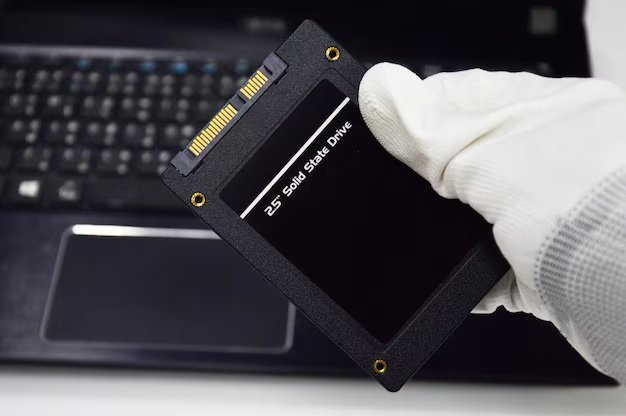
One of the significant factors affecting the response of an embedded system is storage speed. Systems that make use of solid state drive ssd technology require predictable storage latencies and consistent performance across a range of workloads. Performance testing includes verifying the interaction of the firmware, the storage, and the file system’s efficiency.
Testing helps ensure:
- Fast boot and app load times
- Reliable logging and data capture
- Stable firmware updates
- Long-term storage endurance
Advanced validation tools, which simulate real-world workloads, also help teams detect potential bottlenecks.
Why Yocto Linux Needs Comprehensive Performance Validation
Unlike general purpose Linux distributions, Yocto Linux is optimised for specific products. This means that system behaviour is highly dependent on product configuration. System performance validation covers the following aspects of Linux kernel and hardware interaction:
- Kernel scheduler configuration
- Driver performance and latency
- File system and storage stack optimisation
- Network throughput consistency
- Thermal and power system behaviour under load
Performance validation also has long-term maintainability benefits. As embedded systems advance through firmware upgrades, performance validation ensures that new functionality does not adversely impact existing performance characteristics.
The Connection Between Performance Validation and Product Lifecycle Cost
Performance validation can be very costly when performance problems are discovered late in the development cycle or after product deployment. Software performance validation helps detect problems early in the engineering cycle, thus mitigating:
- Field failure rates
- Customer support costs
- Certification delays
- Product recall risks
In the context of embedded and storage-intensive systems, performance validation is more than a validation process; it is an engineering investment.
Engineering Excellence for Performance-Focused Embedded and Storage Systems
Silarra Technologies has extensive domain knowledge in embedded systems, storage engineering, and performance validation for complex product environments.
Silarra’s engineering philosophy is centred on:
- End-to-end product engineering ownership
- Extensive domain knowledge in storage and embedded systems
- Hardware selection and system-level optimisation
- Storage validation and lifecycle testing
Conclusion
Thus, in complex embedded systems with increasing intricacy and thirst for information, performance testing is essential so that the systems remain stable, predictable, and scalable. In Yocto-based embedded Linux systems, configuration choices are validated, storage is tuned, and long-term reliability is ensured during operation.
Performance testing with robust engineering methodologies and state-of-the-art validation tools ensures that embedded systems operate under tough conditions that also occur in real life.
Silarra Technologies, with its extensive knowledge of embedded platforms, storage engineering, and solid state drive ssd technology, aids organisations in the development of advanced embedded products that are production-ready, scalable, and future-proof.
