

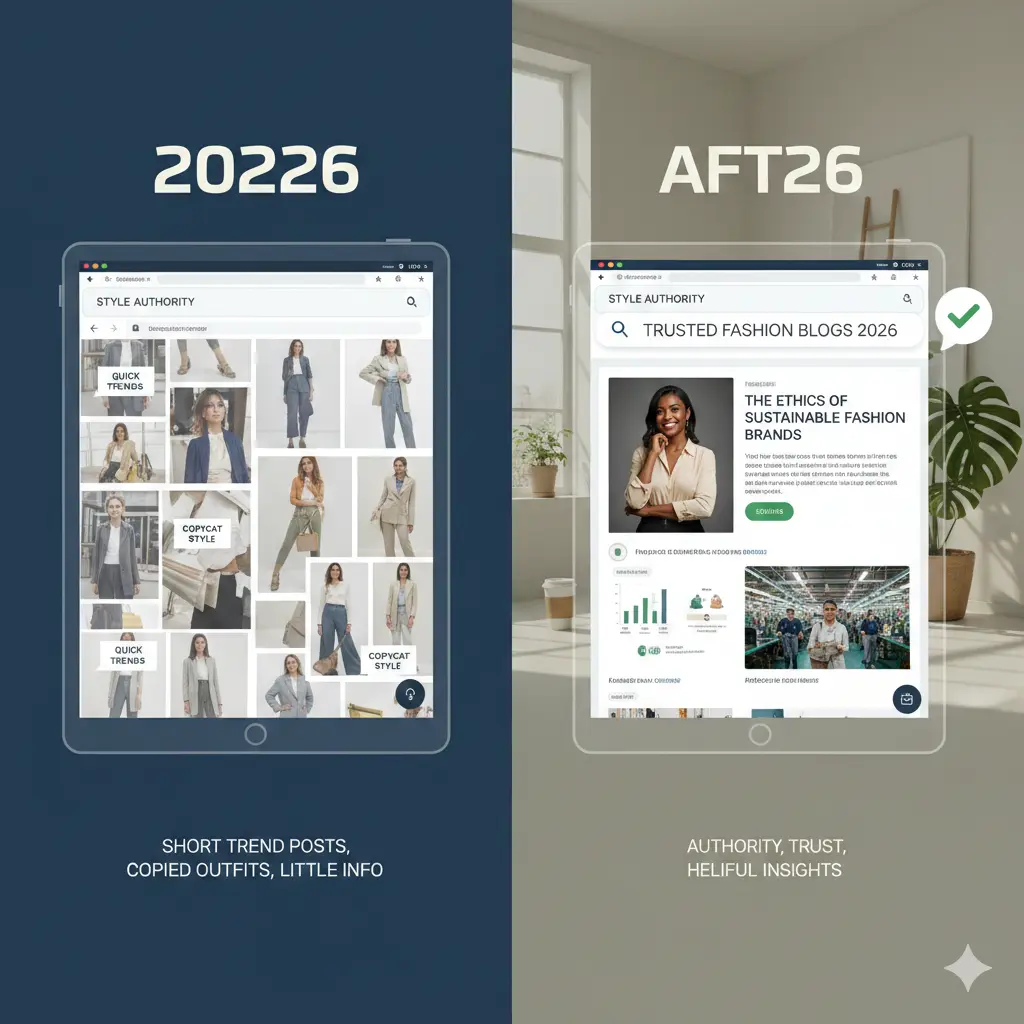
Fashion blogging has changed a lot in recent years. What worked before—short trend posts, copied outfit ideas, or many images with little information—doesn’t work anymore. In 2026, successful fashion blogs are doing something different. They focus on authority, not just looks.
These days, Google cares more about blogs that people actually trust and find helpful. If you run a fashion blog and understand this shift, you can still grow—even when you’re competing against huge shopping sites and big brand names.
So what are fashion blogs that are actually doing well in 2026 doing? Here’s what’s working for them.
The Shift: From “Pretty Blogs” to Trusted Fashion Platforms
Before, fashion blogs were just places to find pretty outfit ideas. Now, Google sees them as actual sources of information. What does that mean for you?
- Who is writing the content matters
- Why the content exists matters
- How helpful and original it is matters
The fashion blogs that are actually surviving Google’s updates aren’t trying to go viral anymore. Instead, they’re becoming experts in one specific thing—like ethnic wear styling, blouse designs, sustainable fashion, or clothing trends from specific regions.
This shift aligns closely with Google’s E-E-A-T framework:
Experience, Expertise, Authoritativeness, and Trustworthiness.
Experience Comes First: Real Fashion Knowledge Wins
One major change in 2026 is how Google evaluates “experience.”
Fashion blogs that actually:
- Talk about real fabric issues
- Explain fitting problems
- Discuss styling mistakes
- Share practical outfit decisions
are clearly outperforming generic AI-written fashion content.
People can tell when someone who actually knows fashion is writing. Blogs like Blouse-Design that focus on real stuff—like how to style blouses, which cuts work for different body types, and what’s actually comfortable to wear—do better because they solve real problems instead of just repeating the same trends everyone else talks about.
This kind of firsthand insight builds credibility naturally.
Content Depth Beats Frequency in 2026
Publishing more articles no longer guarantees growth. What works now is depth.
High-authority fashion blogs are:
- Writing fewer but more detailed articles
- Covering one topic completely instead of partially
- Updating older content instead of constantly creating new URLs
Instead of putting out ten quick posts about different blouse styles, the smart fashion blogs are doing something different—they’re creating one really detailed guide that covers everything. Patterns, necklines, what fabric works best, which occasions to wear them for, and what suits different body types. All in one post that actually helps people.
This improves:
- Time on page
- Search rankings
- Brand trust
Google prefers content that fully answers a user’s question without forcing them to search again.
SEO in 2026 Is About Intent, Not Just Keywords
Fashion SEO has matured. Successful blogs no longer stuff keywords like “latest blouse design” everywhere.
Instead, they focus on:
- Search intent (why the user is searching)
- Natural language
- Supporting subtopics
- Internal linking
A modern fashion article answers related questions automatically:
- When to wear a certain style
- Who it suits
- How it compares to alternatives
This intent-driven approach helps fashion blogs rank for dozens of related queries from a single page.
Author Identity Is Now Non-Negotiable
One of the biggest ranking factors fashion bloggers often ignore is author clarity.
Authority-driven fashion blogs now clearly show:
- Who wrote the article
- Their background or experience
- A consistent author profile across the site
This really matters if you’re giving people styling tips or fashion advice. Google wants to see that a real person with actual knowledge is writing—not some random website pumping out content without any real expertise.
Even a simple author bio explaining hands-on experience with fashion content can significantly improve trust signals.
Internal Linking Is Treated Like a Strategy, Not an Afterthought
Top fashion blogs treat internal linking like site architecture, not decoration.
They:
- Link related blouse, saree, or styling articles together
- Use natural anchor text
- Help users move deeper into the site
This is how you build what’s called “topical authority.” When Google sees a bunch of related fashion posts that link to each other in a way that makes sense, it figures out that your site is actually an expert on that specific topic.
Over time, this structure strengthens rankings across the entire category.
Visuals Support Content — They Don’t Replace It
Images are still important in fashion, but they are no longer enough on their own.
In 2026:
- Images support explanations
- Text provides the real value
- Context matters more than quantity
Fashion blogs that only rely on images without explaining why a design works are losing ground to blogs that combine visuals with clear, helpful explanations.
Trust Signals Go Beyond Design
A clean website is important, but authority comes from signals like:
- Clear About and Contact pages
- Consistent publishing history
- Transparent intent (informational vs commercial)
Fashion blogs that balance education with monetization perform far better than sites that push sales too aggressively.
Final Thoughts: Authority Is Built, Not Chased
The fashion blogs winning in 2026 are not chasing algorithms. They are building trust slowly through:
- Real experience
- Useful content
- Honest intent
- Strong internal structure
SEO is simply the distribution channel. Authority is the foundation.
Fashion blogs that get this—especially the ones focused on one specific type of clothing—are showing that you don’t have to be a huge brand to show up in search results. You just need to actually help people.
