

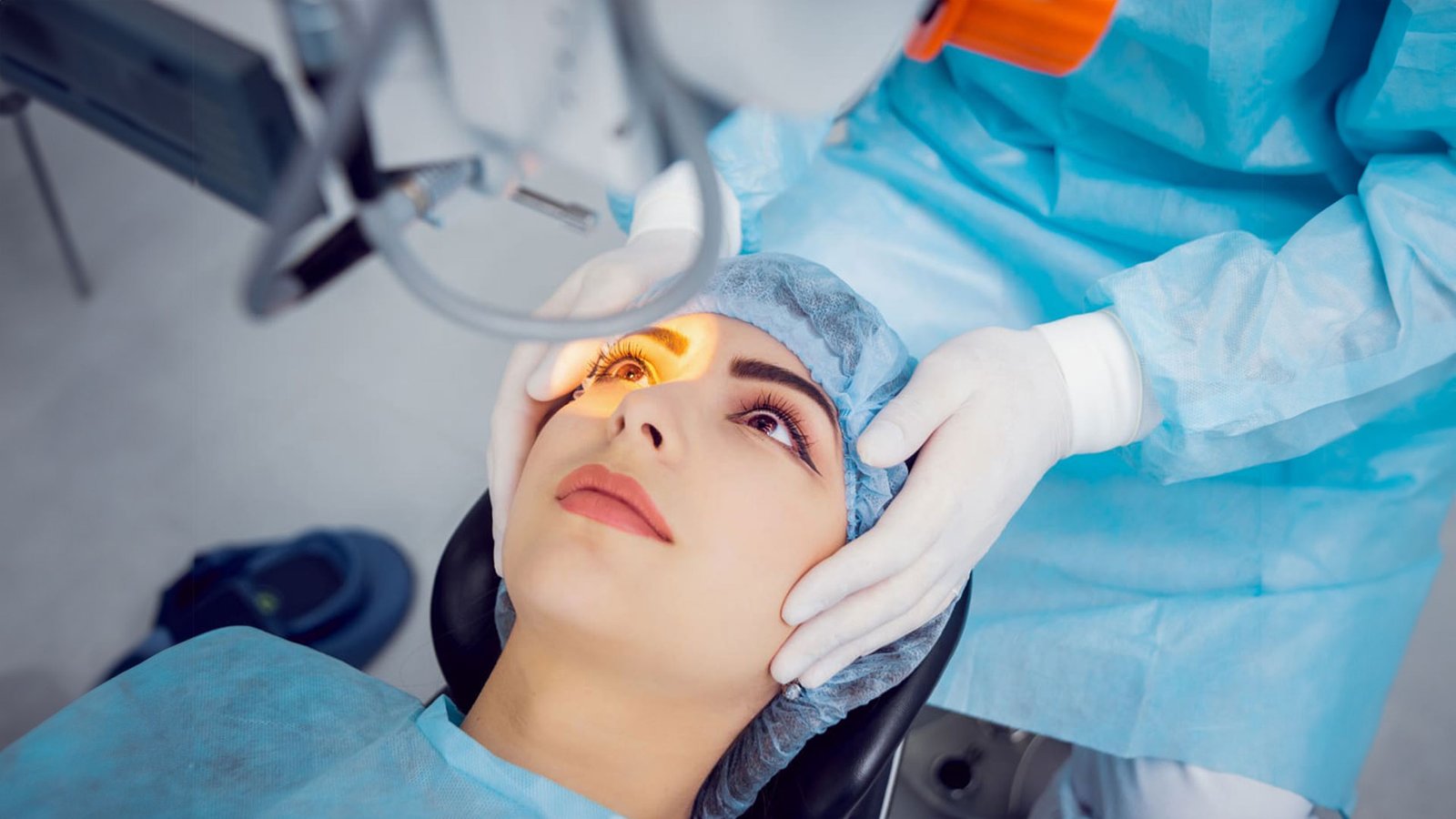
Clear vision is essential for daily life, from reading and driving to working on digital devices. Many people with refractive errors, such as myopia, hyperopia, or astigmatism, rely on glasses or contact lenses to see clearly. For those seeking a long-term solution, LASIK eye surgery in Delhi offers a precise, minimally invasive way to improve vision safely and effectively. Using advanced laser technology, skilled surgeons reshape the cornea to focus light accurately on the retina, enhancing visual clarity. With thorough preoperative assessments, modern surgical techniques, and structured post-operative care, patients can expect better outcomes, faster recovery, and greater confidence in their daily activities.
How LASIK Improves Vision by Reshaping the Cornea
Laser-Assisted In Situ Keratomileusis (LASIK) is a surgical procedure designed to correct common vision problems by reshaping the cornea, the clear front surface of the eye. The cornea directs light onto the retina, which allows us to see clearly. If the cornea’s shape is irregular, light does not focus properly, leading to blurred or distorted vision.
During the procedure, the surgeon creates a thin corneal flap and uses an excimer laser to reshape the underlying tissue. This adjustment improves the way light focuses on the retina, often resulting in clearer distance vision. LASIK is typically recommended for adults with stable vision prescriptions who have mild to moderate myopia, hyperopia, or astigmatism. Before surgery, ophthalmologists assess corneal thickness, tear production, and overall eye health to ensure the procedure is safe and suitable for each patient.
Safety Considerations in LASIK Procedures
Safety remains a major concern for people considering laser vision correction. Ophthalmologists perform detailed eye examinations before recommending the procedure.
Preoperative evaluation often includes several diagnostic tests:
- Corneal topography to map corneal shape
- Pachymetry to measure corneal thickness
- Tear film evaluation to detect dry eye syndrome
- Retinal examination to identify underlying retinal disorders
These tests help doctors detect conditions such as keratoconus or corneal thinning. Early detection helps surgeons avoid procedures that may affect corneal stability and ensures suitability for LASIK eye surgery in Delhi. Patients also receive specific instructions before surgery, including stopping contact lens use, as it can temporarily affect corneal shape. Accurate measurements allow precise treatment planning, and advanced systems, such as those used at BLK-Max Super Speciality Hospital, support safe and effective outcomes.
Technology Used in Modern LASIK Procedures
Advances in ophthalmic technology have improved the precision of LASIK surgery. Modern laser systems allow surgeons to customise treatment for each patient.
Femtosecond Laser
Surgeons use a femtosecond laser to create the corneal flap. The laser delivers extremely short pulses of energy. This approach improves flap accuracy and reduces mechanical pressure on the eye. Controlled flap thickness helps surgeons perform the procedure with greater precision.
Excimer Laser
The excimer laser reshapes the corneal tissue during LASIK. The laser removes microscopic layers of tissue according to a programmed pattern. Ultraviolet laser energy reshapes tissue without producing significant heat. This process protects the surrounding eye structures.
Wavefront-Guided Technology
Wavefront analysis measures subtle optical distortions called higher-order aberrations. These distortions may cause glare or halos around lights. Surgeons use wavefront data to customise laser treatment. Personalised laser correction can improve visual quality after surgery. Modern diagnostic imaging and laser technology allow ophthalmologists to plan treatment with greater accuracy.
Expected Results After LASIK Surgery
Patients usually consider LASIK to reduce dependence on glasses or contact lenses. Visual improvement often begins within a few days after surgery. Minor vision fluctuations may occur while the cornea stabilises during healing. Many patients achieve improved distance vision after recovery. Some individuals reach 20/20 or near-normal visual acuity following successful LASIK correction. Doctors schedule follow-up visits to monitor corneal healing and visual stability. These visits help detect issues such as dry eye symptoms or mild inflammation.
Post-operative care instructions often include:
- Using prescribed lubricating eye drops
- Avoiding eye rubbing during recovery
- Protecting the eyes from dust and smoke
- Attending scheduled follow-up appointments
Following these instructions supports corneal healing and stable visual outcomes. With appropriate patient selection and modern technology, LASIK eye surgery in Delhi continues to offer effective vision correction.
Conclusion
Advancements in laser technology and modern diagnostic tools have made LASIK eye surgery in Delhi a safe and effective solution for many vision problems. Careful preoperative evaluation ensures patients are suitable candidates, while precise corneal reshaping improves how light focuses on the retina. Postoperative care and follow-ups support healing and maintain results. Patients can enjoy clearer vision, reduced dependence on glasses or contact lenses, and improved quality of life. With proper guidance, LASIK offers lasting benefits and predictable outcomes for most patients.
