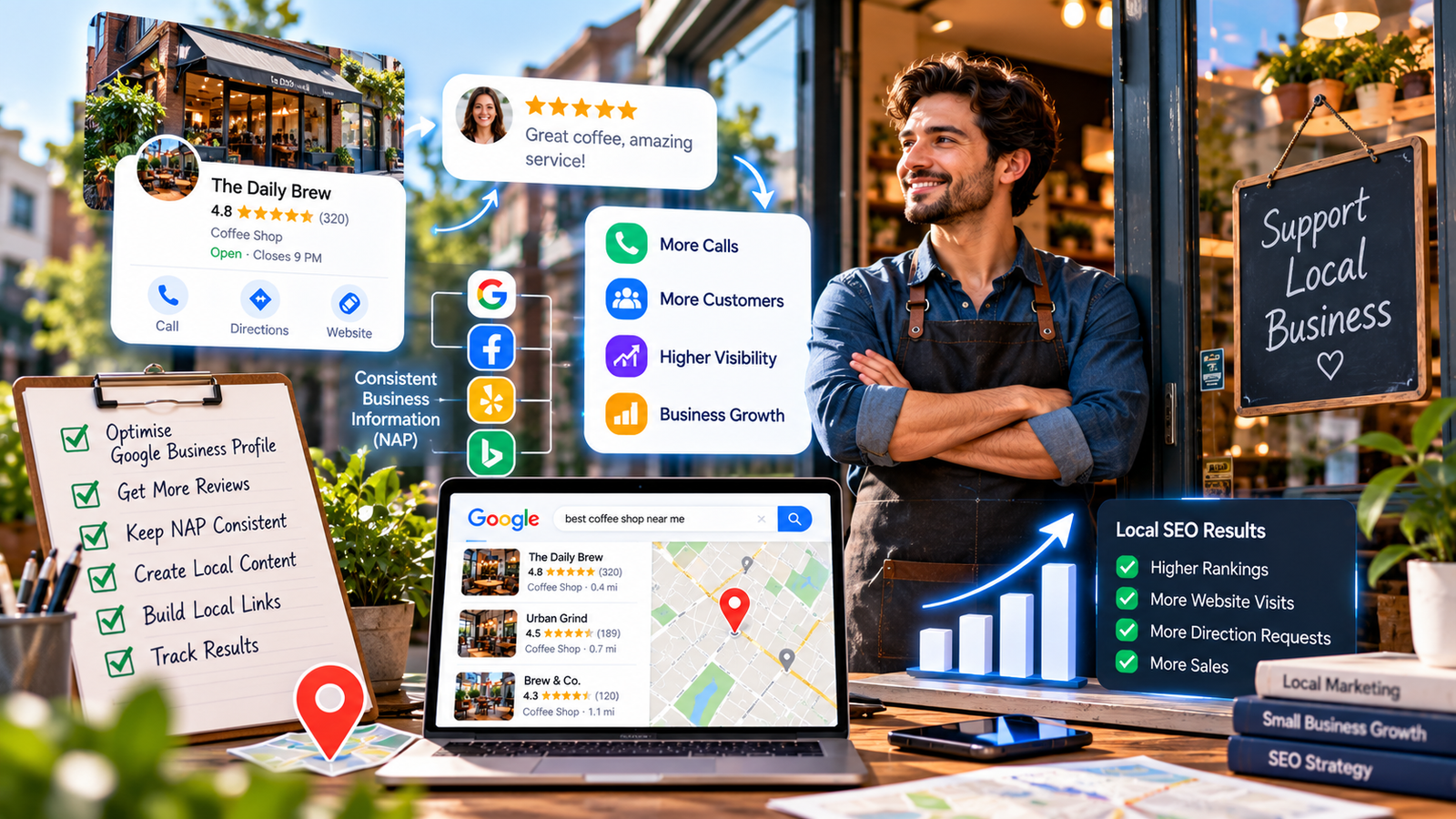
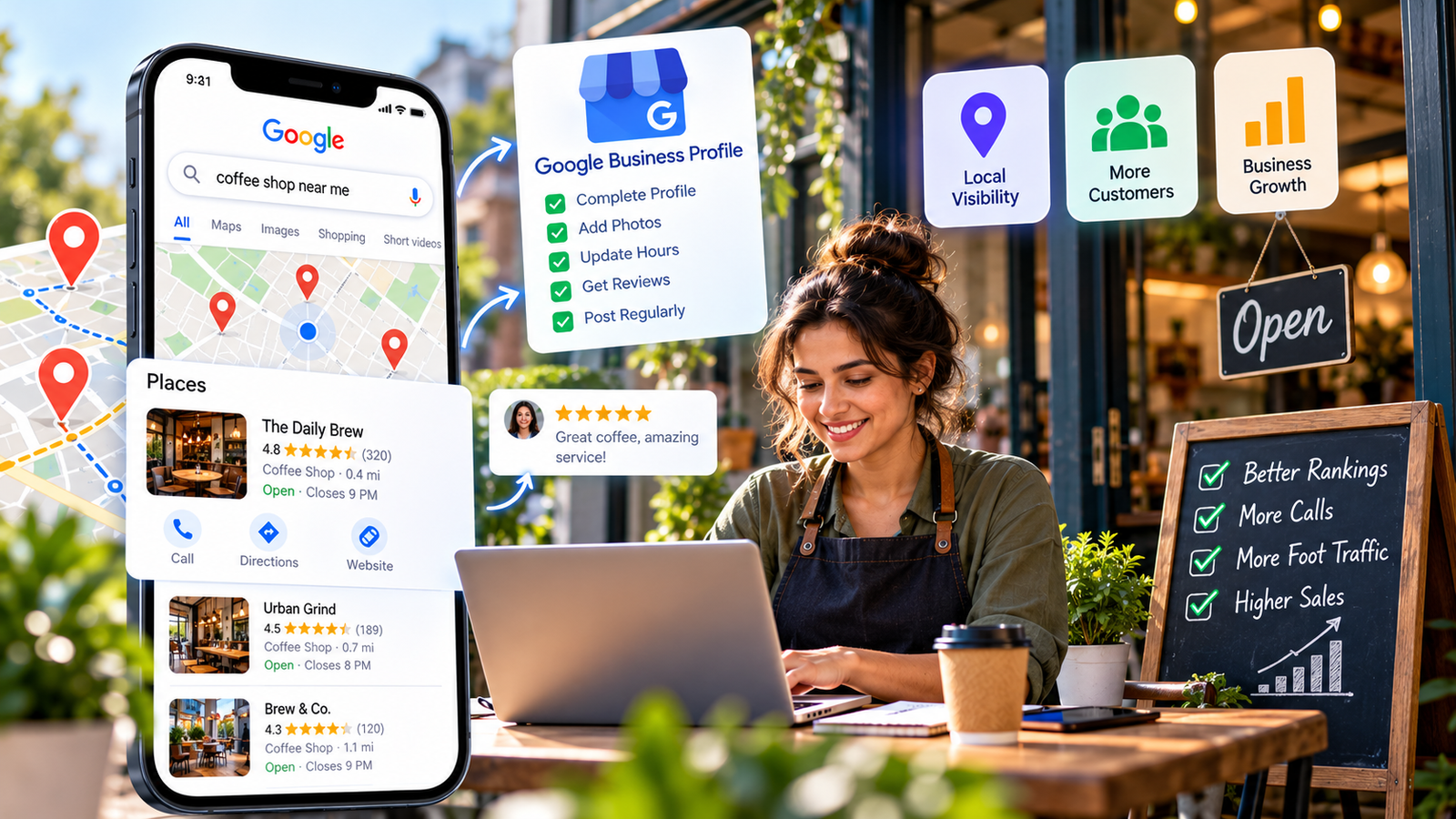
Local SEO for small businesses is one of the most powerful ways to attract customers who are ready to buy. When someone searches for “coffee shop near me” or “best dentist in my area,” Google shows a short list of local businesses at the top. If your business appears there, you win visibility at the exact moment people are looking.
The best part is that local SEO does not require a huge budget. It rewards accurate information, genuine reviews and helpful content. At AtechVibe, we share practical digital marketing guides for growing businesses, and this one covers everything you need to rank higher in local search in 2026.
What Is Local SEO?
Local SEO is the process of improving your online presence so your business appears in location-based searches. These include searches with words like “near me,” a city name, or a neighbourhood.
Regular SEO focuses on ranking a website across a wide audience. Local SEO focuses on being found by people in a specific area. It mainly affects two places: the map results (often called the “local pack”) and the regular search results for local queries.
If you run a shop, restaurant, clinic, salon, agency or any service that customers visit or that serves a specific region, local SEO should be a top priority.
Why Local SEO Matters in 2026
Search behaviour has changed. People now use their phones to find nearby businesses, check opening hours, read reviews and get directions within seconds. Voice assistants and AI-powered search tools also pull answers from local business listings.
This means your online information often forms a customer’s first impression. Missing hours, an old phone number or no reviews can send people straight to a competitor. On the other hand, a complete and active profile builds trust before the customer even contacts you.
For a broader view of how search fits into growth, read our guide to SEO strategies for long-term business growth.
Step 1: Set Up and Optimise Your Google Business Profile
Your Google Business Profile is the foundation of local SEO. It controls how your business appears on Google Search and Maps.
Claim and verify your profile. If you have not done this yet, it is the first job. Verification proves you own the business.
Choose the right primary category. This is one of the strongest ranking signals. Pick the category that best describes your main service, then add a few relevant secondary categories.
Fill in every detail. Add your address or service area, phone number, website, opening hours, holiday hours and a clear business description.
Add quality photos. Upload pictures of your storefront, interior, products, team and work. Profiles with real photos tend to attract more clicks.
Post updates regularly. Share offers, news and events through profile posts. Regular activity shows that your business is active.
Step 2: Keep Your Business Information Consistent
Search engines compare your business details across the internet. Your name, address and phone number, often called NAP, should be exactly the same everywhere.
Check your website, social media pages, online directories and review sites. Small differences, such as “Street” on one site and “St.” on another, are usually fine, but different phone numbers or old addresses can confuse search engines and customers.
Make a simple spreadsheet listing every place your business appears online, and update it whenever something changes.
Step 3: Collect and Respond to Reviews
Reviews are one of the most important local ranking factors. They also strongly influence whether people choose your business.
Ask happy customers. Most satisfied customers are willing to leave a review if you simply ask. Send a short message or share a direct review link after a purchase or appointment.
Respond to every review. Thank people for positive reviews. Reply to negative ones calmly and professionally, and offer to solve the problem. Future customers read your responses too.
Never buy fake reviews. Fake reviews break platform rules and can lead to penalties or profile suspension. Genuine feedback, even if slower to collect, is always safer.
Step 4: Optimise Your Website for Local Search
Your website still plays a major role in local rankings.
Add your location naturally. Mention your city or service area in page titles, headings and content where it makes sense. Avoid stuffing place names everywhere.
Create location or service pages. If you serve several areas or offer different services, create a dedicated page for each with unique, helpful content.
Show contact details clearly. Add your address, phone number and opening hours to your footer or contact page.
Embed a map. A Google Map on your contact page helps visitors find you.
Make it mobile-friendly and fast. Most local searches happen on phones. A slow or hard-to-use site loses customers quickly.
Add local business schema. Structured data helps search engines understand your business name, address, hours and services.
Online sellers can also learn from our guide on how ecommerce SEO services help online stores grow.
Step 5: Create Helpful Local Content
Content helps you rank for more local searches and shows real expertise. Write about topics your local customers care about.
A bakery could write about cakes for local festivals. A home repair company could explain how seasonal weather affects homes in the area. A clinic could answer common patient questions.
Focus on genuinely useful content rather than generic posts. As we explain in what makes engaging content the core of every successful brand, content that solves real problems builds trust and keeps people coming back.
Step 6: Build Local Links and Mentions
Links from other websites tell search engines your business is trusted. For local SEO, links from local sources are especially valuable.
Join your local chamber of commerce or business association. Sponsor community events or local sports teams. Partner with nearby businesses on promotions. Share your expertise with local news sites or community blogs.
Avoid buying links from unrelated websites. Low-quality links can harm rankings instead of helping them.
Step 7: Use Social Media to Support Local Visibility
Social media does not directly control rankings, but it supports local SEO. Active pages help people discover your business, share your content and leave reviews.
Post photos of your work, customer stories and local events. Encourage followers to tag your location. If you need help, our checklist of traits of a great social media marketing agency can help you choose the right partner.
Step 8: Combine Local SEO With Paid Ads
Local SEO takes time to build. Paid local ads can bring customers while your organic rankings grow. Location-targeted search ads and map ads put your business in front of nearby searchers immediately.
Used together, paid ads and local SEO create stronger visibility. Learn the basics in our complete guide to search engine marketing, and see how AI is improving campaign targeting and conversion tracking.
How to Track Your Local SEO Results
Measure progress so you know what is working.
Google Business Profile insights show how people find your profile, how many call you and how many request directions.
Google Search Console shows which searches bring visitors to your website.
Website analytics reveal how local visitors behave on your site and whether they contact you.
Review these numbers monthly. Look for steady growth in calls, direction requests and website enquiries rather than chasing one ranking position.
Common Local SEO Mistakes to Avoid
Many businesses lose rankings because of simple errors. Avoid these:
Leaving the Google Business Profile incomplete or unverified.
Using different phone numbers or addresses across websites.
Ignoring negative reviews or replying angrily.
Stuffing city names into every sentence.
Buying fake reviews or low-quality links.
Forgetting to update holiday or special opening hours.
Final Thoughts
Local SEO for small businesses is about being accurate, active and helpful. Complete your Google Business Profile, keep your details consistent, earn genuine reviews, improve your website and create content your community values. These steps take effort, but they build lasting visibility that keeps bringing customers through your door.
If you would rather work with experts, our guide on how to boost your business with professional SEO services explains what to look for.