Key Takeaways
- Digital Transformation Trends in Modern Pharmacy Services Industry
- Key Features Required for Medicine Ordering Mobile Platforms
- Technology Stack Considerations for Healthcare Delivery Apps
- Regulatory Compliance and Security in Medical Apps Design Standards
- Steps to Build a Scalable Medicine Delivery Application Platform
- Cost Planning and Budgeting for Pharmacy App Creation Process
- User Experience Design Principles for Healthcare Apps Interfaces
- Future Innovations in AI Enabled Pharmacy Logistics Systems Network
- Conclusion
The healthcare industry is rapidly adopting digital platforms to improve accessibility, efficiency, and patient convenience. A Pharmacy Delivery App Development strategy enables pharmacies, hospitals, and healthcare startups to streamline prescription management, automate inventory tracking, and ensure timely medicine delivery to patients. With growing demand for remote healthcare services, mobile technology plays a crucial role in connecting customers with licensed pharmacies. These applications help reduce operational delays, improve medication adherence, and support digital healthcare ecosystems through secure ordering, verification, and logistics coordination systems.
Digital Transformation Trends in Modern Pharmacy Services Industry
Healthcare providers worldwide are adopting digital systems to simplify medicine distribution and patient engagement. Online pharmacy platforms are no longer limited to urban markets; they are becoming essential infrastructure for both private and public healthcare networks.
Digital pharmacy solutions improve transparency in medication availability, reduce manual errors, and support electronic prescriptions. Hospitals and independent pharmacies are integrating delivery applications with patient management systems to create unified healthcare workflows.
The shift toward telemedicine services has also contributed to the growth of Pharmacy Delivery App Development, as patients increasingly expect home delivery options for prescribed medications. Cloud infrastructure, mobile payment systems, and secure data exchange protocols are enabling pharmacies to operate more efficiently while meeting regulatory requirements.
Another major transformation involves predictive analytics tools that help pharmacies manage stock levels and forecast demand patterns. These technologies reduce medicine shortages and improve distribution efficiency across locations.
Key Features Required for Medicine Ordering Mobile Platforms
A successful pharmacy delivery application requires a balance between usability, compliance, and reliability. The platform must support both patients and pharmacy administrators while maintaining medical data security.
Essential features include:
• User registration with secure authentication
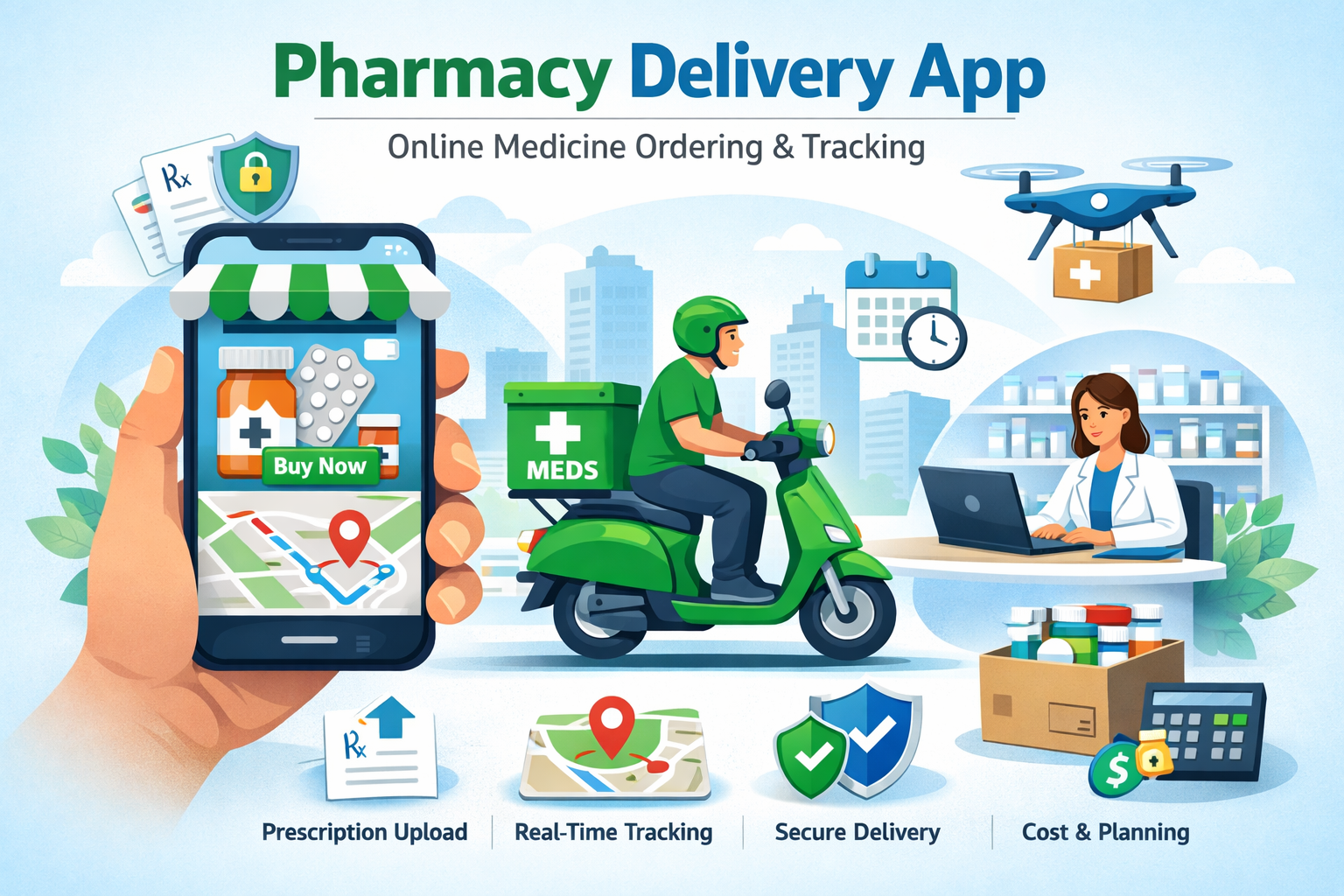
• Prescription upload and verification workflows
• Real time medicine availability tracking
• Integrated digital payment systems
• Order tracking and delivery status notifications
• Pharmacy inventory management dashboard
• Customer support and pharmacist consultation options
Prescription validation is particularly important in Prescription Delivery App Development because it ensures that controlled medications are dispensed only after proper authorization.
Another critical feature is automated refill reminders, which help patients maintain medication schedules. This improves treatment outcomes and strengthens patient engagement with healthcare providers.
Modern applications also include AI assisted search tools that help users find medicines, compare alternatives, and check dosage information safely.
Technology Stack Considerations for Healthcare Delivery Apps
Choosing the right technology stack is essential for application performance, scalability, and security. Healthcare delivery applications must handle sensitive medical data while supporting high transaction volumes.
Backend systems typically rely on scalable cloud environments and microservices architecture. These allow pharmacy platforms to process orders, manage prescriptions, and coordinate deliveries efficiently.
Common technical components include:
• Cloud based database management systems
• Secure API gateways for prescription verification
• GPS integration for delivery tracking
• Payment gateway integration
• Encryption protocols for patient data protection
Mobile applications are usually developed using cross platform frameworks to ensure consistent performance across devices. Backend systems must support regulatory audit logs and secure authentication methods.
Organizations often begin development using mvp app development services to test core functionality before investing in full scale deployment. This approach helps validate workflows such as prescription uploads, pharmacist approvals, and delivery routing.
Regulatory Compliance and Security in Medical Apps Design Standards
Healthcare applications must comply with strict regulatory frameworks governing medical data, prescription handling, and patient privacy. Security architecture must be integrated into the application from the earliest design phase.
Compliance considerations include:
• Secure storage of electronic prescriptions
• Patient identity verification processes
• Audit trails for pharmacy transactions
• Data encryption during transmission and storage
• Controlled access for pharmacists and administrators
Regulatory requirements vary across regions, but most healthcare authorities require traceability of prescription fulfillment and medicine distribution.
Pharmacy Delivery App Development must also address cybersecurity risks, including unauthorized data access and prescription fraud. Multi factor authentication and secure document verification systems are commonly implemented to mitigate these risks.
Routine security audits and penetration testing help maintain application reliability and protect patient information over time.
Steps to Build a Scalable Medicine Delivery Application Platform
Building a pharmacy delivery platform requires structured planning across healthcare operations, logistics, and software engineering. The development lifecycle typically follows a phased approach.
Key development steps include:
- Market research and regulatory requirement analysis
- Defining platform architecture and workflows
- Designing user interface and pharmacist dashboard
- Developing prescription verification modules
- Integrating payment and delivery tracking systems
- Conducting security testing and compliance validation
- Launching pilot deployment with selected pharmacies
Entrepreneurs exploring how to start medicine delivery business models must first establish partnerships with licensed pharmacies and logistics providers. Without verified supply chains, delivery platforms cannot operate legally or reliably.
Pharmacy Delivery App Development teams often prioritize modular system design so additional pharmacies, warehouses, and delivery zones can be added without restructuring the entire application.
Scalability planning also includes database optimization and automated inventory synchronization across multiple pharmacy locations.
Cost Planning and Budgeting for Pharmacy App Creation Process
Budget planning for healthcare applications depends on technical complexity, regulatory requirements, and platform scale. Development costs typically include design, backend infrastructure, mobile application development, compliance implementation, and testing.
The medicine delivery app development cost is influenced by several factors:
• Number of supported user roles
• Prescription verification system complexity
• Integration with pharmacy inventory software
• Security and compliance requirements
• Delivery tracking and logistics integration
• Cloud infrastructure and database scaling
Maintenance costs should also be considered during budgeting. Healthcare applications require continuous monitoring, security updates, and regulatory compliance checks.
Organizations investing in Pharmacy Delivery App Development must allocate resources not only for software creation but also for pharmacist onboarding, logistics coordination, and customer support infrastructure.
A phased rollout strategy often helps manage financial risk while improving platform reliability through real world usage feedback.
User Experience Design Principles for Healthcare Apps Interfaces
User experience design in healthcare applications must prioritize clarity, accessibility, and trust. Patients using pharmacy delivery platforms may include elderly users or individuals managing chronic conditions, making intuitive design essential.
Important UX principles include:
• Simple prescription upload process
• Clear medicine information display
• Accessible navigation for all age groups
• High contrast interface for readability
• Minimal steps for order completion
Designers must also ensure that medical terminology is presented in understandable language without compromising accuracy.
Notifications play an important role in reminding users about delivery schedules, prescription approvals, and refill timelines. Well designed notification systems improve engagement while reducing missed medications.
Accessibility compliance standards should be followed to ensure usability across devices and user demographics.
Future Innovations in AI Enabled Pharmacy Logistics Systems Network
Artificial intelligence and automation technologies are expected to reshape pharmacy logistics and medicine distribution networks. Predictive analytics tools can forecast medicine demand based on seasonal illness patterns and prescription trends.
Emerging innovations include:
• AI driven prescription validation systems
• Automated warehouse inventory management
• Drone based medicine delivery experiments
• Smart routing for delivery optimization
• Voice enabled medicine ordering assistants
Machine learning systems may also help pharmacists detect prescription anomalies and prevent medication misuse.
Pharmacy Delivery App Development will increasingly integrate telehealth platforms, allowing doctors, pharmacies, and delivery services to operate within a unified digital healthcare environment.
Blockchain based prescription verification systems are also being explored to improve transparency and prevent counterfeit medicine distribution.
Conclusion
Digital pharmacy platforms are becoming an essential component of modern healthcare infrastructure. By combining secure prescription handling, reliable delivery systems, and user friendly mobile interfaces, these applications help improve patient access to medications while supporting pharmacy operations. Careful planning across compliance, technology architecture, and user experience ensures that medicine delivery systems remain safe, scalable, and efficient. As healthcare ecosystems continue to evolve, digital medicine distribution platforms will play a vital role in improving service accessibility and operational coordination across providers.