

When it comes to improving the comfort, energy efficiency, and value of your home, upgrading your windows is one of the most impactful decisions you can make. However, homeowners often face a critical question: should you choose retrofit window solutions or opt for full window replacement?
Both options offer unique benefits and drawbacks, and the right choice depends on your budget, goals, and the current condition of your windows. In this comprehensive guide, we’ll break down everything you need to know about retrofit windows vs full replacement, helping you make an informed decision that aligns with your needs.
Understanding Retrofit Window Solutions
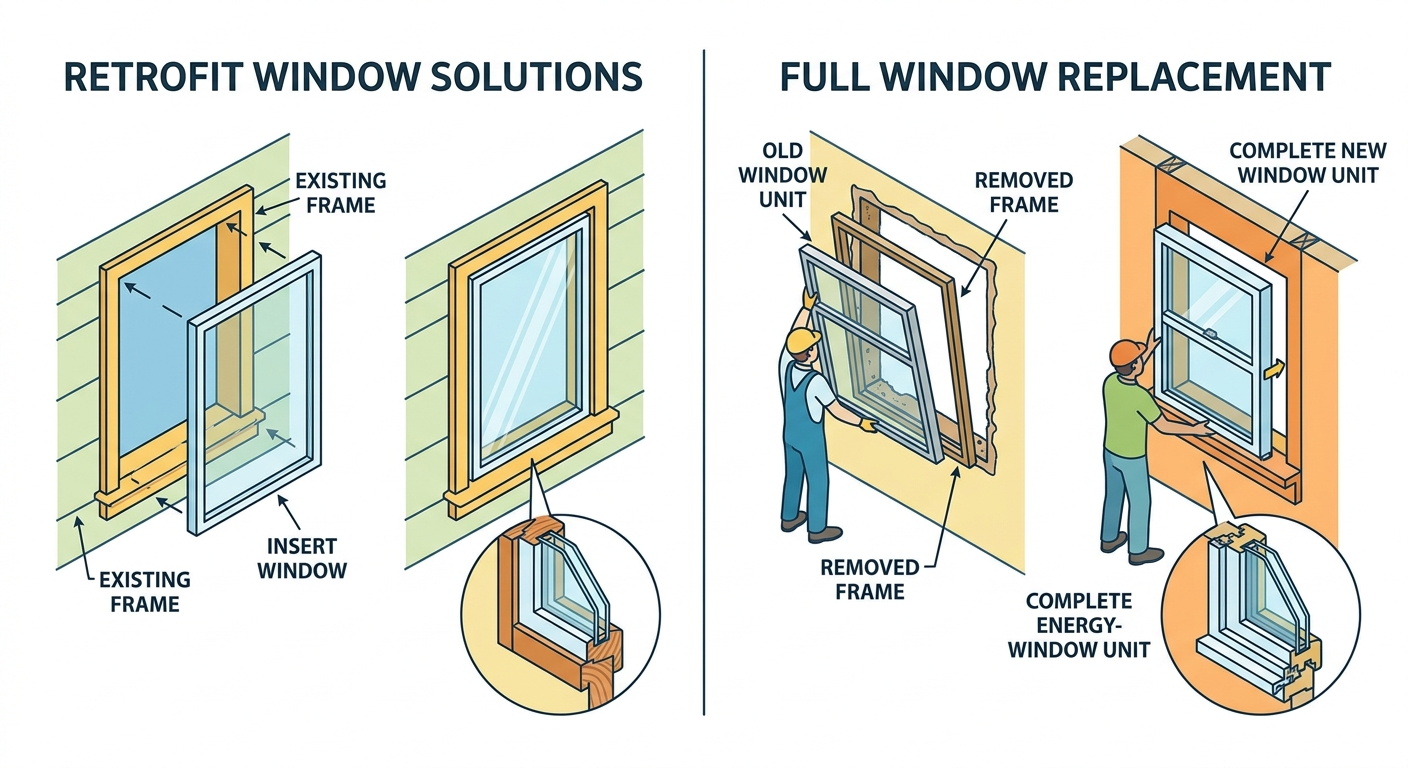
Retrofit window solutions, sometimes called insert windows, are designed to fit into your existing window frames without removing the entire structure. Instead of tearing out the original frame, retrofit windows are installed within it, preserving much of the existing architecture.
This method is particularly appealing for homeowners who want to improve insulation and performance without undergoing major construction.
Key Features of Retrofit Windows
- Installed within existing window frames
- Minimal disruption to interior and exterior finishes
- Faster installation process
- Typically more affordable than full replacement
Retrofit solutions are especially useful in homes where the existing frames are still structurally sound but the glass or insulation performance is lacking.
What Is Full Window Replacement?
Full window replacement involves removing the entire window unit, including the frame, trim, and sometimes even surrounding materials. A completely new window system is then installed in its place.
This option is more comprehensive and is often necessary when existing window frames are damaged, outdated, or poorly installed.
Key Features of Full Replacement
- Complete removal of old window and frame
- Installation of entirely new window system
- Greater flexibility in design and size changes
- Higher cost and longer installation time
While more invasive, full replacement allows for a complete transformation in both aesthetics and performance.
Retrofit vs Full Replacement: Core Differences
Understanding the fundamental differences between these two approaches is key to making the right choice.
1. Installation Process
Retrofit windows are far less invasive. Installers work within the existing frame, meaning less mess, less noise, and quicker completion.
Full replacement, on the other hand, requires significant labor. Walls may be opened, trims removed, and structural adjustments made.
2. Cost Comparison
Retrofit solutions are generally more budget-friendly because they require less labor and fewer materials.
Full replacement tends to be more expensive due to the complexity of the work and the additional components involved.
3. Energy Efficiency
Both options can improve energy efficiency, but the extent varies.
Retrofit windows enhance insulation by adding modern glazing within existing frames. However, if the original frame is inefficient, some energy loss may remain.
Full replacement provides maximum efficiency since the entire system—including frame and seals—is upgraded.
4. Aesthetic Impact
Retrofit windows maintain the original look of your home, which is beneficial for heritage properties or homes with unique architectural features.
Full replacement allows for complete design freedom, including changing window size, shape, or style.
5. Structural Integrity
If your existing frames are in good condition, retrofit windows are a practical choice.
However, if there is rot, warping, or damage, full replacement becomes necessary to ensure long-term durability.
Advantages of Retrofit Window Solutions
Retrofit window solutions have gained popularity for several compelling reasons.
1. Cost-Effective Upgrade
One of the biggest advantages is affordability. Homeowners can significantly improve comfort and efficiency without the high cost of full replacement.
For those looking to balance performance and budget, high-performance retrofit window solutions offer an excellent middle ground.
2. Quick Installation
Retrofit installations can often be completed in a single day, depending on the number of windows. This minimizes disruption to your daily life.
3. Preserves Existing Architecture
If your home has unique or historical features, retrofit windows allow you to maintain its character while still upgrading performance.
4. Improved Energy Efficiency
Modern retrofit systems often include double glazing or secondary glazing, which reduces heat loss and improves insulation.
You can explore energy-efficient window upgrades to better understand how retrofit solutions can transform your home’s performance.
5. Eco-Friendly Option
By reusing existing frames, retrofit solutions reduce construction waste, making them a more sustainable choice.
Advantages of Full Window Replacement
While more expensive, full replacement offers benefits that retrofit solutions cannot match in certain scenarios.
1. Maximum Energy Performance
Replacing the entire window system ensures optimal insulation, eliminating drafts and improving thermal efficiency.
2. Long-Term Investment
Full replacement often adds more value to your home, making it a worthwhile investment if you plan to sell in the future.
3. Design Flexibility
You can completely change the look of your windows—larger openings, modern styles, or improved functionality.
4. Addresses Structural Issues
If your current windows have damage, leaks, or rot, full replacement resolves these issues at the source.
When Should You Choose Retrofit Windows?
Retrofit window solutions are ideal in the following situations:
- Your existing frames are in good condition
- You want a cost-effective upgrade
- You prefer minimal disruption during installation
- You want to maintain your home’s original design
- You’re looking for improved insulation without major renovation
This approach is especially popular in urban homes and heritage properties where preserving the exterior is important.
When Is Full Replacement the Better Option?
Full replacement is the better choice if:
- Your window frames are damaged or deteriorating
- You want to completely change window style or size
- Your home suffers from significant drafts or leaks
- You’re undertaking a major renovation project
- You want the highest possible energy efficiency
In these cases, investing in a full replacement ensures long-term performance and reliability.
Energy Efficiency and Environmental Impact
Energy efficiency is one of the main reasons homeowners upgrade their windows.
Retrofit solutions improve insulation by adding layers of glazing, reducing heat transfer and energy consumption.
Full replacement goes a step further by eliminating inefficiencies in both glass and frame.
From an environmental perspective:
- Retrofit reduces waste by reusing frames
- Full replacement offers long-term energy savings but generates more initial waste
Choosing between the two often depends on whether you prioritize immediate sustainability or long-term efficiency gains.
Noise Reduction Benefits
Both retrofit and full replacement windows can significantly reduce outside noise.
Retrofit systems, particularly those with secondary glazing, are highly effective at soundproofing. This makes them ideal for homes in busy urban areas.
Full replacement windows also reduce noise but may require specialized glass for maximum sound insulation.
Maintenance and Durability
Retrofit windows require minimal maintenance, especially when high-quality materials are used.
Full replacement windows are also durable but may involve more upkeep depending on the materials chosen.
In general:
- Retrofit: easier maintenance, lower upfront investment
- Full replacement: longer lifespan, higher upfront cost
Common Misconceptions
Myth 1: Retrofit Windows Are Less Effective
Modern retrofit solutions can deliver impressive energy efficiency and performance, often rivaling full replacements in many scenarios.
Myth 2: Full Replacement Is Always Better
While full replacement offers maximum performance, it’s not always necessary. Many homes benefit more from the simplicity and affordability of retrofit solutions.
Myth 3: Retrofit Looks Cheap
High-quality retrofit systems are designed to blend seamlessly with existing windows, maintaining or even enhancing visual appeal.
Making the Right Decision
Choosing between retrofit window solutions and full replacement ultimately comes down to your priorities.
Ask yourself:
- What is my budget?
- Are my current frames in good condition?
- Do I want a quick upgrade or a complete transformation?
- How important is energy efficiency to me?
- Am I planning to renovate or sell my home?
By answering these questions, you can determine which option aligns best with your goals.
Final Thoughts
Upgrading your windows is a smart investment that can improve comfort, reduce energy costs, and enhance your home’s value.
Retrofit window solutions offer a cost-effective, minimally invasive way to boost performance while preserving your home’s character. They are ideal for homeowners seeking efficiency without major renovations.
Full window replacement, while more expensive, provides a comprehensive upgrade that addresses structural issues and delivers maximum performance.
Both options have their place, and the right choice depends on your specific situation. By understanding the differences, advantages, and limitations of each, you can confidently move forward with a solution that meets your needs.
Read more here!
