

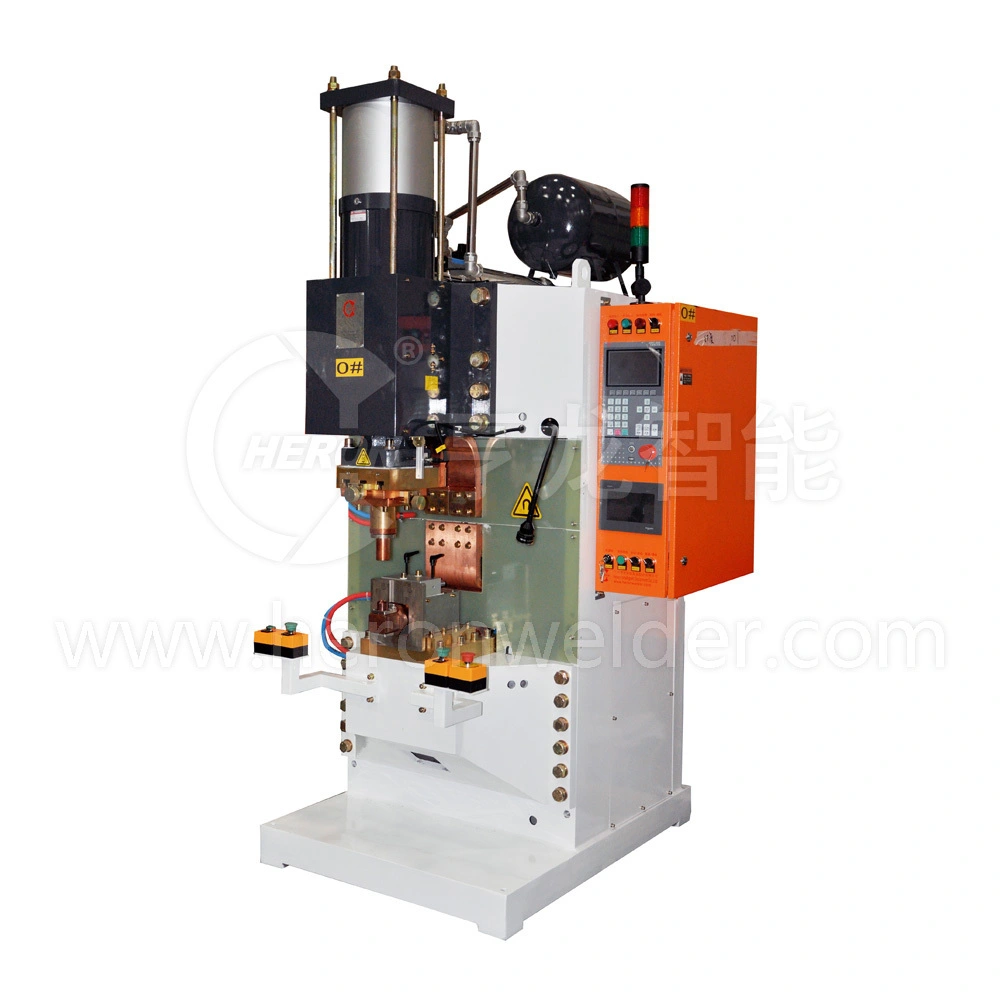
In the evolving landscape of industrial manufacturing, aluminum has become a material of choice for lightweight structures, automotive components, aerospace parts, and consumer electronics. However, welding aluminum presents unique challenges due to its high thermal conductivity, low melting point, and oxide layer formation. For manufacturers, choosing the right spot welder for aluminum is critical to achieving consistent, high-quality welds while maintaining production efficiency.
Heron Welder, a global leader in resistance welding and metal-joining technologies, offers advanced spot welding machines and automation solutions designed specifically to tackle the demands of aluminum welding. In this guide, we explore the principles, applications, and best practices for spot welding aluminum, helping engineers, OEMs, and factory decision-makers optimize their production lines.
Understanding Spot Welding for Aluminum
Spot welding is a type of resistance welding where two or more metal sheets are joined by applying pressure and passing an electric current through the contact area. The heat generated by electrical resistance melts the metal locally, forming a weld nugget once the material cools under pressure.
Aluminum, compared to steel, poses unique challenges:
- High Thermal Conductivity: Aluminum dissipates heat quickly, requiring higher currents and precise timing.
- Oxide Layer: Aluminum forms a thin oxide layer that melts at a higher temperature than the base metal, which can interfere with weld formation.
- Soft Material: Aluminum’s low melting point increases the risk of burn-through if welding parameters are not optimized.
Modern spot welders for aluminum, such as Heron’s MFDC (Medium Frequency Direct Current) and advanced capacitor discharge models, are engineered to address these challenges. They provide precise current control, optimized electrode force, and repeatable weld cycles for consistent results.
Key Applications of Aluminum Spot Welding
Aluminum spot welding is widely used across industries that demand lightweight, corrosion-resistant components:
1. Automotive Manufacturing
Aluminum spot welding is critical in assembling car body panels, battery housings for electric vehicles, and structural frames. High-speed spot welders ensure tight welds without deforming thin aluminum sheets.
2. Aerospace and Aviation
In aerospace manufacturing, every gram counts. Spot welding aluminum alloys ensures structural integrity while minimizing weight, essential for components like fuselage panels and interior frameworks.
3. Electronics and Consumer Goods
Aluminum enclosures, heat sinks, and structural supports for electronic devices benefit from precision spot welding, where consistent weld quality is crucial to product reliability.
4. Industrial Machinery
Heavy equipment and machinery often incorporate aluminum parts for lightweight design. Spot welders enable efficient assembly of frames, enclosures, and panels.
Comparing Spot Welding Aluminum vs. Steel
Manufacturers transitioning from steel to aluminum must understand key differences:
| Feature | Steel | Aluminum |
|---|---|---|
| Thermal Conductivity | Low | High – requires faster, higher current |
| Electrode Wear | Moderate | High – may need copper or copper alloy tips |
| Weld Appearance | Shiny, uniform | May require precise parameter adjustment to avoid burn-through |
| Cooling Requirements | Standard | Rapid cooling may be needed to control nugget formation |
| Equipment | Standard AC/DC welder | Advanced MFDC or capacitor discharge spot welder recommended |
Heron’s spot welders for aluminum are designed with these considerations in mind, offering robust electrode materials, adaptive current control, and integrated process monitoring to maximize weld quality and minimize downtime.
Best Practices for Aluminum Spot Welding
To achieve consistent, high-quality welds, manufacturers should follow these best practices:
- Surface Preparation: Remove contaminants and oxide layers using mechanical or chemical cleaning methods to ensure proper electrical contact.
- Correct Electrode Selection: Use electrodes with high thermal conductivity, often copper or copper alloys, to handle the heat-intensive aluminum welding process.
- Optimized Welding Parameters: Adjust current, pressure, and weld time according to material thickness and alloy type. MFDC welders provide precise control for different aluminum grades.
- Regular Maintenance: Inspect and dress electrodes frequently to maintain contact quality and prevent inconsistencies.
- Automation Integration: Combining spot welders with robotic arms or automated production lines improves repeatability, reduces operator error, and increases throughput. Heron offers fully integrated automation solutions tailored to aluminum welding applications.
Why Choose Heron for Aluminum Spot Welding?
Heron Welder has decades of experience providing industrial welding solutions to OEMs, Tier 1 suppliers, and manufacturing facilities worldwide. Our aluminum spot welders offer:
- Precision Control: MFDC and capacitor discharge technology for repeatable, high-quality welds.
- Scalable Automation: Solutions for standalone machines or fully automated production lines.
- Material Versatility: Optimized for various aluminum alloys, thicknesses, and applications.
- Global Support: Engineering consultation, training, and after-sales service to ensure operational efficiency.
Whether you’re producing automotive panels, aerospace components, or high-volume consumer goods, Heron’s spot welders for aluminum deliver performance, reliability, and efficiency.
FAQs About Aluminum Spot Welding
Q1: Can I use a standard steel spot welder for aluminum?
A: Standard AC/DC steel spot welders are generally not optimized for aluminum due to its high thermal conductivity. MFDC or capacitor discharge welders are recommended for consistent aluminum welds.
Q2: What aluminum thicknesses can be spot welded?
A: Heron spot welders can handle a wide range of thicknesses, from thin foils to multi-millimeter panels, with adjustable current and weld timing.
Q3: How often should electrodes be replaced when welding aluminum?
A: Electrode wear is higher with aluminum. Regular inspection and dressing are recommended, with replacement intervals depending on production volume and alloy type.
Q4: Can spot welding aluminum be fully automated?
A: Yes. Heron provides robotic integration and automation solutions for precise, repeatable welding in high-volume production.
Q5: What alloys are compatible with Heron spot welders?
A: Our systems support common aluminum alloys including 1xxx, 5xxx, and 6xxx series, among others.
Conclusion: Elevate Your Aluminum Welding Operations
Spot welding aluminum requires precision, control, and specialized equipment to overcome its unique challenges. Heron Welder delivers state-of-the-art spot welders and automation solutions that meet the demands of modern manufacturing, from automotive and aerospace to consumer electronics and industrial machinery.
Request a quote today or consult our experts to design a customized aluminum welding solution tailored to your production needs.
