

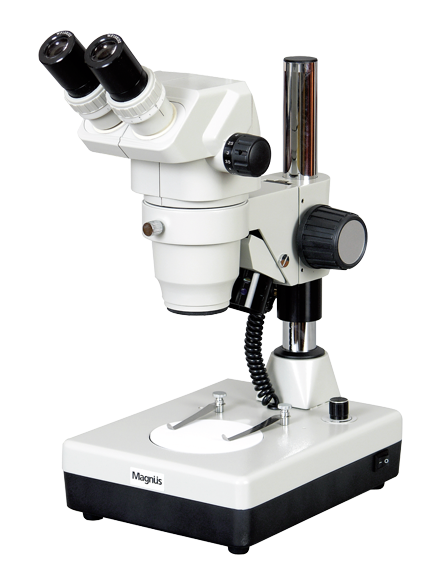
Microscopes are the backbone of scientific discovery, education, healthcare diagnostics, and industrial research. Whether you are setting up a school lab, a pathology center, or a manufacturing quality-control unit, choosing the right microscope is critical. Among the most commonly compared instruments are the Stereo Zoom Microscope and the traditional (compound) microscope.
If you are exploring high-quality Laboratory Microscopes in India, understanding the differences between these two types will help you make a smart, long-term investment.
Understanding the Basics
What Is a Stereo Zoom Microscope?
A Stereo Zoom Microscope is designed for low to medium magnification and provides a three-dimensional (3D) view of the specimen. It uses two separate optical paths with two objectives and eyepieces, giving depth perception and a realistic image.
These microscopes are commonly used in:
- Electronics inspection
- Dissection in biology labs
- Jewelry and gemstone analysis
- PCB inspection
- Small parts assembly
What Is a Traditional (Compound) Microscope?
A traditional microscope, also known as a compound microscope, is built for higher magnification and detailed observation of thin specimens. It uses multiple lenses (objective + eyepiece) aligned vertically to magnify specimens mounted on glass slides.
Compound microscopes are typically used in:
- Pathology labs
- Microbiology studies
- Blood sample analysis
- Cellular research
- Educational institutions
Key Differences: Stereo Zoom vs. Traditional Microscope
1. Magnification Range
Stereo Zoom Microscope
- Low to medium magnification (typically 5x to 50x, sometimes higher).
- Ideal for observing larger, solid objects.
Traditional Microscope
- High magnification (40x to 1000x or more).
- Suitable for examining cells, bacteria, and microorganisms.
Verdict: If you need to observe microscopic organisms or cell structures, a traditional microscope is better. For surface inspection and 3D observation, stereo zoom wins.
2. Image Type (2D vs 3D)
One of the biggest differences lies in image perception.
- Stereo Zoom Microscope: Produces a 3D image with depth perception.
- Traditional Microscope: Produces a 2D flat image.
This makes stereo microscopes extremely useful in applications that require hand-eye coordination, such as circuit board repair or surgical training.
3. Working Distance
Working distance refers to the space between the objective lens and the specimen.
- Stereo Zoom Microscope: Offers a larger working distance. This allows users to manipulate tools under the lens.
- Traditional Microscope: Has a shorter working distance due to higher magnification lenses.
If your application involves handling or assembling small components under magnification, stereo zoom is the clear choice.
4. Illumination Method
Stereo Zoom Microscopes
- Often uses reflected (incident) light.
- Suitable for opaque specimens.
Traditional Microscopes
- Use transmitted light from below the stage.
- Ideal for transparent or semi-transparent specimens mounted on slides.
5. Application Areas
| Application | Stereo Zoom Microscope | Traditional Microscope |
| PCB Inspection | ✔ | ✖ |
| Cell Culture | ✖ | ✔ |
| Dissection | ✔ | ✖ |
| Microbiology | ✖ | ✔ |
| Industrial Quality Control | ✔ | Limited |
| Educational Biology Labs | ✔ | ✔ |
Both play crucial roles in modern laboratory environments, especially when sourcing reliable Laboratory Microscopes in India for institutions and research facilities.
6. Ease of Use
Stereo zoom microscopes are generally easier for beginners because:
- They require minimal slide preparation.
- Objects can be placed directly on the stage.
- Zoom adjustment is simple and smooth.
Traditional microscopes require:
- Proper slide preparation.
- Careful focusing at higher magnifications.
- More training for accurate observation.
For student labs, both types are valuable, but the learning curve differs.
7. Cost Consideration
Cost varies based on brand, optical quality, and features.
- Stereo zoom microscopes are often moderately priced, depending on zoom range and illumination type.
- Traditional microscopes can range from affordable educational models to high-end research-grade systems with oil immersion objectives.
When evaluating Laboratory Microscopes in India, institutions should consider long-term durability, optical clarity, and service support in addition to price.
When Should You Choose a Stereo Zoom Microscope?
You should choose a Stereo Zoom Microscope if:
- You need 3D visualization.
- Your work involves the assembly or inspection of solid objects.
- You require a large working distance.
- You operate in electronics, manufacturing, or forensic labs.
It is particularly valuable in industries where precision handling under magnification is required.
When Should You Choose a Traditional Microscope?
A traditional microscope is ideal if:
- You are studying microorganisms or cells.
- You work in pathology, microbiology, or research labs.
- High magnification and fine detail are essential.
- You are preparing slides for academic demonstrations.
Most medical and life science laboratories rely heavily on compound microscopes.
Can a Laboratory Have Both?
Absolutely. In fact, most advanced labs maintain both systems. A stereo zoom microscope handles macro-level inspection and dissection tasks, while a traditional microscope supports detailed cellular and microbiological analysis.
Educational institutions, hospitals, and industrial R&D centers often invest in both types to ensure comprehensive lab capability.
Final Thoughts
Choosing between a Stereo Zoom Microscope and a traditional microscope ultimately depends on your application. While traditional microscopes dominate in cellular biology and medical diagnostics, stereo zoom microscopes excel in industrial, educational, and surface-level inspections.
If you’re searching for reliable and high-performance Laboratory Microscopes in India, understanding these distinctions ensures you invest in equipment that aligns perfectly with your lab’s needs. Whether for research, diagnostics, manufacturing, or education, selecting the right microscope enhances accuracy, efficiency, and scientific discovery.
