

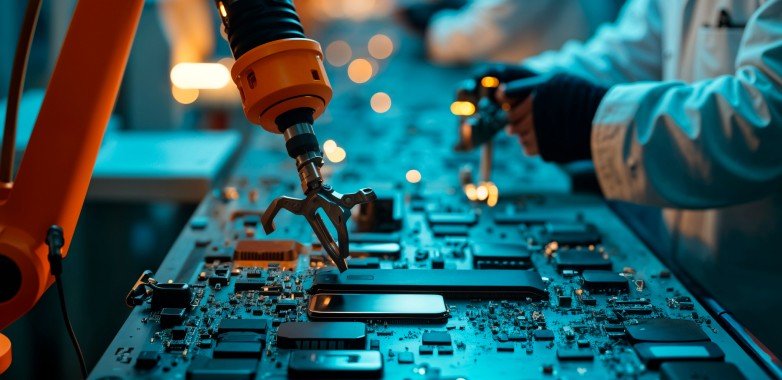
Artificial Intelligence is reshaping software development at a fundamental level. What began as automation for specific tasks has evolved into intelligent systems that assist, optimize, and continuously improve how software is designed, built, tested, and maintained. As AI matures, it is becoming a core part of the software lifecycle—changing not only tools and processes, but also how businesses think about innovation and scalability.
AI as a Development Accelerator
One of the most immediate impacts of AI in software development is speed. AI-powered development tools can assist with code generation, suggest logic improvements, and automate repetitive tasks. This significantly reduces development time while improving consistency and accuracy.
In the future, businesses can expect:
- Faster development cycles
- Reduced manual coding effort
- Higher developer productivity
- Quicker adaptation to changing requirements
AI enables teams to move from writing every line of code manually to supervising and refining intelligent outputs.
Smarter Testing and Quality Assurance
Testing has traditionally been one of the most resource-intensive stages of software development. AI is transforming this by enabling automated test creation, intelligent test prioritization, and continuous quality monitoring.
Future AI-driven testing will:
- Predict high-risk areas in code
- Adapt test cases as applications evolve
- Detect bugs earlier in the lifecycle
- Reduce post-release defects
This shift ensures higher software quality while lowering the cost and time associated with testing.
Predictive Development and Decision-Making
AI excels at pattern recognition, making it ideal for analyzing historical development data. In the future, AI will play a larger role in predicting project outcomes, estimating timelines, and identifying potential risks before they occur.
For businesses, this means:
- More accurate project planning
- Better resource allocation
- Fewer unexpected delays
- Improved delivery confidence
Development decisions will increasingly be data-driven rather than assumption-based.
Intelligent Code Maintenance and Refactoring
Maintaining large codebases is a major challenge for growing applications. AI is set to revolutionize code maintenance by continuously analyzing code health and suggesting improvements.
Future AI systems will:
- Identify technical debt early
- Recommend refactoring opportunities
- Improve performance and scalability
- Extend the lifespan of applications
This ensures that software remains efficient and manageable even as it grows in complexity.
Security Embedded Through AI
As cyber threats become more sophisticated, AI will play a critical role in securing software applications. Future development practices will rely on AI to identify vulnerabilities, detect unusual behavior, and respond to threats in real time.
AI-driven security will enable:
- Early detection of insecure code patterns
- Continuous monitoring in production environments
- Faster response to potential breaches
- Stronger compliance with security standards
Security will become an integrated, continuous process rather than a final checkpoint.
AI and DevOps Evolution
The integration of AI with DevOps practices is shaping the next generation of software delivery. AI will optimize build pipelines, monitor system performance, and automate deployment decisions.
In AI-driven DevOps environments:
- Releases will become faster and more reliable
- System failures will be predicted before impact
- Downtime will be minimized
- Operational efficiency will improve
This leads to more stable applications and smoother user experiences.
Personalized and Adaptive Software
AI will enable software to adapt dynamically to user behavior. Applications will learn from how users interact with features and adjust interfaces, workflows, and functionality accordingly.
This future-focused approach allows businesses to:
- Deliver personalized user experiences
- Improve customer engagement
- Continuously refine product features
- Increase long-term user retention
User-centric development will be powered by real-time intelligence rather than static design assumptions.
Redefining the Role of Developers
As AI becomes more capable, the role of software developers will continue to evolve. Developers will spend less time on repetitive tasks and more time on system design, innovation, and strategic problem-solving.
AI will act as:
- A collaborative development assistant
- A quality and security advisor
- A productivity enhancer rather than a replacement
This shift will elevate development roles and encourage deeper collaboration between technical and business teams.
Long-Term Business Impact
For businesses, the future of software development with AI represents more than technical improvement—it is a strategic advantage. AI-driven development enables faster innovation, better scalability, reduced costs, and higher-quality digital products.
Organizations that embrace AI early will be better positioned to:
- Respond to market changes
- Scale digital solutions efficiently
- Deliver superior customer experiences
- Maintain long-term competitiveness
Conclusion
The future of software development with Artificial Intelligence is intelligent, adaptive, and deeply integrated into every stage of the software lifecycle. AI is not replacing developers or traditional practices—it is enhancing them. By automating routine tasks, improving quality, strengthening security, and enabling smarter decisions, AI is setting the foundation for faster, more resilient, and more innovative software development.
Custom AI Development Company in India delivering tailor-made, scalable, and secure AI solutions aligned with unique business requirements.
