

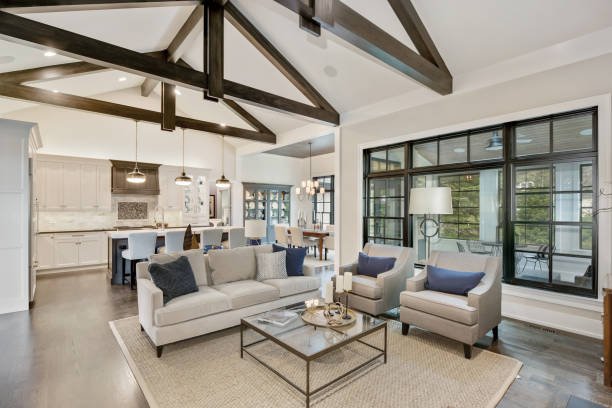
Luxury gets thrown around a lot these days. Marble countertop? Luxury. Gold faucet? Luxury. Big budget? Must be luxury. Not quite. Real high-end spaces don’t scream at you. They whisper. They feel intentional. That’s the difference. And if you’ve ever worked with a true Luxury Interior Design Firm Las Vegas homeowners trust, you’ll notice something fast, it’s never about just “nice stuff.” It’s about the details most people overlook. The alignment of seams. The way light hits a textured wall at 5 pm. The weight of a door when it closes. That’s where luxury actually lives.
Why Details Separate Good Design from High-End Design
Anyone can pick expensive furniture. That part’s easy. Swipe the card and call it a day. But high-end design is less about what you buy and more about how everything works together. The proportions have to feel right. The spacing between elements can’t feel cramped or too airy. Even something small, like the reveal on cabinetry, matters more than people think. A sixteenth of an inch off? You feel it, even if you can’t explain why. That’s the strange thing about detail — most clients don’t walk in and say, “Wow, great millwork tolerances.” They just feel calm. Balanced. Comfortable. That emotional response doesn’t happen by accident. It’s built slowly, decision by decision.
Material Selection Isn’t Just About Looks
Here’s where things get real. Materials can look amazing in a showroom and completely fall apart in a real home. I’ve seen it happen. A slab that looked subtle under warehouse lights suddenly screams under residential LEDs. A fabric that felt soft in a sample book pills after six months. Attention to detail means testing, reviewing, and questioning everything. How does this stone react to humidity? Does this wood species expand in desert heat? In places like Las Vegas, that matters. Climate isn’t forgiving. The wrong choice will show itself quickly. True luxury design considers performance just as much as aesthetics. Maybe more.
Lighting Is Where Most Projects Quietly Fail
Lighting can make a million-dollar renovation look average. Or make a modest space feel layered and thoughtful. The placement of recessed lights. The temperature of bulbs. The angle of wall washers. All tiny decisions, but together they shape how the room breathes. You don’t want a space that feels like a hospital. You also don’t want a cave. There’s a middle ground, and it’s delicate. Layered lighting — ambient, task, accent — isn’t some trendy phrase designers throw around. It’s structural. Miss one layer and the whole thing feels off. Not terrible. Just… unfinished.
Custom Work Demands Obsessive Precision
Custom cabinetry, built-ins, integrated appliances this is where detail either shines or completely unravels. Measurements have to be exact. Installations need supervision. You can design the most beautiful entertainment wall on paper, but if the outlets are misaligned or the stone seam runs through the centre of a focal point, the illusion breaks. And luxury doesn’t forgive visual noise. High-end projects require coordination between designers, contractors, fabricators, and electricians. It’s a team sport, honestly. And someone has to guard the details like a hawk. Otherwise, small mistakes stack up. Quietly. Until the room feels “off” and nobody can quite say why.
Texture, Layers, and the Subtle Art of Restraint
Not every surface needs to shout. That’s another misconception. Luxury isn’t about adding more. Sometimes it’s about pulling back. Mixing textures matte plaster with polished brass, soft linen against structured leather creates depth without chaos. But the mix has to be intentional. Too many competing finishes, and the room starts arguing with itself. I’ve walked into spaces that were expensive but exhausting. That’s usually a detail problem. No editing. No restraint. True high-end interiors know when to stop. That pause, that restraint, is a detail too.
The Role of Scale and Proportion in High-End Interiors
Scale is sneaky. You don’t always notice it directly, but you definitely feel it. Oversized chandeliers can dominate a room in the wrong way. Undersized rugs make furniture look like it’s floating awkwardly. Even art placement matters more than people think. A few inches too high, and suddenly it disconnects from the furniture below it. A seasoned designer measures twice. Sometimes three times. Because proportion isn’t guesswork. It’s math mixed with instinct. That balance takes experience. You don’t develop that overnight.
Luxury Interior Design in Las Vegas Requires Regional Awareness
Designing in Las Vegas isn’t the same as designing in New York or Miami. The desert light is different. The heat is different. Even the lifestyle expectations are different. Clients often want drama, but they also want comfort. They entertain. They host. They expect a bit of impact. A Luxury Interior Design Firm, Las Vegas-based professionals rely on understanding how to blend bold visual statements with materials that survive the environment. UV exposure alone can ruin the wrong fabric. So again, detail. Always back to detail.
How Residential Interior Design Services Elevate the Everyday Experience
The 3rd last paragraph from the bottom requirement brings us here, and it matters. Residential Interior Design Services aren’t just about making a home look pretty for photos. They’re about improving how someone lives in that space every single day. The placement of outlets so that cords disappear. The hidden storage that reduces clutter. The way a hallway transitions into a bedroom without a jarring shift in mood. Those choices feel small during planning. But six months later, when the homeowner moves through the space effortlessly, that’s the payoff. Good design supports life quietly. Great design anticipates it.
Budget Doesn’t Replace Attention to Detail
Here’s something people don’t always want to hear. Throwing more money at a project doesn’t guarantee refinement. I’ve seen massive budgets produce mediocre results because no one slowed down enough to focus. On the flip side, carefully managed budgets with sharp oversight can feel incredibly high-end. It comes down to discipline. Reviewing shop drawings. Visiting the site. Questioning inconsistencies. Luxury isn’t lazy. It’s meticulous. And yes, that can be exhausting. But it shows.
Conclusion: Details Are the Difference You Can Feel
At the end of the day, luxury interior design isn’t about sparkle. It’s about precision. It’s about the things most guests won’t consciously notice but will absolutely feel. The softness of the lighting. The alignment of materials. The quiet confidence of a well-proportioned room. That level of detail doesn’t happen by accident, and it definitely doesn’t happen by rushing. It takes patience. Experience. A little obsession, if we’re being honest.
When every seam lines up, when every finish makes sense, when nothing feels forced — that’s luxury. Not loud. Not flashy. Just right. And “just right” is harder to achieve than most people think.
