

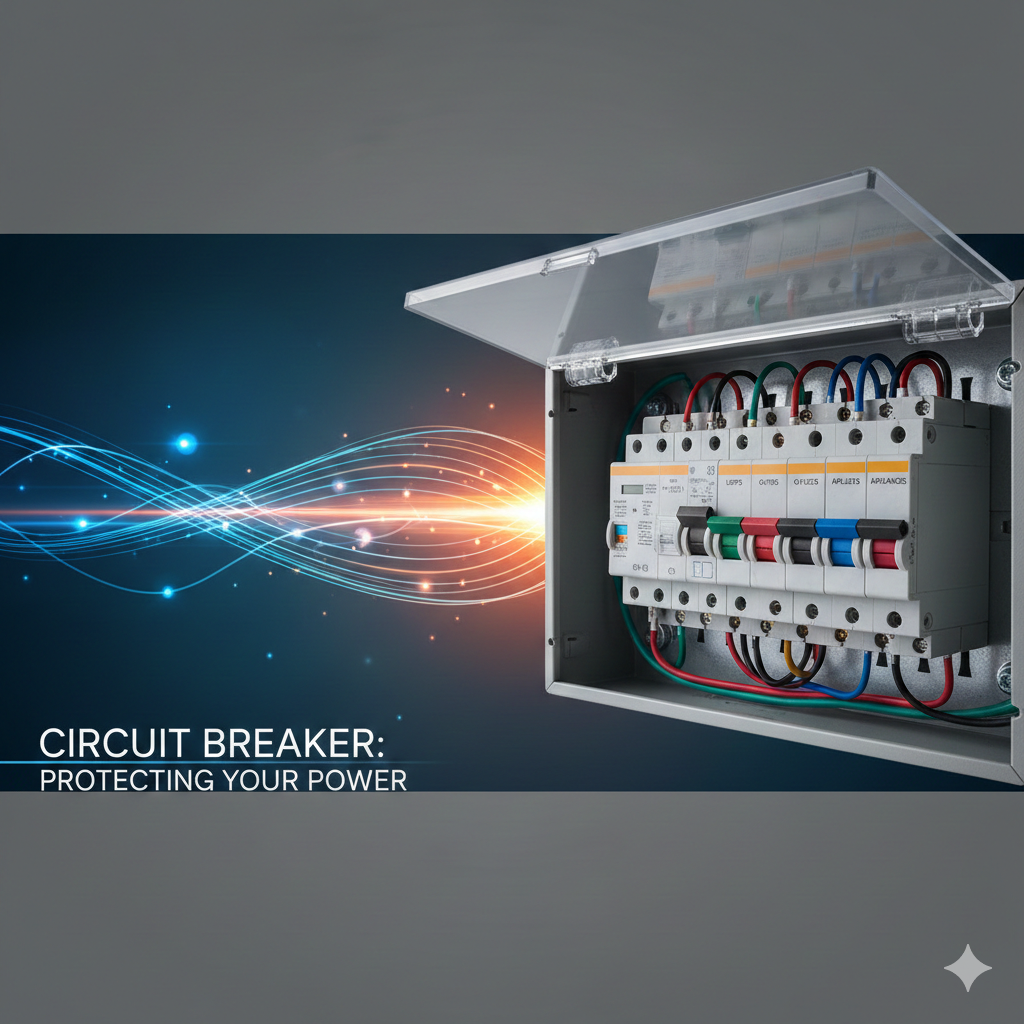
A circuit breaker is one of the most critical components in any electrical system, whether in homes, commercial buildings, or industrial facilities. It plays a vital role in protecting electrical circuits from damage caused by overloads, short circuits, or faults. Without a circuit breaker, electrical systems would be highly vulnerable to overheating, fire hazards, and equipment failure.
In modern electrical infrastructure, the circuit breaker has replaced traditional fuses in many applications due to its reliability, reusability, and ability to respond quickly to abnormal conditions. This article explains what a circuit breaker is, how it works, its different types, applications, advantages, and why it is essential for safety and efficiency.
What Is a Circuit Breaker?
A circuit breaker is an automatic electrical switch designed to interrupt the flow of electricity when it detects a fault in the circuit. Its primary function is to protect electrical wiring, appliances, and users from damage or danger caused by excessive current.
Unlike a fuse, which must be replaced after it blows, a circuit breaker can be reset once the fault is resolved. This feature makes it more convenient and cost-effective over the long term.
In simple terms, a circuit breaker acts as a safety guard that continuously monitors current flow and disconnects power when unsafe conditions occur.
How Does a Circuit Breaker Work?
The working principle of a circuit breaker is based on detecting abnormal current levels and mechanically or electronically opening the circuit.
Under normal operating conditions, current flows through the breaker without interruption. When an overload or short circuit occurs, the current exceeds the rated limit of the circuit breaker. This excess current triggers a tripping mechanism, which instantly opens the contacts inside the breaker and stops the flow of electricity.
Most circuit breakers use one or both of the following mechanisms:
- Thermal mechanism: Uses a bimetallic strip that bends when heated by excess current, causing the breaker to trip.
- Magnetic mechanism: Uses an electromagnetic coil that reacts instantly to high current surges, such as short circuits.
These mechanisms ensure fast and reliable protection against electrical faults.
Why Is a Circuit Breaker Important?
The importance of a circuit breaker cannot be overstated. It provides several key benefits that contribute to electrical safety and system reliability.
First, it protects electrical wiring from overheating. Excess current can cause insulation to melt, leading to short circuits or fires. A circuit breaker prevents this by disconnecting power immediately.
Second, it safeguards electrical appliances and equipment. Sensitive devices can be damaged by voltage spikes or overloads, and a circuit breaker helps minimize such risks.
Third, it ensures human safety. Electrical faults can result in shocks or fires, and a properly installed circuit breaker reduces these hazards significantly.
Finally, circuit breakers improve system control by allowing sections of a circuit to be isolated for maintenance or repair without shutting down the entire system.
Types of Circuit Breakers
There are several types of circuit breakers, each designed for specific applications and voltage levels.
Miniature Circuit Breaker (MCB)
An MCB is commonly used in residential and small commercial installations. It protects against overloads and short circuits in low-voltage circuits. MCBs are compact, easy to install, and widely used in distribution boards.
Molded Case Circuit Breaker (MCCB)
An MCCB is used in industrial and commercial settings where higher current ratings are required. It offers adjustable trip settings, making it suitable for circuits with varying load conditions.
Residual Current Circuit Breaker (RCCB)
An RCCB, also known as a residual current device, protects against earth leakage currents. It is designed to prevent electric shocks by disconnecting power when it detects an imbalance between live and neutral currents.
Air Circuit Breaker (ACB)
An ACB is used in high-voltage industrial applications. It uses air as the arc-extinguishing medium and is typically installed in power distribution panels.
Vacuum Circuit Breaker (VCB)
A VCB uses vacuum technology to extinguish the electrical arc. It is commonly used in medium-voltage systems and is known for its long service life and low maintenance requirements.
Applications of Circuit Breakers
Circuit breakers are used in a wide range of applications across different sectors.
In residential buildings, they protect lighting circuits, power outlets, and household appliances. In commercial buildings, circuit breakers manage electrical loads for offices, elevators, and HVAC systems.
In industrial environments, circuit breakers protect heavy machinery, motors, and production lines from electrical faults. Power generation and transmission systems also rely heavily on high-capacity circuit breakers to ensure grid stability and safety.
Even renewable energy systems, such as solar and wind installations, use specialized circuit breakers to protect inverters and distribution networks.
Circuit Breaker Ratings and Specifications
Choosing the right circuit breaker requires understanding its ratings and specifications.
The current rating indicates the maximum current the breaker can carry continuously without tripping. The voltage rating specifies the maximum voltage the breaker can safely interrupt.
The breaking capacity defines the maximum fault current the circuit breaker can handle without damage. This is especially important in industrial and high-power systems.
Other specifications include trip characteristics, such as Type B, C, or D for MCBs, which determine how quickly the breaker responds to different fault levels.
Selecting the correct ratings ensures optimal protection and prevents nuisance tripping or system damage.
Advantages of Using Circuit Breakers
Circuit breakers offer several advantages over traditional protection devices.
They are reusable and can be reset after tripping, reducing maintenance costs. They provide faster response times, which enhances safety and minimizes damage.
Circuit breakers also allow better system management, as individual circuits can be isolated without affecting others. Modern circuit breakers can even be integrated with smart systems for remote monitoring and control.
These benefits make circuit breakers the preferred choice for modern electrical installations.
Maintenance and Testing of Circuit Breakers
Regular maintenance is essential to ensure the reliable operation of a circuit breaker. Over time, dust, corrosion, or mechanical wear can affect performance.
Routine inspections should include checking for signs of overheating, loose connections, and physical damage. Testing the tripping mechanism periodically ensures the breaker will function correctly during a fault.
In industrial settings, professional testing and calibration are often required to meet safety standards and regulations.
Common Issues with Circuit Breakers
Although circuit breakers are highly reliable, they can experience issues.
Frequent tripping may indicate an overloaded circuit, faulty appliance, or wiring problem. A breaker that does not trip when required can be dangerous and should be replaced immediately.
Understanding these issues and addressing them promptly helps maintain electrical safety and system efficiency.
Conclusion
A circuit breaker is an essential component of any electrical system, providing protection, safety, and control. By automatically interrupting power during faults, it prevents fires, equipment damage, and personal injury. With various types designed for different applications, circuit breakers are used in residential, commercial, and industrial environments worldwide.
Understanding how a circuit breaker works, its types, and its importance helps users make informed decisions when designing or upgrading electrical systems. Investing in the right circuit breaker and maintaining it properly ensures long-term safety, reliability, and peace of mind.
