

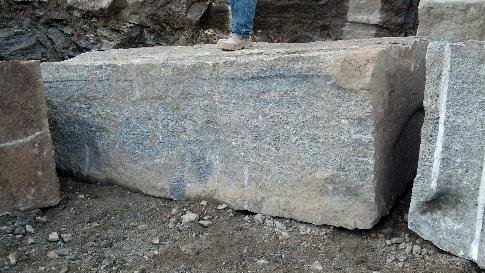
If you have ever waited on stone delivery near me in California and wondered why some loads look like neat rectangular blocks while others arrive as small angular pieces… well, you are not alone. We talk to customers all the time who ask, “Hey, are these even the same type of stone?” And honestly, it can get confusing because both products come from the same rock deposits but serve totally different purposes.
So let us break it down in a simple, friendly way… no heavy jargon, just the stuff you actually need to know.
So… What Exactly Is Dimension Stone?
Dimension stone is basically stone that is cut with precision. Think of it like the “premium cut” of the rock world. These blocks or slabs are trimmed, sliced, and shaped in quarries to match exact sizes. We see it used in things like building facades, countertops, monuments, fireplaces… you name it.
One interesting study from the Natural Stone Institute noted that dimension stone production focuses more on quality than volume. That means quarries often discard large amounts of rock just to keep the parts that look uniform and clean. Kind of wild, right? But it makes sense when you think about how picky architects can be about color and pattern.
Another fun fact: most dimension stone comes from materials like granite, marble, sandstone, and limestone because these stones can handle being cut into big, strong pieces without cracking.
And Crushed Stone… That is a Whole Different Story
Crushed stone is what you get when large rocks run through crushers and break into smaller pieces. It is way more rough around the edges (literally) than dimension stone. And because of that texture, it packs really well, which is why it is used under roads, railways, concrete slabs, and playgrounds.
A report from the U.S. Geological Survey mentioned that crushed stone is actually one of the highest-volume construction materials used in the country… billions of tons every year. It shocked us the first time we looked at the numbers. But when you think about road beds, drainage systems, and construction foundations, it adds up fast.
The Real Difference… In Simple Words
Here is the quickest way to remember it:
- Dimension stone is cut to size
- Crushed stone is broken into pieces
- Both come from quarries, but the processing and end uses could not be more different
If you walked through a quarry yard, you would notice something immediately: the dimension stone area looks like a showroom of big clean blocks, while the crushed stone area is just mountains of rocks waiting for trucks.
Why Does It Matter When You Are Ordering?
If you ever order materials for a job… this part helps a lot.
When you need something structural like a retaining wall veneer or stair treads, dimension stone is the way to go. But if you are working on drainage, pathways, landscaping bases… crushed stone is your friend every time.
Many contractors mix the two without realizing it, and then wonder why the final look or performance is off. Happens more often than you would think.
And just a quick note… when people ask for “clean stone” or “aggregate”, they are almost always talking about crushed stone, not the blocks.
A Quick Word on Material Costs
The price difference is no joke. Dimension stone costs more because the quarrying, cutting, and finishing take time and skill. Crushed stone, on the other hand, is more about efficiency and bulk production. So if your project does not require a polished look, you can save a good amount by going with crushed stone near me in California.
(Some projects even blend both… smart way to stay within a budget.)
FAQs
1. Can dimension stone be used in place of crushed stone?
Not really. Dimension stone is decorative or structural… crushed stone is functional. They do not replace each other well.
2. Is crushed stone and gravel the same thing?
No. Gravel is naturally rounded from riverbeds. Crushed stone has sharp edges because it is machine-broken.
3. Which lasts longer in construction?
Both last long, but dimension stone is often chosen for longevity and appearance… think old monuments still standing strong.
4. Does the type of rock matter for crushed stone?
Yes. Granite and limestone are common because they hold up well under pressure.
5. Is dimension stone more eco-friendly?
Studies show natural stone has a lower carbon footprint than many manufactured building materials, especially when sourced locally.
