

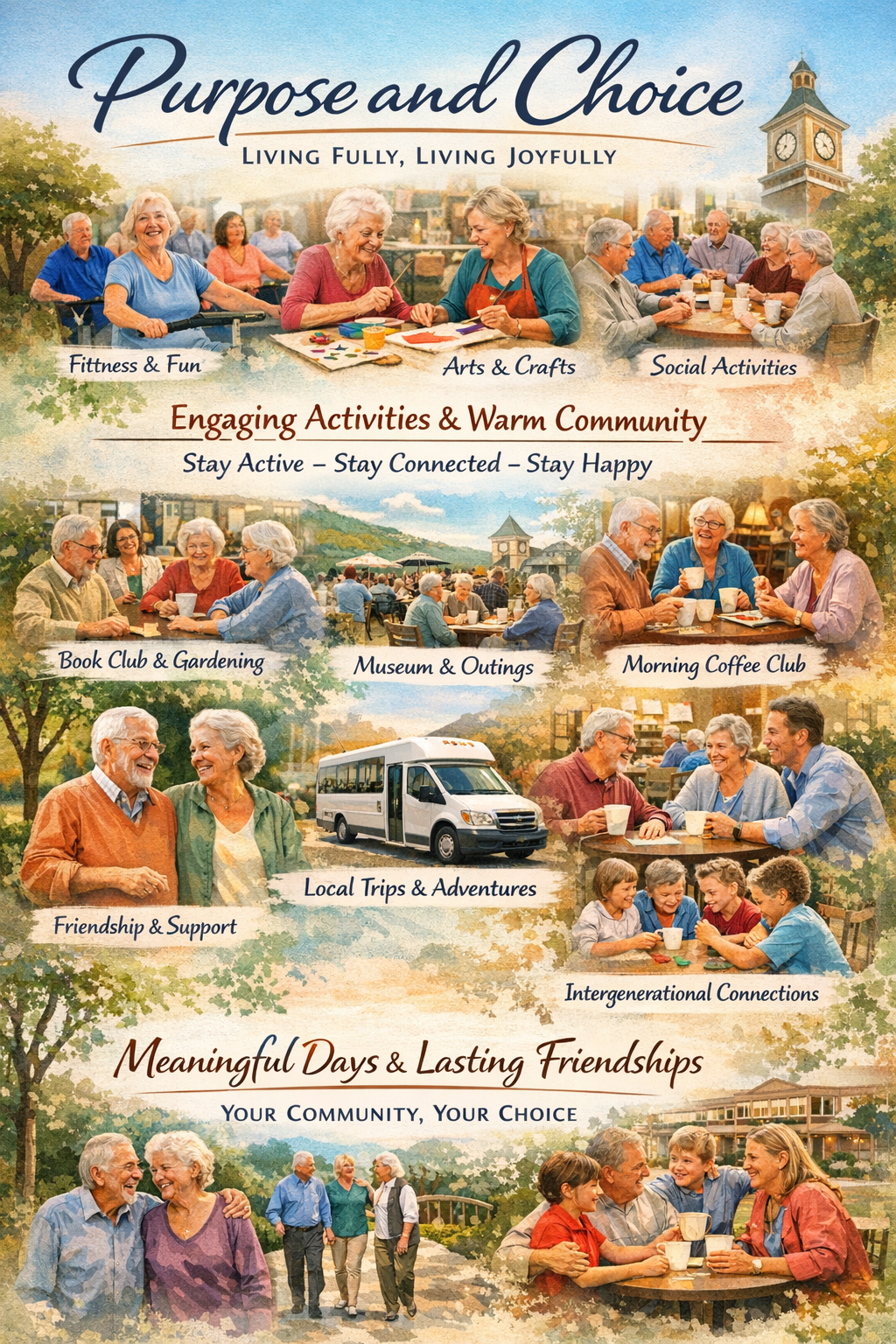
Retirement should be filled with conversation, laughter, and places to go. Independent living communities provide the setting where good friends and busy days become part of everyday life rather than occasional events. By removing the daily pressures of home maintenance and surrounding seniors with active peers, these communities turn ordinary weeks into engaging, memorable experiences that bring joy and purpose to every day.
Days With Purpose and Choice
One of the hardest parts of living alone is the “empty calendar.” Days stretch endlessly without structure, purpose, or anticipated events. The question “what should I do today?” can feel overwhelming when options are limited by isolation, mobility challenges, or the sheer effort required to organize activities independently.
In our independent living community, you are presented with a menu of options every day. You might choose a morning exercise class, follow-ed by a craft workshop, an afternoon card game, or a group outing to a local museum. Book clubs meet weekly, gardening groups gather in community plots, and movie nights bring neighbors together for shared entertainment.
The structure is there to encourage participation, but it is never forced. You have the total freedom to be as “busy” as you want to be. Some residents pack their calendars with multiple activities daily, thriving on constant engagement. Others prefer quieter rhythms, selecting just a few favorite programs each week. Both approaches are equally supported and celebrated.
For many, simply knowing there is a coffee club meeting downstairs every morning provides a gentle reason to get dressed and start the day with a smile. These small rituals create anchors that transform aimless days into purposeful ones. Having something to look forward to—even something as simple as Tuesday morning trivia or Thursday afternoon bingo—provides motivation and structure that improves overall wellbeing.
The variety of offerings ensures everyone finds activities matching their interests and abilities. Fitness enthusiasts enjoy water aerobics, yoga, and walking clubs. Creative souls explore art classes, pottery workshops, and music appreciation groups. Intellectually curious residents attend lectures, current events discussions, and technology classes. Social butterflies thrive in game tournaments, happy hours, and themed parties.
A Neighborhood Feeling
Rather than a “facility,” the atmosphere here resembles a friendly town where everyone knows your name. This neighborhood feeling fosters a deep sense of confidence. When you are part of a lively environment, you feel more capable and self-assured. You aren’t just “aging”; you are living in a place that celebrates your history and supports your future.
The community becomes an extension of family—chosen family based on proximity, shared experiences, and genuine affection. Neighbors check on each other, celebrate birthdays together, and provide support during difficult times. The bonds formed in independent living communities often rival or surpass those from previous life stages.
Hallway conversations become treasured daily interactions. The simple pleasure of seeing familiar faces, exchanging greetings, and sharing brief updates creates the social fabric that defines true community. These micro-connections accumulate into profound feelings of belonging that combat the isolation plaguing so many older adults living alone.
Common areas designed for gathering rather than passing through encourage lingering and conversation. Comfortable seating arrangements invite small groups to form naturally. Libraries with cozy reading nooks, sunrooms overlooking gardens, and bistro-style cafés create multiple gathering spots suited to different moods and preferences. https://atechvibe.com/
The intergenerational programs many independent living communities offer bring additional richness. Visits from local schoolchildren, partnerships with youth organizations, and family-friendly events create connections beyond the senior community, helping residents feel engaged with the broader world rather than segregated by age.
Wellness Through Activity
Busy days are the best medicine for the body and mind. Movement classes keep the joints limber, brain games keep the mind sharp, and social interaction keeps the heart light. Because all these things are “baked into” the lifestyle, residents often find themselves in better health six months after moving in than they were when they were struggling to manage a house alone.
The health benefits of active independent living extend far beyond physical fitness. Mental health improves dramatically when loneliness and isolation disappear. Depression rates drop when days have purpose and social connection. Anxiety decreases when safety concerns and home maintenance worries evaporate. Cognitive function often improves with regular mental stimulation and social engagement.
Physical activity becomes sustainable when it’s enjoyable and social rather than solitary obligation. Walking alone at home requires motivation and feels like exercise. Walking with friends while chatting feels like socializing that happens to include movement. The reframing makes consistency achievable.
Group fitness classes provide accountability and encouragement. When friends expect to see you at Tuesday morning tai chi, you show up. When you know your walking partner waits in the lobby each afternoon, you don’t skip. This gentle social pressure creates the consistency that produces real health benefits.
Nutrition improves when meals are professionally prepared, properly portioned, and enjoyed socially. The effort of cooking for one often results in poor food choices or skipped meals. Restaurant-style dining in independent living communities ensures balanced nutrition without the work, while social mealtimes improve appetite and enjoyment.
Sleep quality often improves after moving to independent living. Reduced stress, increased physical activity, social stimulation during the day, and the security of knowing help is available all contribute to better rest. Many residents report sleeping through the night for the first time in years.
Building Lifelong Friendships
The friendships formed in independent living communities often become the most meaningful relationships of later life. Shared daily experiences, proximity, similar life stages, and freedom from work and family obligations create ideal conditions for deep bonds.
Unlike friendships from working years that centered on professional connections, or family-focused friendships built around children’s activities, independent living friendships develop purely from genuine compatibility and shared interests. These authentic connections enrich life immeasurably.
Best friendships often emerge unexpectedly—the dinner table companion who becomes a confidant, the exercise class partner who becomes a travel buddy, the neighbor who becomes family. The environment facilitates these connections organically without forcing relationships.
Freedom to Explore Beyond the Community
While the community itself offers abundant activities, connections to the broader area remain important. Organized outings to cultural events, restaurants, shopping, and entertainment venues keep residents engaged with their city. Transportation services remove barriers, ensuring mobility limitations don’t equal isolation.
Residents maintain connections to religious communities, volunteer organizations, and longtime social groups. Independent living supports these external relationships while providing a rich internal community as well.
Conclusion
For seniors who want friendships and full calendars, communities like Regency Birmingham show how the right setting can turn retirement into a season of energy, laughter, and meaningful connection. Days fill naturally with purpose, relationships deepen through shared experiences, and wellness improves through engagement. Independent living transforms retirement from potentially isolating years into vibrant, fulfilling chapters filled with the good friends and busy days that make life worth celebrating.
