

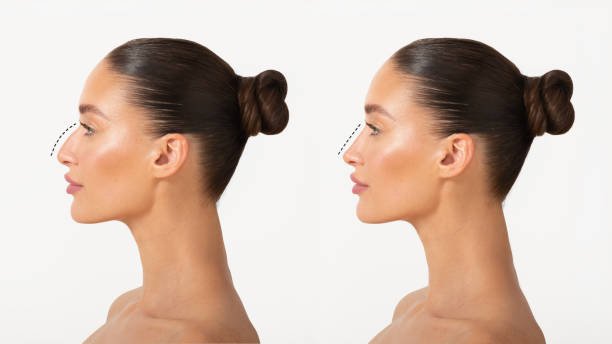
Introduction to Thick-Skinned Rhinoplasty
Rhinoplasty in Riyadh frequently involves patients with thick nasal skin, a common characteristic in Middle Eastern populations. Thick skin can obscure the underlying nasal framework, making refinement of the tip, dorsum, and overall nasal silhouette particularly challenging. Standard reduction techniques alone often fail to produce the desired definition, which has led to the development of advanced debulking strategies. These techniques focus on carefully reducing subcutaneous and fibrofatty tissue while preserving skin vascularity, ensuring that subtle refinements become visible without compromising healing or natural appearance.
Anatomical Considerations for Thick Skin
Understanding the anatomy of thick-skinned noses is crucial for effective rhinoplasty. Thick skin contains dense sebaceous glands and fibrofatty tissue that add volume and limit skin contraction. Beneath this layer lies cartilage and bone, which must be reshaped strategically to guide the thick skin into a defined contour. In Riyadh, surgeons performing rhinoplasty take into account not only the skin thickness but also the skin’s elasticity, sebaceous activity, and propensity for edema, all of which influence surgical planning and postoperative outcomes.
Preoperative Assessment and Planning
Effective debulking begins with meticulous preoperative assessment. Surgeons performing Rhinoplasty in Riyadh evaluate nasal thickness, cartilage strength, and overall facial proportions to determine the degree and method of tissue reduction required. High-resolution imaging and 3D modeling can assist in planning, enabling surgeons to visualize the final nasal shape and anticipate challenges. Patient expectations are also discussed carefully to ensure that the achievable refinements align with aesthetic goals while respecting the natural structure of the nose.
Debulking Techniques for Soft Tissue Management
Debulking thick nasal skin involves selective thinning of fibrofatty tissue in a manner that preserves the overlying skin’s vascular supply. In Riyadh, surgeons employ techniques such as careful sub-SMAS dissection, selective removal of soft tissue beneath the tip, and precise defatting of the dorsum. The goal is to reduce bulk while maintaining tissue viability, which is essential for proper healing and for the nasal contours to emerge clearly postoperatively.
Cartilage Reinforcement and Tip Definition
While debulking reduces the volume of thick skin, it must be complemented by careful cartilage modification. Strong cartilage in thick-skinned patients provides structural support but resists reshaping. Advanced rhinoplasty techniques in Riyadh include reinforcing the tip with grafts, adjusting the lower lateral cartilages, and using suturing techniques to guide the cartilage into the desired position. This combination of debulking and structural support ensures that the tip becomes more defined and projects naturally despite the overlying thick skin.
Maintaining Skin Viability During Debulking
Preserving skin vascularity is paramount in thick-skinned rhinoplasty. Excessive or aggressive tissue removal can compromise blood flow, leading to skin necrosis, delayed healing, or visible irregularities. Surgeons in Riyadh prioritize controlled, incremental debulking and use magnification tools to monitor blood supply. This approach reduces postoperative complications while enabling the skin to redrape smoothly over the reshaped cartilage.
Addressing Prolonged Swelling
Thick-skinned noses are prone to prolonged postoperative swelling due to the volume of fibrofatty tissue and inherent tissue density. Advanced rhinoplasty recovery protocols in Riyadh include gentle taping, compression techniques, and anti-inflammatory strategies to manage edema. By controlling swelling, surgeons allow the refined contours to become visible earlier, enhancing patient satisfaction and demonstrating the effectiveness of debulking strategies.
Balancing Dorsum and Tip Refinement
A successful thick-skinned rhinoplasty requires harmony between the dorsum and tip. Debulking focuses not only on reducing bulk but also on creating a smooth transition from the nasal bridge to the tip. Surgeons in Riyadh often combine defatting with cartilage modification, structural grafting, and meticulous shaping to achieve balance. This integrated approach ensures that refinement in one area does not create disproportion or disharmony elsewhere.
Grafting Techniques for Enhanced Definition
Cartilage grafts are essential tools in rhinoplasty for thick-skinned patients. Spreader grafts, columellar struts, and shield grafts provide structural reinforcement, support tip projection, and guide skin draping. In Riyadh, grafts are strategically placed to counteract the weight and resistance of thick skin, allowing subtle refinements to become apparent and stable over time. This combination of debulking and grafting is key to achieving durable aesthetic results.
Managing Patient Expectations
Patients with thick nasal skin may not achieve the same level of dramatic tip refinement as those with thinner skin. Surgeons in Riyadh emphasize patient education, discussing achievable results, gradual evolution of definition, and the importance of postoperative care. Setting realistic expectations ensures that patients appreciate the subtle but significant improvements made possible by advanced debulking techniques.
Postoperative Care and Scar Management
Proper postoperative care is critical in ensuring that the effects of debulking are maintained. Riyadh surgeons provide detailed instructions for taping, splinting, and avoiding trauma to the nose. Scar-minimization techniques, even in closed rhinoplasty, help the skin heal evenly and reduce the risk of visible irregularities. Long-term care supports skin redraping over the modified framework, allowing refined contours to emerge naturally.
Cultural and Aesthetic Considerations
Rhinoplasty in Riyadh is influenced by regional aesthetic preferences that favor natural-looking results while respecting ethnic identity. Debulking strategies are employed judiciously to enhance nasal definition without over-reduction or artificial appearance. Surgeons balance refinement with preservation, creating outcomes that harmonize with facial features and cultural expectations.
Integration with Facial Proportions
Debulking alone does not define the nose; it must be considered in the context of overall facial harmony. Surgeons in Riyadh analyze the patient’s profile, frontal view, and three-quarter view to ensure that tip projection, dorsum refinement, and overall nasal shape integrate seamlessly with the face. Advanced debulking strategies are therefore part of a comprehensive approach that considers both local tissue anatomy and global aesthetics.
Long-Term Stability and Evolution
Refined rhinoplasty results in thick-skinned patients continuing to evolve over time. As swelling resolves and tissue settles, subtle contour improvements become more pronounced. Surgeons in Riyadh design debulking procedures with long-term stability in mind, combining careful soft tissue management, grafting, and cartilage reshaping to ensure that results remain natural and enduring.
Psychological Impact and Patient Satisfaction
Successful management of thick skin through advanced debulking techniques has a profound psychological impact. Patients in Riyadh often report increased confidence and satisfaction when their nasal contours are refined, balanced, and culturally congruent. The careful combination of debulking, structural reinforcement, and meticulous postoperative care contributes to both aesthetic and emotional outcomes.
Technological Advances Supporting Debulking
Modern rhinoplasty in Riyadh leverages imaging technology, high-resolution magnification, and precise surgical instruments to enhance debulking accuracy. These innovations allow surgeons to remove tissue strategically, minimize trauma, and optimize cartilage shaping. Technology also aids in patient communication, helping patients visualize expected outcomes and understand the subtleties of thick-skinned nasal refinement.
Advanced Surgeon Expertise as a Determinant of Success
Debulking thick-skinned noses is a highly specialized skill requiring extensive experience. Riyadh surgeons combine knowledge of nasal anatomy, surgical precision, and aesthetic judgment to achieve refined outcomes. Expertise in both cartilage modification and soft tissue management ensures that debulking enhances definition while maintaining nasal function and long-term stability.
Conclusion: Refinement Through Advanced Debulking
Rhinoplasty in Riyadh for thick-skinned noses demands a sophisticated approach that integrates advanced debulking strategies, structural reinforcement, and meticulous postoperative care. By selectively reducing fibrofatty tissue, reshaping cartilage, and supporting healing through tailored recovery protocols, surgeons achieve visible refinement, natural contour, and long-lasting results. Advanced debulking allows patients to experience subtle yet significant improvements, restoring balance, enhancing definition, and ensuring that the final outcome is harmonious, culturally appropriate, and enduring.
